What Is the Fibonacci Sequence and Its Significance in Nature?
TL;DR
The Fibonacci sequence is a series of numbers (1, 1, 2, 3, 5, 8, ...) that appears frequently in nature, particularly in the arrangement of leaves, petals, and seeds for optimal efficiency. This sequence is linked to the Golden Ratio, or Phi (approximately 1.618), which is often associated with beauty in art and architecture, illustrating a profound connection between mathematics and the natural world.
Transcript
Math wasn't made up to harass English majors. It was invented by a little something called, "nature," and it's everywhere you look. In fact, there are specific numbers that we see in nature all the time. Together, they're called "The Fibonacci Sequence" and it goes something like this: 1, 1, 2, 3, 5, 8, 13, 21, 34, 55 You may know this pattern. The... Read More
Key Insights
- 🙈 The Fibonacci sequence, originating from India, is a series of numbers seen in nature and math.
- 🌱 Plants exhibit Fibonacci numbers in petals, seeds, and fruit sections for efficient growth.
- 🥳 The Golden Ratio, Phi, derived from Fibonacci numbers, is a ratio of physical perfection seen in art and nature.
- 😵💫 Nature's spirals and arrangements, like pine cones and sunflowers, follow the Fibonacci sequence.
- 🥰 The Fibonacci sequence is used in art, architecture, and sculptures to create visually pleasing compositions.
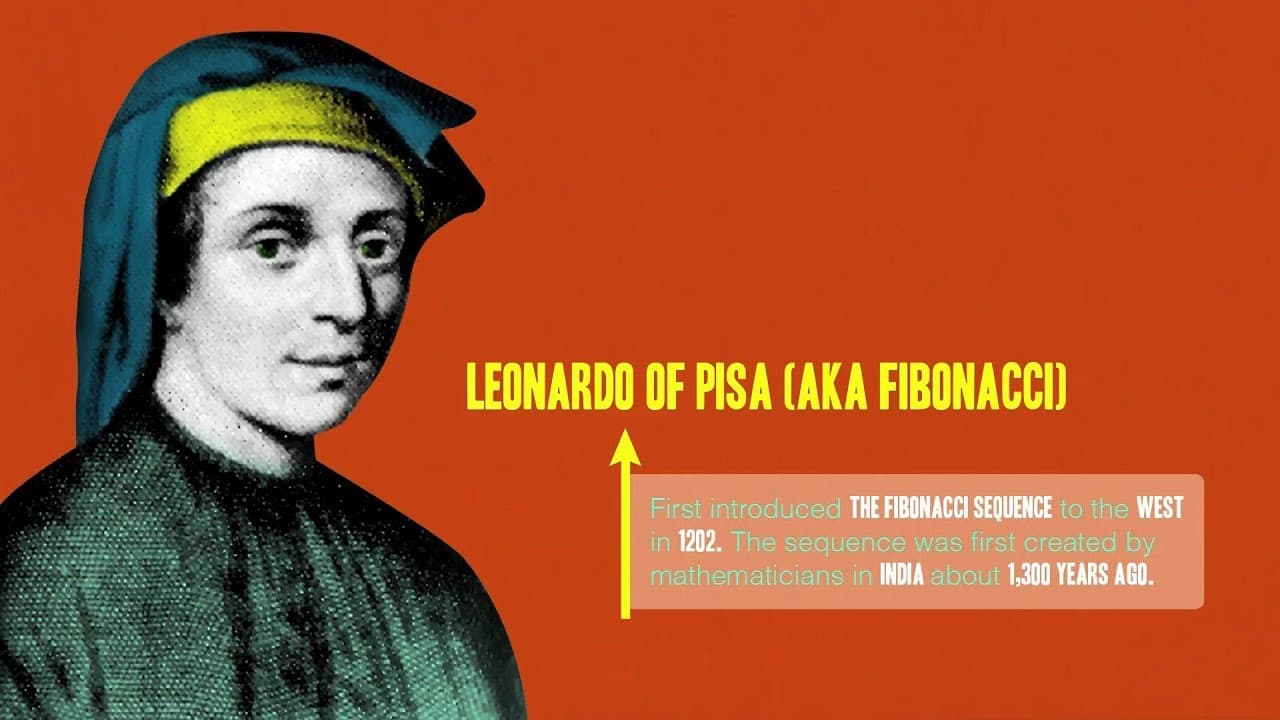
- 🗽 Leonardo of Pisa, or Fibonacci, introduced the sequence to the west through his book Liber Abaci.
- 💅 The Fibonacci sequence and Golden Ratio showcase the beauty and harmony of mathematics in nature and human creations.
Install to Summarize YouTube Videos and Get Transcripts
Explore YouTube Video Summarizer or Get YouTube Transcript Extractor
Questions & Answers
Q: What is the Fibonacci sequence and how is it seen in nature?
The Fibonacci sequence is a series of numbers starting with 1, 1, 2, 3, 5, 8, etc., observed in nature's plants, petals, seeds, and fruit sections for efficient growth and packing.
Q: How is the Golden Ratio related to the Fibonacci sequence?
The Golden Ratio, Phi, is derived from dividing successive Fibonacci numbers. It is seen in Greek sculptures as a ratio of physical perfection and in nature's spirals and arrangements.
Q: How did Leonardo of Pisa, or Fibonacci, introduce the Fibonacci sequence to the western world?
Fibonacci's book Liber Abaci introduced the sequence through a thought experiment about bunnies breeding. It showcased the pattern of each number being the sum of the two prior numbers.
Q: How is the Fibonacci sequence used in art and architecture?
The Fibonacci sequence and Golden Ratio are used in art as a harmonious ratio for composition and in architecture to create aesthetically pleasing structures based on natural patterns.
Summary & Key Takeaways
-
The Fibonacci sequence, dating back to India and introduced to the west by Fibonacci, is seen in nature and math as 1, 1, 2, 3, 5, 8.
-
Plants display Fibonacci numbers in petals, seeds, and fruit sections for efficient packing.
-
The Golden Ratio, Phi, is derived from Fibonacci numbers and seen in sculptures and nature's spirals.
Read in Other Languages (beta)
Share This Summary 📚
Summarize YouTube Videos and Get Video Transcripts with 1-Click
Try YouTube Summary with ChatGPT & Claude or YouTube Transcript Generator
Explore More Summaries from SciShow 📚

Summarize YouTube Videos and Get Video Transcripts with 1-Click
Try YouTube Summary with ChatGPT & Claude or YouTube Transcript Generator