Eric Weinstein on Leonard Cohen's Hallelujah | Lex Fridman
TL;DR
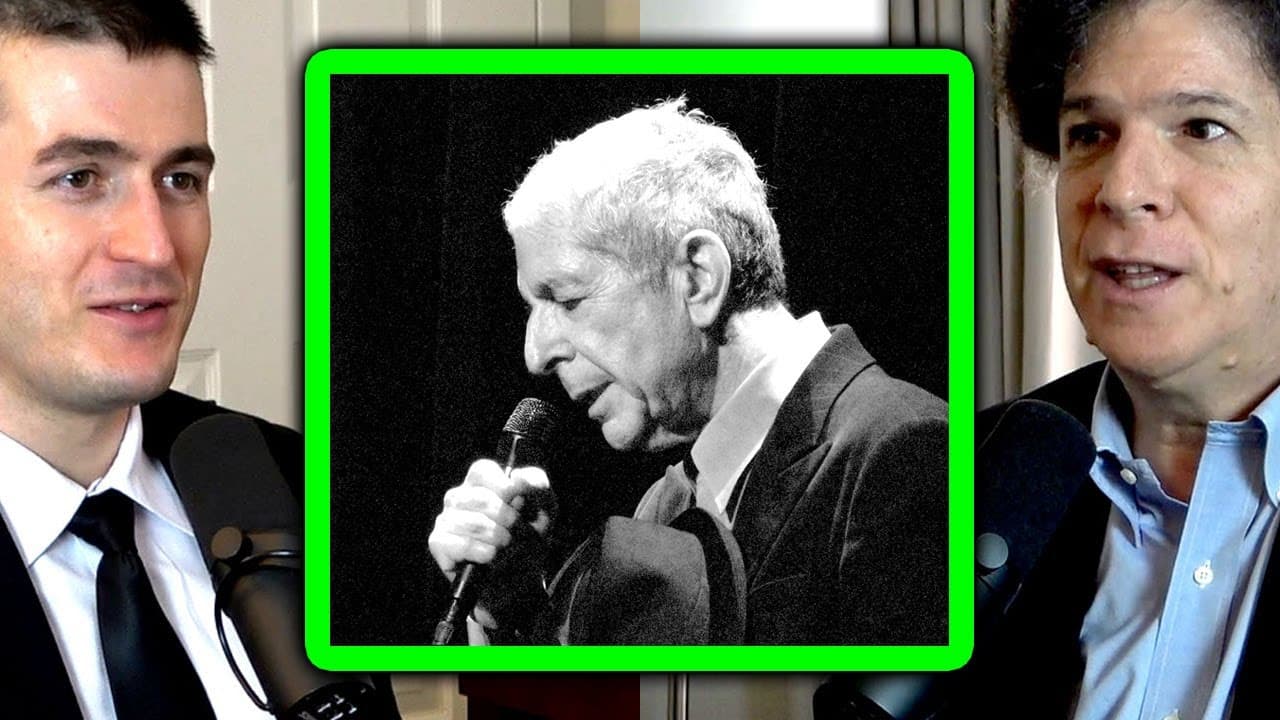
Leonard Cohen's "Hallelujah" is a mysterious song that alternates between joy and sadness through chord progression, showcasing Cohen's understanding of musical techniques.
Transcript
can we go back to larry cohen yeah can we just i the things i feel when i listen to hallelujah by leonard cohen or anything by him really but that one what do you want to get into let's go what what does it that song mean to you is it love oh boy well first of all it's it's it's mystery like it starts off about mystery so what do you what are you d... Read More
Key Insights
- 😃 Cohen's "Hallelujah" alternates between joy and sadness through chord progression, evoking contrasting emotions.
- 😒 The use of bathos adds complexity and depth to the song, allowing multiple interpretations and engaging the audience.
- ㊙️ The lyrics of "Hallelujah" contain hidden meanings and secrets, showcasing Cohen's talent as a songwriter.
- 🎼 The song reflects Cohen's understanding of musical techniques and his ability to compose with audacity and creativity.
- 😒 Cohen's use of the alternating chords represents a musical discovery and adds to the allure of "Hallelujah."
- 🎼 The juxtaposition between the sublime and mundane elements in the song reflects Cohen's perspective on the audience and their relationship with music.
- 🎼 "Hallelujah" showcases the tension between the wave equation and even temperament in music, highlighting the beauty of this musical system.
Install to Summarize YouTube Videos and Get Transcripts
Explore YouTube Video Summarizer or Get YouTube Transcript Extractor
Questions & Answers
Q: What does the technique of alternating between two chords in "Hallelujah" symbolize?
The alternating chords represent the contrast between joy and sadness, with one chord representing a feeling of sadness and the other symbolizing happiness. Cohen uses this technique to evoke different emotions in the listeners.
Q: How does Leonard Cohen use bathos in "Hallelujah"?
Cohen employs bathos by combining sublime and mundane elements in the song. He starts with a bitter tone towards the audience, highlighting their indifference to music. This technique adds depth and complexity to the lyrics.
Q: How does "Hallelujah" compare to other songs that use major to minor transitions?
Unlike other songs that use major to minor transitions to evoke emotional shifts, "Hallelujah" performs a head fake by reversing the expected pattern. This makes the song unique and showcases Cohen's creativity.
Q: What is the significance of the lyrics and chord progression in "Hallelujah"?
The lyrics of "Hallelujah" describe the chord progression in real-time, giving insights into Cohen's understanding of functional harmony. This demonstrates his mastery of musical techniques and his ability to create engaging compositions.
Summary & Key Takeaways
-
"Hallelujah" uses the technique of alternating between two chords, representing joy and sadness, with only one note difference between them.
-
Cohen employs bathos in the song, juxtaposing sublime and mundane elements to create a bitter energy towards the audience.
-
The lyrics of "Hallelujah" describe the chord progression in real-time, illustrating Cohen's mastery of functional harmony.
Read in Other Languages (beta)
Share This Summary 📚
Summarize YouTube Videos and Get Video Transcripts with 1-Click
Try YouTube Summary with ChatGPT & Claude or YouTube Transcript Generator
Explore More Summaries from Lex Clips 📚



Summarize YouTube Videos and Get Video Transcripts with 1-Click
Try YouTube Summary with ChatGPT & Claude or YouTube Transcript Generator