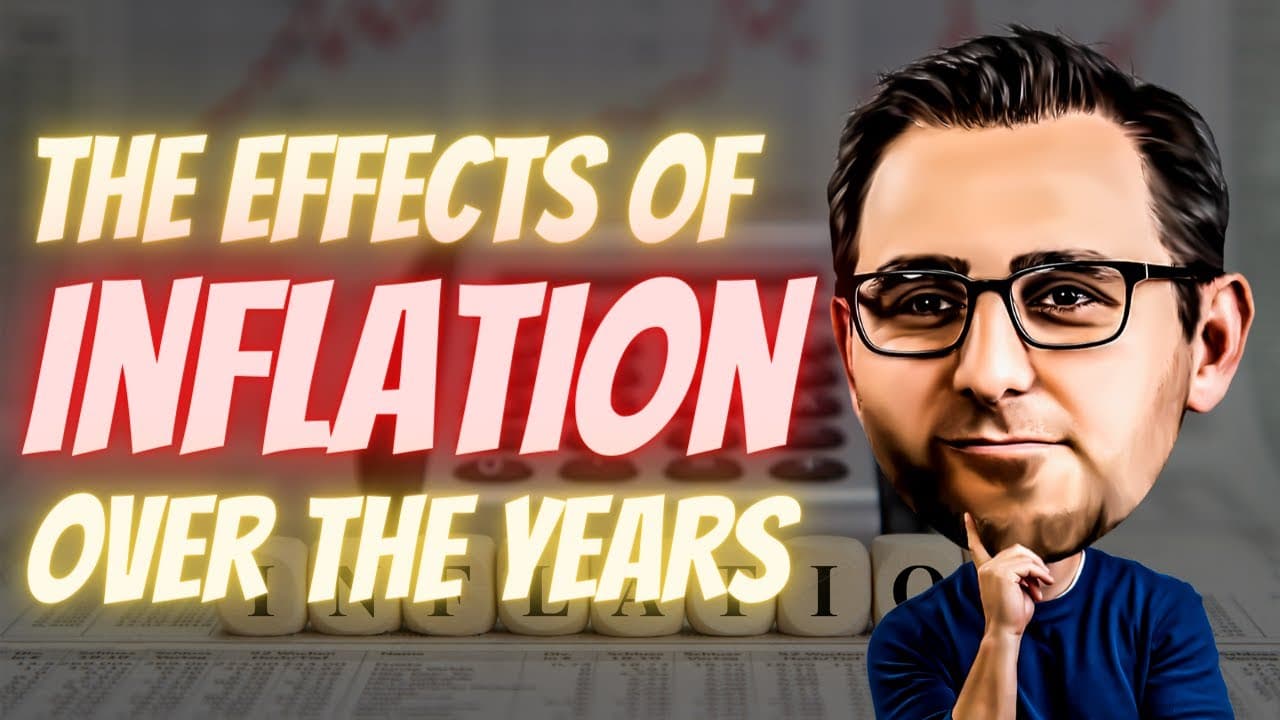
What Does Inflation ACTUALLY Mean and How Does It Grow?
TL;DR
Inflation is complex - a necessary evil with both benefits and downsides.
Transcript
hey everybody it's seth and paul with everything money channel on this episode right now paul discusses what the hell inflation is what it means how does it grow up down sideways what it means for investors in the economy right now on the everything money channel let's do this baby hey everybody it's paul and seth with everything money channel than... Read More
Key Insights
- 🤩 Inflation, the rising cost of living, is a key economic indicator that affects consumers, investors, and businesses.
- ✋ High inflation or deflation pose challenges, impacting spending, investments, and long-term economic stability.
- 🤑 Printing more money can lead to inflation, devaluing the currency and impacting purchasing power.
- 💱 Steady inflation at around 3-4% annually is generally preferable, encouraging economic growth without excessive erosion of the currency's value.
- ☠️ The historical context of inflation, interest rates, and government debt influences current economic policies and future projections.
- 🍉 Differentiating between short-term bailouts and long-term economic consequences is crucial in understanding inflation's impact.
- 👨💼 Individuals and businesses can navigate inflation by saving, investing wisely, and understanding the implications of economic policies.
Install to Summarize YouTube Videos and Get Transcripts
Explore YouTube Video Summarizer or Get YouTube Transcript Extractor
Questions & Answers
Q: What is inflation and how does it impact the cost of living?
Inflation refers to the increase in the price of goods and services over time, making them more expensive to purchase.
Q: Why is steady inflation preferable to high inflation or deflation?
Steady inflation encourages spending and growth without eroding the value of money rapidly, unlike periods of high inflation or deflation, which can disrupt the economy.
Q: How does printing more money contribute to inflation and its implications?
Printing more money increases the money supply, causing the value of the dollar to decrease as more money competes for the same goods and services, leading to inflation.
Q: Can inflation impact investments, such as real estate or stocks?
Yes, inflation can impact investments positively or negatively; for instance, real estate values typically rise with inflation, while high inflation can erode stock values and reduce purchasing power.
Summary & Key Takeaways
-
Inflation, the increase in the cost of living over time, impacts consumers, investors, and the economy.
-
Steady inflation at around 3-4% annually is generally beneficial, but high inflation or deflation can pose challenges.
-
Printing more money can lead to inflation, affecting the value of the dollar and long-term economic stability.
Read in Other Languages (beta)
Share This Summary 📚
Summarize YouTube Videos and Get Video Transcripts with 1-Click
Try YouTube Summary with ChatGPT & Claude or YouTube Transcript Generator
Explore More Summaries from Everything Money 📚



Summarize YouTube Videos and Get Video Transcripts with 1-Click
Try YouTube Summary with ChatGPT & Claude or YouTube Transcript Generator