Products
Features
YouTube Video Summarizer
Summarize YouTube videos
Web & PDF Highlighter
Highlight web pages & PDFs
Chat with PDF
Ask any PDF questions with AI
Ask AI Clone
Chat with your highlights & memories
Audio Transcriber
Transcribe audio files to text
Glasp Reader
Read and highlight articles
Kindle Highlight Export
Export your Kindle highlights
Idea Hatch
Hatch ideas from your highlights
Integrations
Obsidian Plugin
Notion Integration
Pocket Integration
Instapaper Integration
Medium Integration
Readwise Integration
Snipd Integration
Hypothesis Integration
Apps & Extensions
Chrome Extension
Safari Extension
Edge Add-ons
Firefox Add-ons
iOS App
Android App
Discover
Discover
Ideas
Discover new ideas and insights
Articles
Curated articles and insights
Books
Book recommendations by great minds
Posts
Essays and notes from readers
Quotes
Inspiring quotes collection
Videos
Curated videos and summaries
Explore Glasp
Glasp Newsletter
Weekly insights and updates
Glasp Talk
Interview series with great minds
Glasp Blog
Latest news and articles
Glasp Use Cases
Learn how others use Glasp
Build & Support
Glasp API
Access Glasp's API for developers
MCP Connector
Connect Glasp to Claude & ChatGPT
Community
Glasp Reddit Community
Students
Student discount and benefits
FAQs
Frequently Asked Questions
AboutPricing
DashboardLog inSign up

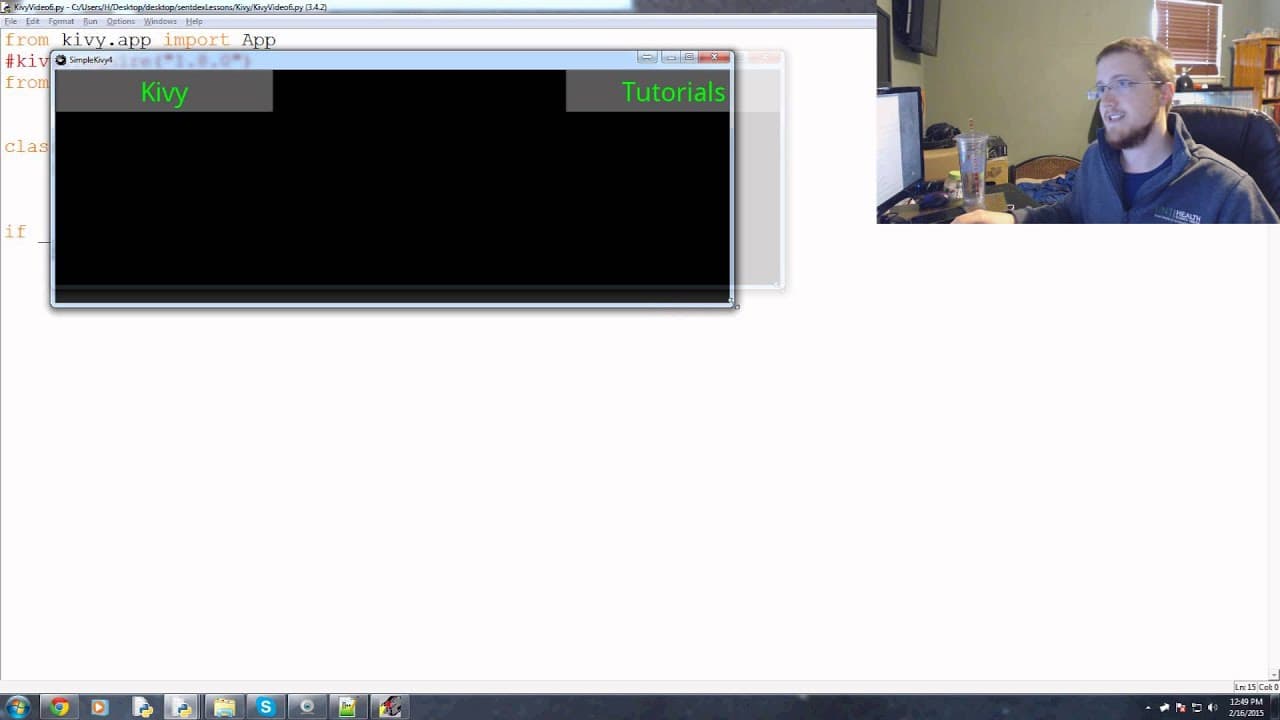
Kivy with Python tutorial Part 6 - Layouts: Float Layout
45.0K views
•
February 23, 2015
by
sentdex
YouTube video player
Kivy with Python tutorial Part 6 - Layouts: Float Layout

TL;DR

Learn about Float Layout for dynamic sizing and placement of elements in Kivy app development.

Transcript

what's going on everybody welcome to the sixth TV basics tutorial video in this video what we're gonna be talking about is the float layout so this is another version of a layout now as we can see this layout is is fairly responsive you know we can move things around at least and the buttons are somewhat placed decently but not the greatest and you... Read More

Key Insights

  • ❓ Float Layout in Kivy enables dynamic sizing and placement of UI elements.
  • 😒 Understanding size_hint and pos_hint parameters is crucial for effective use of Float Layout.
  • 🖐️ The X and Y coordinates play a vital role in positioning elements within Float Layout.
  • 😀 Utilizing relative size and position hints ensures responsiveness in Kivy app development.
  • 👤 Float Layout provides flexibility in designing user interfaces for varying screen sizes.
  • 🏃 Proper implementation of Float Layout can prevent elements from running into each other.
  • ❓ Experimenting with different parameters like size_hint and pos_hint can enhance the visual layout.

Install to Summarize YouTube Videos and Get Transcripts

Explore YouTube Video Summarizer or Get YouTube Transcript Extractor

Questions & Answers

Q: What is the purpose of using Float Layout in Kivy development?

Float Layout in Kivy allows for dynamic sizing and placement of elements, providing responsiveness to different screen resolutions.

Q: How can size_hint parameter be used in Float Layout?

The size_hint parameter in Float Layout allows specifying the relative size of elements based on percentages of the screen width and height.

Q: What is the significance of pos_hint parameter in Float Layout?

The pos_hint parameter in Float Layout is used to define the position of elements using X and Y coordinates relative to the parent container.

Q: How can one ensure elements do not overlap in Float Layout?

By utilizing the size_hint parameter effectively and setting appropriate position hints, elements in Float Layout can be prevented from overlapping.

Summary & Key Takeaways

  • Tutorial on implementing Float Layout in Kivy for dynamic sizing and placement of elements.

  • Explanation on using size_hint and pos_hint parameters in Float Layout for responsiveness.

  • Demonstrations on adjusting button position and size dynamically based on X and Y coordinates in Float Layout.


Read in Other Languages (beta)

English

Share This Summary 📚

Summarize YouTube Videos and Get Video Transcripts with 1-Click

Download browser extensions on:

Try YouTube Summary with ChatGPT & Claude or YouTube Transcript Generator

Explore More Summaries from sentdex 📚
Python: How to Graph the Chaikin Money Flow Trading Indicator in Matplotlib thumbnail
Python: How to Graph the Chaikin Money Flow Trading Indicator in Matplotlib
sentdex
How to Parse Twitter for Twitter Analysis: Part 1 thumbnail
How to Parse Twitter for Twitter Analysis: Part 1
sentdex
Parsing XML - Go Lang Practical Programming Tutorial p.11 thumbnail
Parsing XML - Go Lang Practical Programming Tutorial p.11
sentdex
How to Train a Chatbot Using TensorFlow and Python thumbnail
How to Train a Chatbot Using TensorFlow and Python
sentdex
Python Generator Functions for massive Performance Improvements with Lists thumbnail
Python Generator Functions for massive Performance Improvements with Lists
sentdex
Python: How to Program the Chaikin Money Flow Trading Indicator thumbnail
Python: How to Program the Chaikin Money Flow Trading Indicator
sentdex

Summarize YouTube Videos and Get Video Transcripts with 1-Click

Download browser extensions on:

Try YouTube Summary with ChatGPT & Claude or YouTube Transcript Generator

Apps & Extensions

  • Chrome Extension
  • Safari Extension
  • Edge Add-ons
  • Firefox Add-ons
  • iOS App
  • Android App

Key Features

  • YouTube Video Summarizer
  • Web & PDF Summarizer
  • Web & PDF Highlighter
  • Chat with PDF
  • Ask AI Clone
  • Audio Transcriber
  • Glasp Reader
  • Kindle Highlight Export
  • Idea Hatch

Integrations

  • Obsidian Plugin
  • Notion Integration
  • Pocket Integration
  • Instapaper Integration
  • Medium Integration
  • Readwise Integration
  • Snipd Integration
  • Hypothesis Integration

More Features

  • APIs
  • MCP Connector
  • Blog & Post
  • Embed Links
  • Image Highlight
  • Personality Test
  • Quote Shots

Company

  • About us
  • Blog
  • Community
  • FAQs
  • Job Board
  • Newsletter
  • Pricing
Terms

•

Privacy

•

Guidelines

© 2026 Glasp Inc. All rights reserved.