Why Do We Overlook War's Environmental Impact?
TL;DR
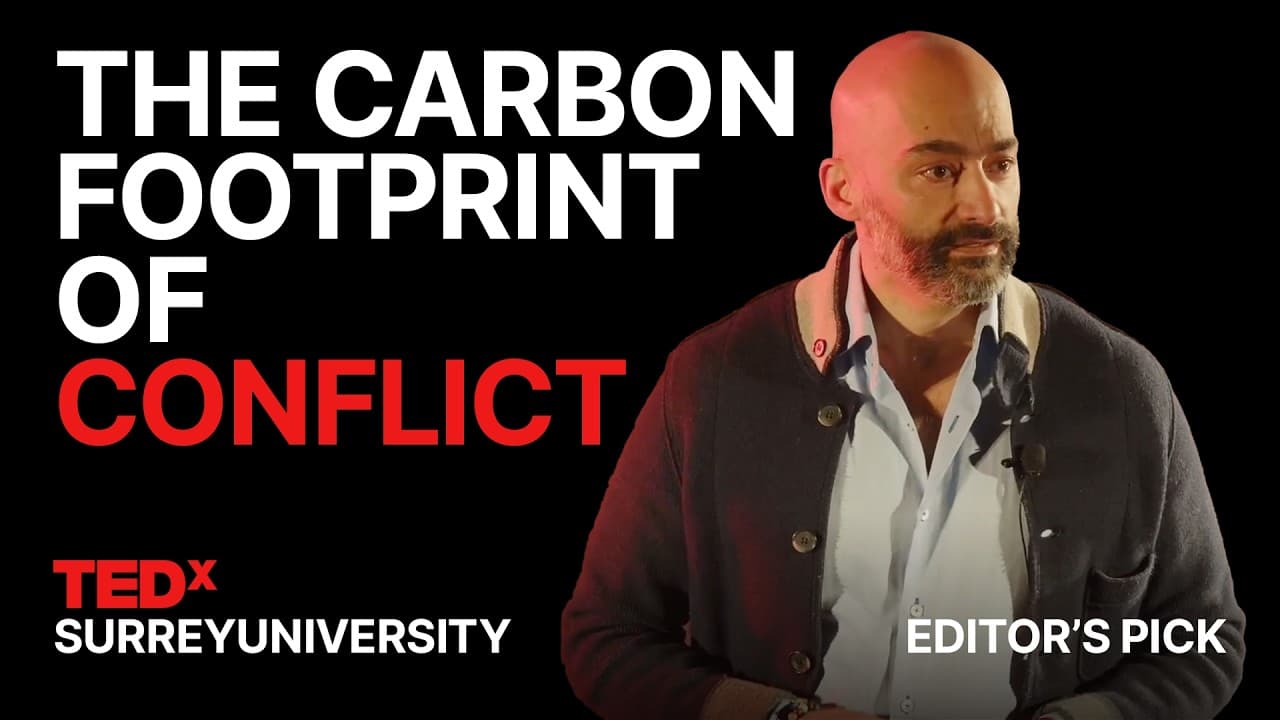
War contributes significantly to climate change through emissions from military operations and reconstruction efforts. Despite this, the environmental impact of war is often ignored in global emissions discussions. Addressing this oversight requires transparency and the use of AI and technology to measure and simulate the carbon footprint of conflicts.
Transcript
I'd like to invite you to go back to when you were 9 years old. For me, it was 22nd of September, 1980. A normal Monday morning, getting ready, having breakfast to go to school. My mother was making the tea. She turned on the radio and the voice on the radio said, "At 1:30 a.m., Iraqi forces have attacked Iran." The cup fell from her hand. I stoppe... Read More
Key Insights
- War is a major contributor to carbon emissions, yet its impact is often ignored in climate discussions.
- Military operations and the reconstruction of destroyed infrastructure significantly contribute to emissions.
- The Keeling curve shows a correlation between rising CO2 levels and military activities since 1958.
- Current emissions measurements overlook the carbon footprint of military actions and their aftermath.
- AI and satellite technology can help measure and simulate the environmental impact of wars.
- International efforts often focus on emissions from consumer goods but ignore emissions from military activities.
- There is a need for a global conflict carbon compass to track and price the emissions from wars.
- Ending emissions exceptionalism requires transparency and accountability from global powers.
Install to Summarize YouTube Videos and Get Transcripts
Explore YouTube Video Summarizer or Get YouTube Transcript Extractor
Questions & Answers
Q: How do wars contribute to climate change?
Wars contribute to climate change through emissions from military operations and the reconstruction of destroyed infrastructure. These activities release significant amounts of carbon dioxide and other greenhouse gases, yet they are often overlooked in global emissions discussions. The environmental impact of war includes both the immediate emissions from military activities and the long-term emissions from rebuilding efforts.
Q: Why is the environmental impact of war often ignored?
The environmental impact of war is often ignored due to a focus on consumer goods and everyday activities in emissions discussions. Military operations and their carbon footprint are not typically included in national emissions inventories. Additionally, there is a lack of transparency and accountability in measuring and reporting emissions from military activities, leading to their exclusion from climate change dialogues.
Q: What is the Keeling curve and its relevance to military activities?
The Keeling curve is a graph that shows the increase in atmospheric carbon dioxide levels since 1958. It is relevant to military activities because there is a correlation between rising CO2 levels and military operations over the years. Despite reductions in coal consumption, emissions have increased, suggesting that military activities contribute significantly to global emissions, yet are not adequately addressed in climate policies.
Q: How can AI and technology help address war's environmental impact?
AI and technology, such as satellite imagery and machine learning, can help measure and simulate the environmental impact of wars. These tools can provide accurate data on emissions from military activities and reconstruction efforts, enabling the creation of a global conflict carbon compass. This would allow for better tracking, pricing, and accountability of war-related emissions, contributing to more comprehensive climate change strategies.
Q: What is emissions exceptionalism and how can it be addressed?
Emissions exceptionalism refers to the exclusion of certain emissions, particularly from military activities, from global climate discussions and policies. It can be addressed by increasing transparency and accountability in measuring and reporting these emissions. Utilizing AI, satellite technology, and international cooperation can help create systems that accurately track and simulate the carbon footprint of conflicts, ensuring that all emissions are considered in climate strategies.
Q: Why is there a need for a global conflict carbon compass?
A global conflict carbon compass is needed to track and price the emissions from military activities and their aftermath. This tool would provide transparency and accountability, ensuring that the significant carbon footprint of wars is included in global emissions inventories. By accurately measuring and simulating these emissions, it would help address the oversight in current climate policies and contribute to more effective climate change mitigation efforts.
Q: What role do international efforts play in addressing war emissions?
International efforts often focus on consumer goods and everyday activities, overlooking emissions from military activities. To address war emissions, international cooperation is necessary to create systems for measuring and reporting these emissions. By including military activities in national emissions inventories and utilizing technology to track and simulate their impact, international efforts can more effectively contribute to comprehensive climate change strategies.
Q: How can transparency and accountability be increased in measuring war emissions?
Transparency and accountability in measuring war emissions can be increased by utilizing AI, satellite technology, and international cooperation to create accurate systems for tracking and simulating the carbon footprint of military activities. By including these emissions in national inventories and ensuring that global powers are held accountable for their military actions, the significant environmental impact of wars can be addressed in climate change strategies.
Summary & Key Takeaways
-
War significantly contributes to carbon emissions, yet this impact is often ignored in global climate discussions. Military operations and the reconstruction of destroyed infrastructure are major sources of emissions. Addressing this oversight requires transparency and the use of AI and satellite technology to measure and simulate the carbon footprint of conflicts.
-
Since 1958, the correlation between rising CO2 levels and military activities has been evident, yet current emissions measurements overlook the carbon footprint of military actions. AI and satellite technology can help address this by providing accurate measurements and simulations of war's environmental impact.
-
International climate efforts focus on consumer goods emissions but ignore military activities. A global conflict carbon compass is needed to track and price war emissions. Ending emissions exceptionalism requires transparency and accountability from global powers, leveraging technology to provide a clear picture of war's environmental impact.
Read in Other Languages (beta)
Share This Summary 📚
Summarize YouTube Videos and Get Video Transcripts with 1-Click
Try YouTube Summary with ChatGPT & Claude or YouTube Transcript Generator
Explore More Summaries from TEDx Talks 📚






Summarize YouTube Videos and Get Video Transcripts with 1-Click
Try YouTube Summary with ChatGPT & Claude or YouTube Transcript Generator