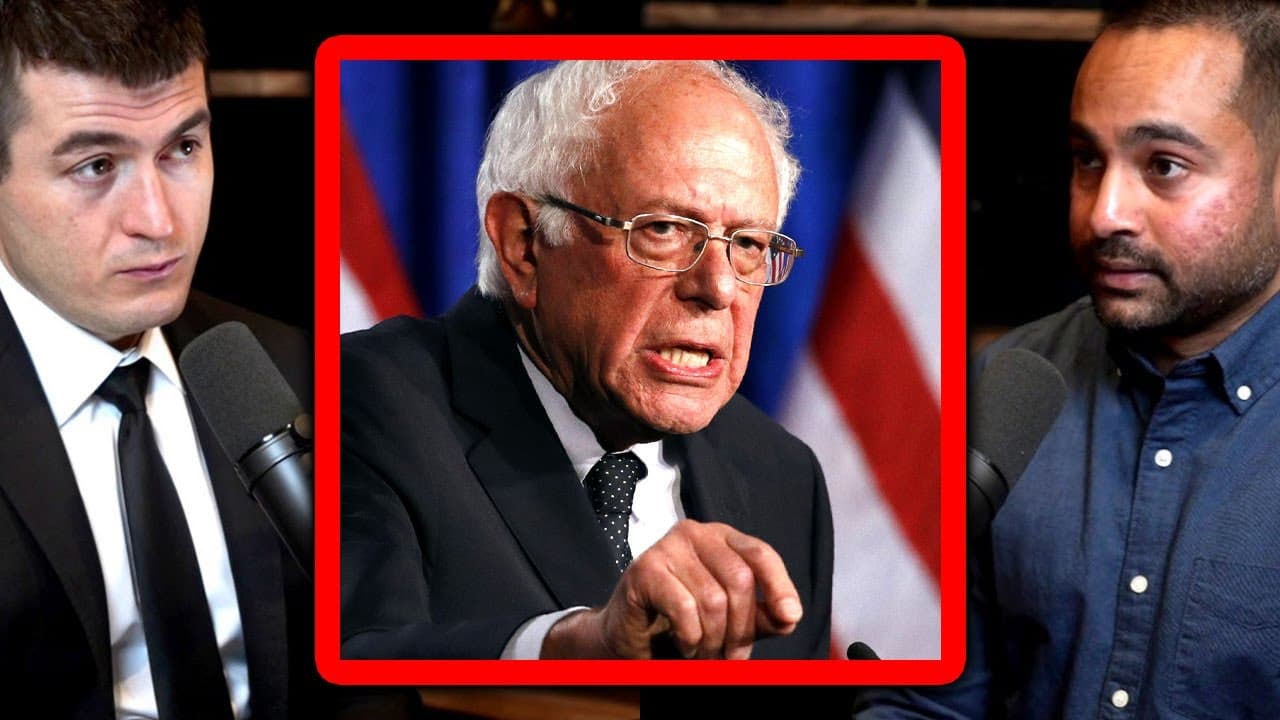
Attacks on Bernie Sanders in 2016 | Bhaskar Sunkara and Lex Fridman
TL;DR
The Democratic party and the media were dismissive, hostile, and biased against Bernie Sanders during his presidential campaign in 2016, leading to missed opportunities and resentment among voters.
Transcript
we lost a chance in 2016 to like someone that I think would have beaten Trump or the very least would have you know been close do you think the Democrats screwed him over that's not in the way of deliberate or direct vote working but they put their thumb on the scale uh for sure I mean there's there's it's not even conspiracy theory there's all thi... Read More
Key Insights
- 🥳 The Democratic party and media's treatment of Bernie Sanders in 2016 involved bias, favoritism, and a dismissive attitude.
- 🥳 Media bias and dismissiveness towards certain candidates is not limited to one political party.
- 👾 Authenticity and refusal to conform to traditional political game-playing can inspire and resonate with voters.
- 😚 The media's closed-mindedness towards non-traditional politicians fuels resentment and contributes to the extreme polarization of American politics.
- 😮 The rise of new media platforms allows for more open-mindedness and inclusivity towards outsider candidates.
- ❓ Authenticity and independence can be effective strategies in political campaigns.
- 🔉 The media's emphasis on politeness and proper behavior limits diversity of voices and ideas in politics.
Install to Summarize YouTube Videos and Get Transcripts
Explore YouTube Video Summarizer or Get YouTube Transcript Extractor
Questions & Answers
Q: Did the Democratic party intentionally sabotage Bernie Sanders' chances in the 2016 election?
While it may not have been deliberate sabotage, there is evidence of bias and favoritism towards Clinton, including leaked debate questions and a dismissive tone from the media.
Q: Why were certain candidates, like Bernie Sanders and Andrew Yang, dismissed and treated smugly by the media?
The dismissive attitude towards certain candidates may stem from a smugness and elitism within the Democratic party, where they believe they know what is best for the party and who should be running.
Q: Are views outside the boundaries of acceptable conversation being unfairly labeled as illegitimate?
Yes, while there are certain views that should be considered illegitimate, there is a tendency in the media to label opinions as illegitimate simply because they differ from mainstream ideologies, fueling resentment and division.
Q: Why does the media value politeness and proper behavior in politicians?
The media often values politeness and proper behavior as a sign of credibility and seriousness, dismissing candidates who do not conform to these standards. This can limit the range of voices and ideas in politics.
Summary & Key Takeaways
-
The Democratic party and media put their thumb on the scale against Bernie Sanders during the 2016 campaign, displaying bias and favoritism towards Clinton.
-
The media's dismissive and hostile treatment of Sanders reflects a smugness and elitism within the Democratic party.
-
Bernie Sanders' authenticity and refusal to play by the rules of polite politics inspired many, challenging the notion that one needs to be adept at political game-playing to be successful.
Read in Other Languages (beta)
Share This Summary 📚
Summarize YouTube Videos and Get Video Transcripts with 1-Click
Try YouTube Summary with ChatGPT & Claude or YouTube Transcript Generator
Explore More Summaries from Lex Clips 📚




Summarize YouTube Videos and Get Video Transcripts with 1-Click
Try YouTube Summary with ChatGPT & Claude or YouTube Transcript Generator