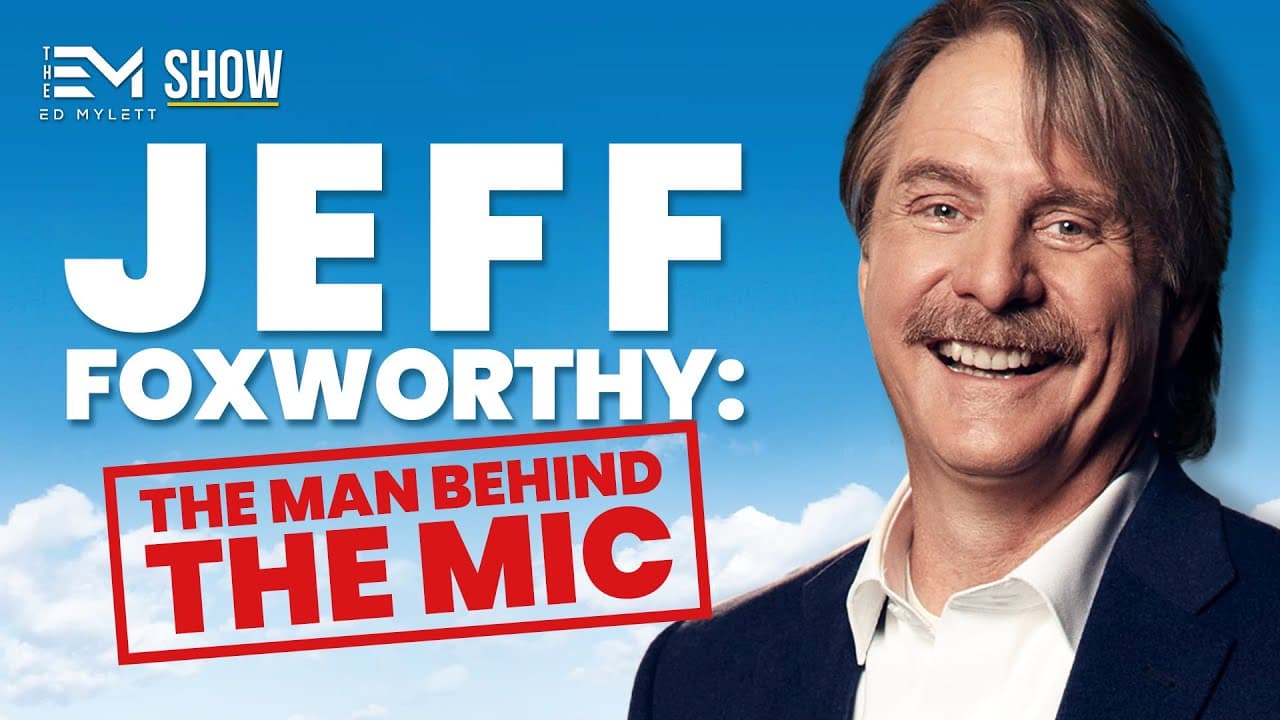
What You DO Is NOT Who You ARE | The Good Old Days w/ Jeff Foxworthy
TL;DR
Jeff Foxworthy shares life lessons, comedy insights, and personal stories.
Transcript
did you have to become comfortable with silence you know what i mean right that is nuance i used to just want to just not give them a chance to breathe and just beat this knot out of them and then i realized the silence is even more powerful because if you stop and nobody's getting up to go to the bathroom nobody's shuffling you don't hear drinks t... Read More
Key Insights
- Jeff Foxworthy emphasizes the power of silence in communication, suggesting that it allows the audience to absorb and respond, enhancing engagement.
- He highlights the importance of understanding that what you do is not who you are, advocating for a consistent identity across different life roles.
- Foxworthy discusses the impact of parental abandonment, explaining how it influenced his commitment to being a present father.
- He reflects on his journey from working at IBM to becoming a successful comedian, driven by a passion for comedy and storytelling.
- Jeff shares his experience leading a men's group at a homeless shelter, emphasizing the importance of addressing early life trauma to overcome addiction.
- He advises against making big life mistakes, such as infidelity, by understanding personal vulnerabilities and avoiding risky situations.
- Foxworthy talks about the challenges of cancel culture in comedy, stressing the need for society to learn to laugh at itself.
- He discusses the significance of failing often to push boundaries and find one's capabilities, encouraging people to embrace failure as a growth opportunity.
Install to Summarize YouTube Videos and Get Transcripts
Explore YouTube Video Summarizer or Get YouTube Transcript Extractor
Questions & Answers
Q: How does Jeff Foxworthy view the role of silence in communication?
Jeff Foxworthy believes that silence in communication is powerful because it allows the audience to process the information and decide how to respond. It places the responsibility back on the audience, making them more engaged and attentive, as they anticipate the next move or statement.
Q: What is Jeff Foxworthy's perspective on identity and profession?
Foxworthy stresses that one's identity should not be tied to their profession. He believes that while what you do might change throughout life, who you are should remain consistent. He identifies himself as a father, husband, and community member, rather than just a comedian.
Q: How did Jeff Foxworthy's father's absence affect his parenting?
Jeff Foxworthy's father's absence left him feeling unworthy, which deeply impacted his approach to parenting. Determined to avoid making his children feel the same way, he committed to being a present and reliable father, ensuring his children never doubted his love and commitment.
Q: What led Jeff Foxworthy to transition from IBM to comedy?
Foxworthy's transition from IBM to comedy was driven by his passion for making people laugh and his realization that his job at IBM was unfulfilling. Encouraged by colleagues and a successful first performance at a comedy contest, he pursued comedy full-time, despite the initial financial challenges.
Q: What insights did Jeff Foxworthy gain from leading a men's group at a homeless shelter?
Leading a men's group at a homeless shelter taught Foxworthy about the impact of early life trauma on addiction. He realized that many individuals turned to substances to numb their pain, and that healing required addressing these deep-rooted issues. This experience reinforced his belief in the power of community and support.
Q: How does Jeff Foxworthy suggest avoiding big life mistakes?
Foxworthy advises recognizing personal vulnerabilities and avoiding situations that could lead to major life mistakes, such as infidelity. By understanding where one is likely to falter, individuals can set boundaries and make choices that protect their most valuable relationships and commitments.
Q: What is Jeff Foxworthy's stance on cancel culture in comedy?
Foxworthy believes that society has lost the ability to laugh at itself, which is crucial for comedy. He argues that comedians are truth-tellers who highlight the absurdities of life, and that cancel culture stifles this role by discouraging open and honest humor.
Q: Why does Jeff Foxworthy encourage embracing failure?
Foxworthy encourages embracing failure because it signifies pushing boundaries and exploring one's capabilities. He believes that failure is an essential part of growth and learning, and that avoiding failure means missing out on opportunities to discover and expand one's potential.
Summary & Key Takeaways
-
Jeff Foxworthy shares his journey from a small-town upbringing to becoming a leading comedian, emphasizing the importance of storytelling and silence in engaging audiences. He reflects on personal experiences, including his father's absence and its impact on his own parenting approach.
-
Foxworthy discusses his commitment to helping others, notably through leading a men's group at a homeless shelter, where he learned about the deep-rooted causes of addiction. He advocates for addressing early life trauma and stresses the importance of community and accountability.
-
He touches on the challenges of cancel culture in comedy, the significance of knowing one's identity beyond professional roles, and the importance of avoiding big life mistakes by understanding personal vulnerabilities. Jeff also highlights the need to embrace failure as a path to success.
Read in Other Languages (beta)
Share This Summary 📚
Summarize YouTube Videos and Get Video Transcripts with 1-Click
Try YouTube Summary with ChatGPT & Claude or YouTube Transcript Generator
Explore More Summaries from Ed Mylett 📚



Summarize YouTube Videos and Get Video Transcripts with 1-Click
Try YouTube Summary with ChatGPT & Claude or YouTube Transcript Generator