Products
Features
YouTube Video Summarizer
Summarize YouTube videos
Web & PDF Highlighter
Highlight web pages & PDFs
Chat with PDF
Ask any PDF questions with AI
Ask AI Clone
Chat with your highlights & memories
Audio Transcriber
Transcribe audio files to text
Glasp Reader
Read and highlight articles
Kindle Highlight Export
Export your Kindle highlights
Idea Hatch
Hatch ideas from your highlights
Integrations
Obsidian Plugin
Notion Integration
Pocket Integration
Instapaper Integration
Medium Integration
Readwise Integration
Snipd Integration
Hypothesis Integration
Apps & Extensions
Chrome Extension
Safari Extension
Edge Add-ons
Firefox Add-ons
iOS App
Android App
Discover
Discover
Ideas
Discover new ideas and insights
Articles
Curated articles and insights
Books
Book recommendations by great minds
Posts
Essays and notes from readers
Quotes
Inspiring quotes collection
Videos
Curated videos and summaries
Explore Glasp
Glasp Newsletter
Weekly insights and updates
Glasp Talk
Interview series with great minds
Glasp Blog
Latest news and articles
Glasp Use Cases
Learn how others use Glasp
Build & Support
Glasp API
Access Glasp's API for developers
MCP Connector
Connect Glasp to Claude & ChatGPT
Community
Glasp Reddit Community
Students
Student discount and benefits
FAQs
Frequently Asked Questions
AboutPricing
DashboardLog inSign up

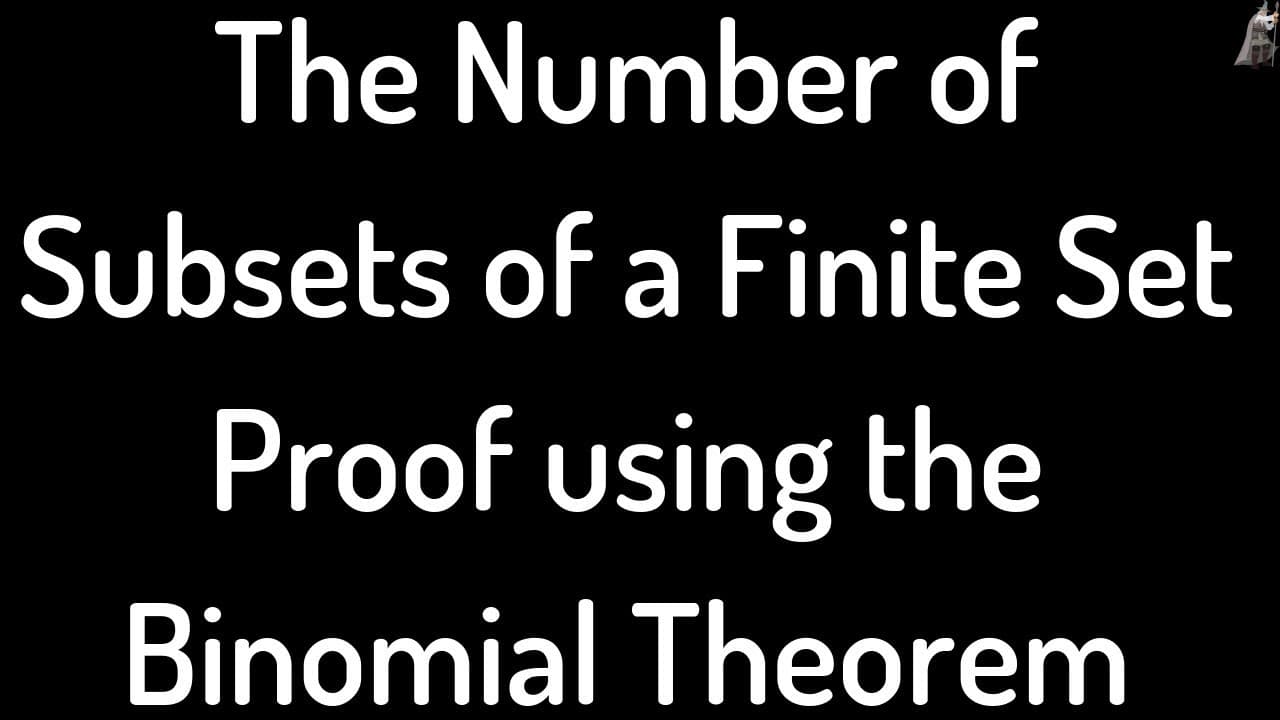
The Number of Subsets of a Finite Set Binomial Theorem Proof
17.4K views
•
October 26, 2014
by
The Math Sorcerer
YouTube video player
The Number of Subsets of a Finite Set Binomial Theorem Proof

TL;DR

Using the binomial theorem, the proof shows a set with n elements has exactly 2 to the N subsets.

Transcript

every set with n elements has exactly 2 to the N subsets there are several ways to prove this so this is just one way so proof so let s be a set with n elements and we're going to show that s has 2 to the N subsets exactly two to the n subsets so the way we'll do it and this proof is to use the binomial theorem so recall if you take X plus y to the... Read More

Key Insights

  • 😑 The binomial theorem is a fundamental tool used in mathematics to expand algebraic expressions.
  • 😫 Understanding n choose K is essential in determining the number of subsets of a set.
  • ❓ The relationship between subset sizes and total subsets can be elegantly demonstrated through the binomial theorem.
  • ❓ The proof showcases a profound connection between algebraic concepts and combinatorial principles.
  • 😫 Counting subsets in a set illustrates a deeper understanding of mathematical structures.
  • 😌 The proof's elegance lies in its ability to connect seemingly disparate concepts into a coherent mathematical argument.
  • 😫 By breaking down subset counts by size, the proof offers a unique perspective on set theory.

Install to Summarize YouTube Videos and Get Transcripts

Explore YouTube Video Summarizer or Get YouTube Transcript Extractor

Questions & Answers

Q: How is the binomial theorem utilized in proving the number of subsets in a set?

The proof leverages the binomial theorem by breaking down 2 to the N as the sum of binomial coefficients, showcasing the relationship between subsets and the binomial theorem's expansion.

Q: What is the significance of n choose K in the proof?

The value of n choose K represents the number of K-element subsets in a set of size n, crucial in determining the total number of subsets in the proof.

Q: How does the proof demonstrate the relationship between subset sizes and the total number of subsets?

By summing the counts of subsets of different sizes from 0 to n, the proof illustrates how this total count corresponds to the 2 to the N subsets of a set with n elements.

Q: Why is understanding the binomial theorem essential in comprehending the proof?

The binomial theorem provides a powerful tool to express complex algebraic relationships, allowing for a concise and elegant proof of fundamental concepts in mathematics like subset counting.

Summary & Key Takeaways

  • Every set with n elements has precisely 2 to the N subsets.

  • Utilizing the binomial theorem, the proof involves understanding n choose K.

  • By summing the counts of subsets of different sizes, the total equals 2 to the N.


Read in Other Languages (beta)

English

Share This Summary 📚

Summarize YouTube Videos and Get Video Transcripts with 1-Click

Download browser extensions on:

Try YouTube Summary with ChatGPT & Claude or YouTube Transcript Generator

Explore More Summaries from The Math Sorcerer 📚
How to Show a Function is Not a Linear Transformation thumbnail
How to Show a Function is Not a Linear Transformation
The Math Sorcerer
Proving two Spans of Vectors are Equal Linear Algebra Proof thumbnail
Proving two Spans of Vectors are Equal Linear Algebra Proof
The Math Sorcerer
Learn How to Express Sums in Summation Notation thumbnail
Learn How to Express Sums in Summation Notation
The Math Sorcerer
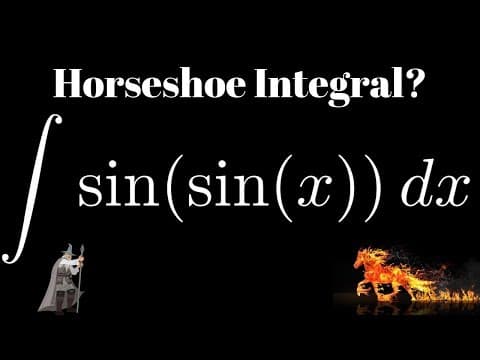
Integral sin(sin(x)) ****Horseshoe Integral*** thumbnail
Integral sin(sin(x)) ****Horseshoe Integral***
The Math Sorcerer
Prove that Every Integer is Even or Odd thumbnail
Prove that Every Integer is Even or Odd
The Math Sorcerer
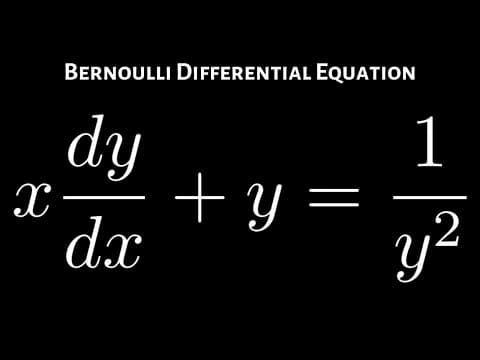
How to Solve a Bernoulli Differential Equation Step-by-Step thumbnail
How to Solve a Bernoulli Differential Equation Step-by-Step
The Math Sorcerer

Summarize YouTube Videos and Get Video Transcripts with 1-Click

Download browser extensions on:

Try YouTube Summary with ChatGPT & Claude or YouTube Transcript Generator

Apps & Extensions

  • Chrome Extension
  • Safari Extension
  • Edge Add-ons
  • Firefox Add-ons
  • iOS App
  • Android App

Key Features

  • YouTube Video Summarizer
  • Web & PDF Summarizer
  • Web & PDF Highlighter
  • Chat with PDF
  • Ask AI Clone
  • Audio Transcriber
  • Glasp Reader
  • Kindle Highlight Export
  • Idea Hatch

Integrations

  • Obsidian Plugin
  • Notion Integration
  • Pocket Integration
  • Instapaper Integration
  • Medium Integration
  • Readwise Integration
  • Snipd Integration
  • Hypothesis Integration

More Features

  • APIs
  • MCP Connector
  • Blog & Post
  • Embed Links
  • Image Highlight
  • Personality Test
  • Quote Shots

Company

  • About us
  • Blog
  • Community
  • FAQs
  • Job Board
  • Newsletter
  • Pricing
Terms

•

Privacy

•

Guidelines

© 2026 Glasp Inc. All rights reserved.