The LED's Challenge to High Pressure Sodium
TL;DR
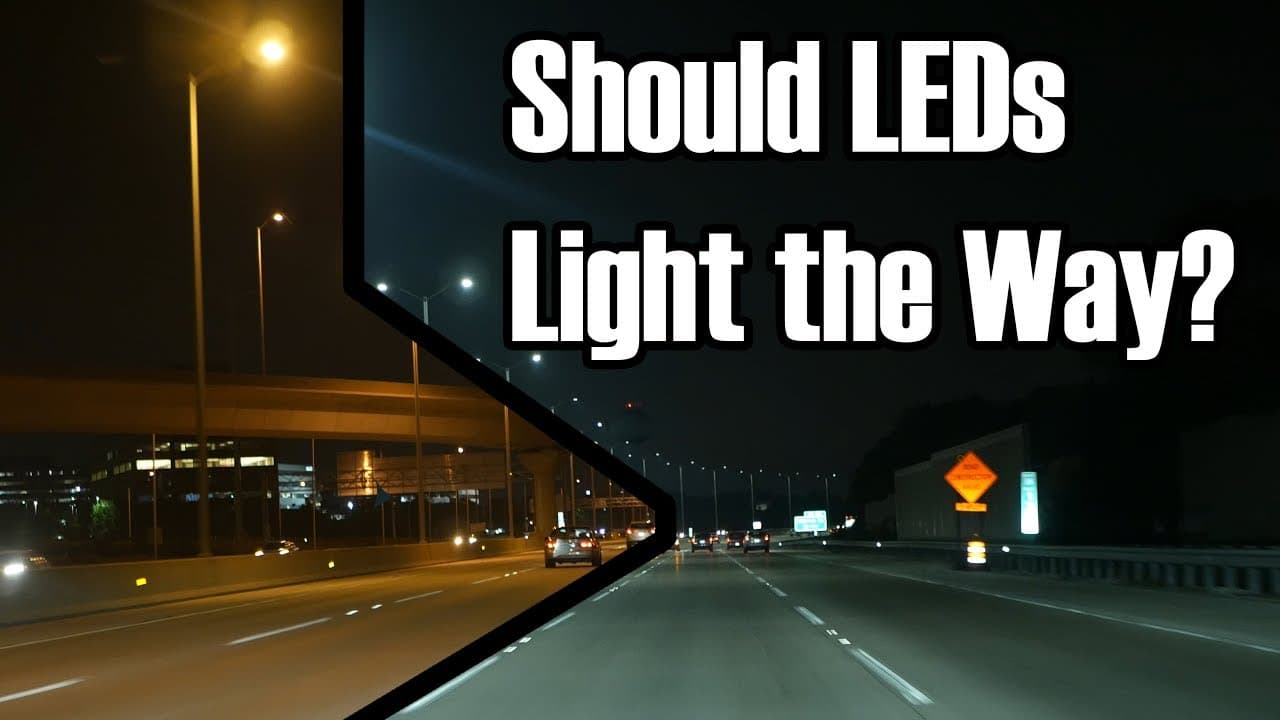
High pressure sodium lamps may have a proven track record and efficiency, but their output doesn't align with our scotopic (nighttime) vision. LED lighting, although more efficient and safer for nighttime driving, may contribute to circadian rhythm disruption and light pollution.
Transcript
In my last video, we talked about the high pressure sodium lamp and its ubiquitous use in outdoor lighting. Already this type of lighting is starting to be phased out with various technologies, with new LED technology among the most common. Now, given the robust nature of the sodium lamp and its proven track record in providing an efficient light s... Read More
Key Insights
- ✋ High pressure sodium lamps have a proven track record and efficiency but don't align with scotopic (nighttime) vision.
- 🥺 LED lighting is more efficient and safer for nighttime driving, as it aligns with our scotopic vision and improves visibility.
- 🙂 LED lighting may contribute to circadian rhythm disruption and light pollution, but advancements in optics and light control systems can help mitigate these issues.
- 👫 Choosing the color temperature of LED lighting can affect its efficacy, energy consumption, and aesthetics.
- 🥺 LED technology is rapidly evolving and provides opportunities for customizable outdoor lighting solutions.
- 🙂 Light pollution caused by outdoor lighting is a growing concern, and LEDs offer the potential to reduce it with improved light control.
- 🥺 There are trade-offs to consider when choosing between high pressure sodium lamps and LED lighting, such as energy efficiency, safety, aesthetics, and impact on circadian rhythm. LED technology is likely to surpass high pressure sodium lamps in the future.
Install to Summarize YouTube Videos and Get Transcripts
Explore YouTube Video Summarizer or Get YouTube Transcript Extractor
Questions & Answers
Q: Why do we use outdoor lighting, particularly street lighting?
Outdoor lighting, especially street lighting, is used to improve safety, specifically pedestrian safety. It provides better visibility for drivers, allowing them to see farther and perceive potential hazards.
Q: Why aren't high pressure sodium lamps effective for improving safety at night?
Our nighttime vision, known as scotopic vision, is more sensitive to bluish light. High pressure sodium lamps emit light in a color spectrum that doesn't align with our scotopic vision, making it less effective for enhancing visibility at night.
Q: What are the advantages of LED lighting for outdoor applications?
LED lighting offers increased nighttime visibility and safety due to its alignment with our scotopic vision. It also has the potential to reduce energy consumption and improve light distribution through customizable optic systems.
Q: What are the concerns with LED lighting for outdoor applications?
LED lighting may contribute to circadian rhythm disruption, as the blue light it emits can suppress melatonin production. It can also contribute to light pollution, although advancements in optics and light control systems can help mitigate this issue.
Summary & Key Takeaways
-
High pressure sodium lamps are commonly used for outdoor lighting, but their spectral output doesn't align with our scotopic (nighttime) vision, making them less effective for improving safety.
-
LED lighting, although more efficient and safer for nighttime driving, may contribute to circadian rhythm disruption and light pollution.
-
LED technology is evolving rapidly and offers customizable options for better light distribution and reduced energy consumption.
Read in Other Languages (beta)
Share This Summary 📚
Summarize YouTube Videos and Get Video Transcripts with 1-Click
Try YouTube Summary with ChatGPT & Claude or YouTube Transcript Generator
Explore More Summaries from Technology Connections 📚



Summarize YouTube Videos and Get Video Transcripts with 1-Click
Try YouTube Summary with ChatGPT & Claude or YouTube Transcript Generator