Should We Be Worried About The BRICS?
TL;DR
BRICS alliance could shift global economic and political dynamics.
Transcript
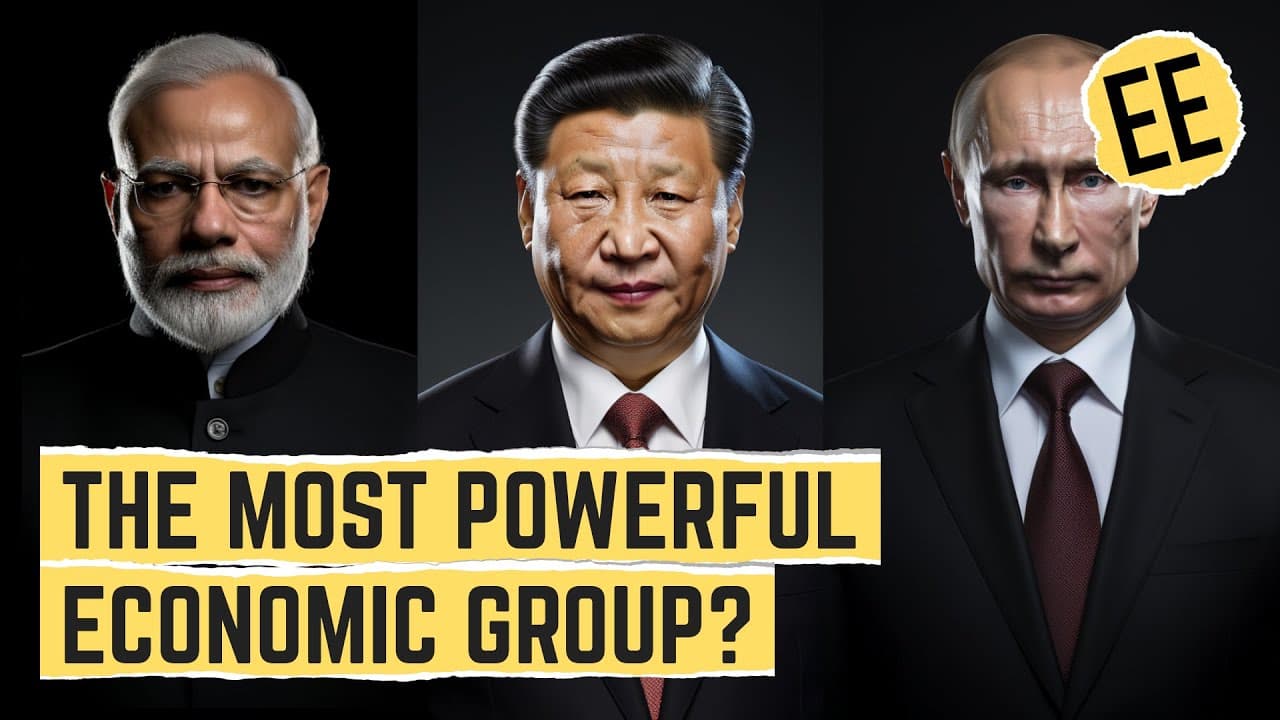
Brazil Russia India China and South Africa form the intergovernmental organization known as brics which is one of the most powerful economic groups in the world and one that a lot of people have never even heard of while not the most flattering name the brics controlled 26.7 of the world's surface area 41.5 of the global population and around a qua... Read More
Key Insights
- BRICS, consisting of Brazil, Russia, India, China, and South Africa, controls a significant portion of the world's economy and population, making it a powerful economic group.
- The group plans to intensify trade among members and possibly introduce a common currency, potentially challenging Western economic dominance.
- BRICS members face political challenges, including Russia's war and China's ambitions concerning Taiwan, which could impact global stability.
- Despite its potential, BRICS is not as unified as other organizations like the EU, as its members often have conflicting interests and tensions.
- The BRICS bank aims to provide investment opportunities similar to the IMF, but with more limited membership and a focus on developing economies.
- The group's initiatives, such as undersea cables and the BRICS Games, reflect a desire for independence from Western influence and infrastructure.
- While BRICS has the potential to reshape global trade, its effectiveness is hindered by internal conflicts and the dominance of China within the group.
- The rise of BRICS reflects a broader trend of countries seeking economic self-sufficiency, which could slow global economic growth.
Install to Summarize YouTube Videos and Get Transcripts
Explore YouTube Video Summarizer or Get YouTube Transcript Extractor
Questions & Answers
Q: What is the primary goal of the BRICS alliance?
The primary goal of the BRICS alliance is to increase economic cooperation among its member countries, which include Brazil, Russia, India, China, and South Africa. This cooperation aims to enhance trade, develop a common currency, and reduce dependence on Western economic systems. By doing so, BRICS seeks to strengthen its economic influence globally and provide an alternative to existing Western-dominated financial institutions.
Q: How does BRICS plan to challenge Western economic dominance?
BRICS plans to challenge Western economic dominance by intensifying trade among its members and potentially introducing a common currency. This move could reduce reliance on the US dollar and Western financial systems, thereby shifting economic power. Additionally, initiatives like the BRICS bank and undersea cables aim to create independent financial and communication infrastructures, further distancing the group from Western influence.
Q: What are the political challenges faced by BRICS members?
BRICS members face significant political challenges, including Russia's ongoing conflict with Ukraine and China's territorial ambitions regarding Taiwan. These issues have strained relations with Western countries and within the group itself. Additionally, internal tensions among members, such as the border disputes between China and India, further complicate the alliance's ability to function cohesively and effectively.
Q: Why is the effectiveness of BRICS limited despite its potential?
The effectiveness of BRICS is limited due to internal conflicts and the dominance of China within the group. While the alliance has significant economic potential, conflicting interests among members, such as geopolitical tensions and varying economic goals, hinder its ability to act as a unified force. Furthermore, China's economic dominance overshadows other members, making it challenging for the group to present a balanced and cohesive front.
Q: What is the purpose of the BRICS bank?
The BRICS bank, officially known as the New Development Bank, aims to provide financial support for development projects in member countries and other developing economies. It serves as an alternative to the International Monetary Fund (IMF) and World Bank, focusing on infrastructure and sustainable development. The bank seeks to enhance economic growth in its member countries and reduce their reliance on Western financial institutions.
Q: How does the BRICS alliance impact global trade?
The BRICS alliance has the potential to significantly impact global trade by creating a large economic bloc that can negotiate trade agreements and foster economic cooperation independently of Western influence. However, internal conflicts and the lack of a cohesive strategy limit its ability to fully capitalize on this potential. Despite these challenges, the alliance's initiatives to increase trade among members and develop alternative financial systems could reshape global trade dynamics.
Q: What are the potential risks of BRICS forming a trading bloc?
The formation of a BRICS trading bloc poses potential risks such as increased geopolitical tensions and a shift in global economic power. By creating an independent economic entity, BRICS could reduce the influence of Western countries and challenge existing trade systems. This shift may lead to economic isolation for non-member countries and contribute to a more fragmented global economy, potentially slowing down global economic growth and cooperation.
Q: Why is the trend towards economic self-sufficiency concerning?
The trend towards economic self-sufficiency is concerning because it may lead to a more fragmented global economy, reducing the benefits of international trade and cooperation. As countries focus on self-reliance and forming exclusive economic blocs like BRICS, global trade could become less efficient, slowing down economic growth. This shift away from globalization may also increase geopolitical tensions and reduce the opportunities for collaboration and innovation across borders.
Summary & Key Takeaways
-
BRICS is an economic alliance of Brazil, Russia, India, China, and South Africa, representing a significant portion of the global economy and population. The group aims to increase internal trade and possibly introduce a common currency, challenging Western economic influence.
-
The BRICS countries face political challenges and internal tensions, with members like Russia and China involved in controversial geopolitical actions. Despite its potential, the group's effectiveness is limited by these conflicts and the dominance of China.
-
BRICS initiatives, including a new development bank and undersea cables, reflect a desire for independence from Western economic systems. However, the group's internal conflicts and reliance on China hinder its ability to significantly impact global trade.
Read in Other Languages (beta)
Share This Summary 📚
Summarize YouTube Videos and Get Video Transcripts with 1-Click
Try YouTube Summary with ChatGPT & Claude or YouTube Transcript Generator
Explore More Summaries from Economics Explained 📚


Summarize YouTube Videos and Get Video Transcripts with 1-Click
Try YouTube Summary with ChatGPT & Claude or YouTube Transcript Generator