Music’s power over your brain, explained | Michael Spitzer
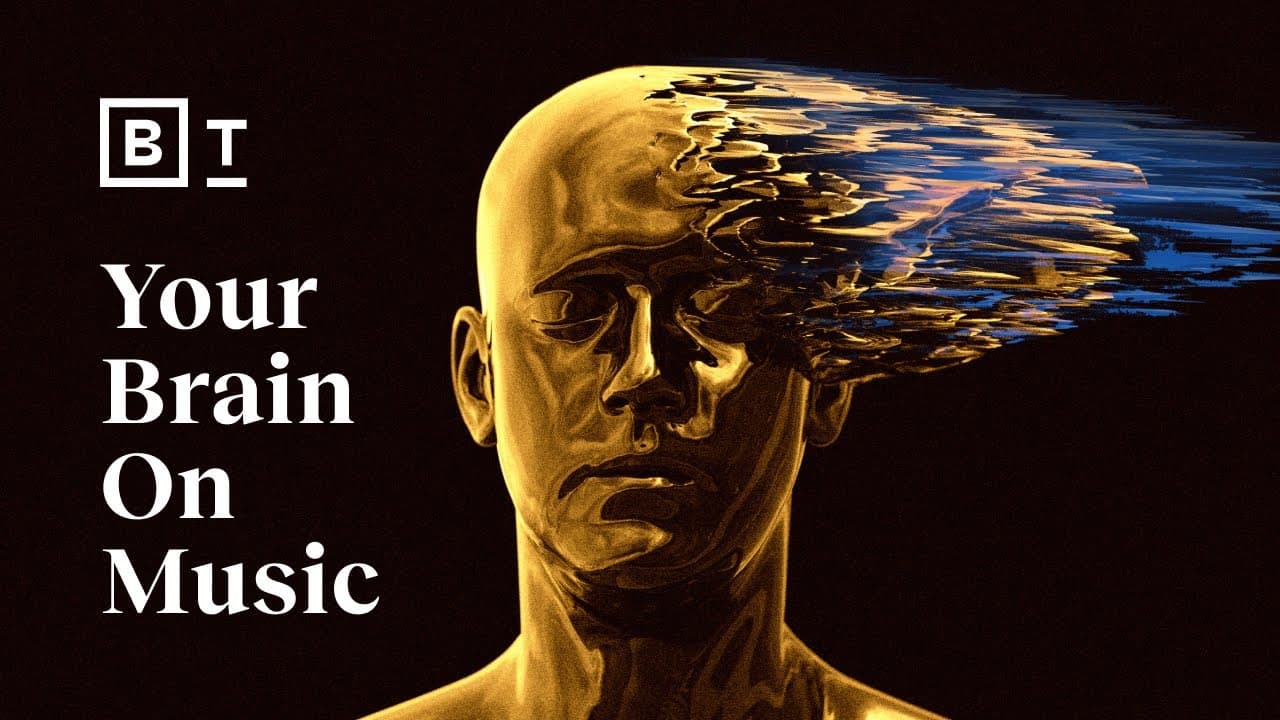
TL;DR
Human music is deeply linked to our evolution, emotions, and brain structure, impacting mental health and social connections.
Transcript
- 4.4 million years ago, an Australopithecine called "Ardi" stood on her legs and walked. And ever since then, the rhythm of walking has stamped human music, but much more than that, pun intended, that the first steps put us on the path to forging links between the brain and muscular exertion and sound. Hominids learned to hear footsteps as a patte... Read More
Key Insights
- 🚶 The rhythm of walking from our ancestors influences the rhythmic patterns found in human music.
- 🧠 The brain's connections between motor regions and auditory processing shape our unique relationship with music.
- 😑 Music serves as a powerful tool for mental health, stress reduction, social bonding, and emotional expression.
- 🧠 Emotional responses to music are deeply rooted in our brain's evolutionary survival mechanisms.
- 👻 Music provides a form of mental time travel, allowing listeners to tap into deep layers of biological connections.
- 🖐️ Mirror neurons in the brain play a role in our innate ability to imitate rhythm and empathize with emotional content in music.
- 🥺 The chills induced by music trigger similar brain responses as fear, leading to a mix of enjoyment and emotional intensity.
Install to Summarize YouTube Videos and Get Transcripts
Explore YouTube Video Summarizer or Get YouTube Transcript Extractor
Questions & Answers
Q: How does the rhythm of walking influence human music?
The rhythm of walking, dating back to our ancestors, has become a foundational element in human music, shaping patterns and our sense of time in musical compositions.
Q: What role does the brain play in our appreciation of music?
The human brain's intricate connections between motor control, auditory processing, emotion, and pleasure centers contribute to our deep affinity for music and emotional responses to it.
Q: How does music impact mental health and social connections?
Music has the power to reduce stress, increase pleasure, foster social connections, and serve as a mode of expression for deep emotions, ultimately enhancing mental well-being and social networks.
Q: Why do certain moments in music evoke intense emotional responses?
Breakthrough moments in music, akin to fear-inducing situations, trigger profound emotional reactions in the brain, leading to physical responses like goosebumps, providing a unique and safe way to experience intense emotions.
Summary & Key Takeaways
-
Human music is rooted in the rhythmic patterns of walking, tracing back to our ancestors walking out of Africa.
-
Our brain's connection between motor control and auditory processing shapes our unique relationship with music.
-
Music plays a vital role in mental health, social bonding, memory, and emotional expression.
Read in Other Languages (beta)
Share This Summary 📚
Summarize YouTube Videos and Get Video Transcripts with 1-Click
Try YouTube Summary with ChatGPT & Claude or YouTube Transcript Generator
Explore More Summaries from Big Think 📚




Summarize YouTube Videos and Get Video Transcripts with 1-Click
Try YouTube Summary with ChatGPT & Claude or YouTube Transcript Generator