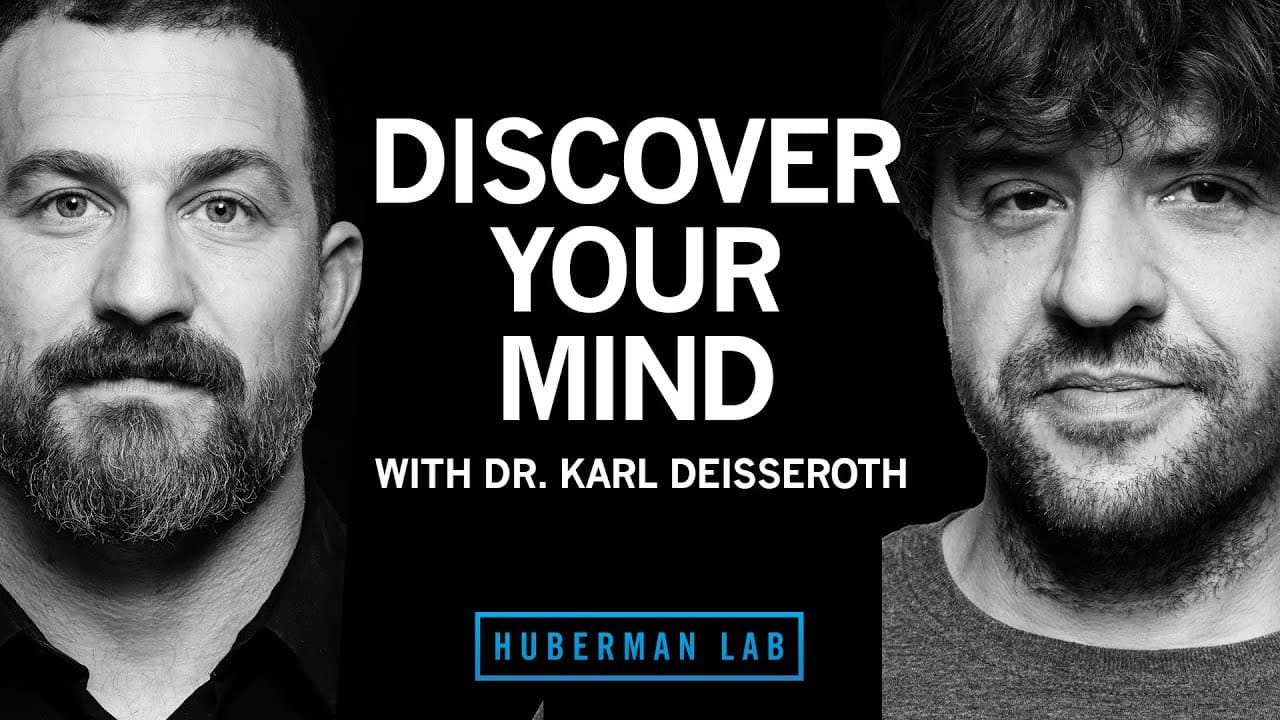
Dr. Karl Deisseroth: Understanding & Healing the Mind
TL;DR
Channelopsins and optogenetics are groundbreaking technologies that can control the activity of neurons in the brain and body with the use of light, providing a new approach for the treatment of psychiatric illnesses and nervous system disorders.
Transcript
[gentle upbeat music]
- [Andrew] Welcome to the Huberman Lab Podcast, where we discuss science, and science-based tools for everyday life. I'm Andrew Huberman, and I'm a professor of neurobiology and ophthalmology at Stanford School of Medicine. Today, I have the pleasure of introducing the first guest of the Huberman Lab Podcast. My guest is Dr. K... Read More
Key Insights
- 🙂 Channelopsins and optogenetics offer a revolutionary approach to controlling neuronal activity in the brain and body using light.
- 😟 Optogenetics has shown promise in animal models and in early human trials for the treatment of psychiatric illnesses and nervous system disorders.
- 🤗 The technology allows for precise manipulation of specific neural circuits, opening up new possibilities for understanding the brain and developing targeted therapeutic interventions.
- 🙂 Challenges remain in achieving specificity, delivering genes and light to targeted areas, and ensuring long-term safety and effectiveness.
Install to Summarize YouTube Videos and Get Transcripts
Explore YouTube Video Summarizer or Get YouTube Transcript Extractor
Questions & Answers
Q: How do channelopsins work in controlling neuronal activity?
Channelopsins are proteins that, when exposed to light, open small pores in the cell membrane, allowing charged particles to flow in and out of neurons. This manipulation of ion flow can either stimulate or inhibit neuronal activity, depending on the type of channelopsin used.
Q: What are the potential applications of optogenetics in the clinic?
Optogenetics has the potential to treat various psychiatric illnesses, such as depression, schizophrenia, and anxiety disorders, by selectively activating or inhibiting specific neuronal circuits involved in these conditions. It could also be used to explore and understand the neural basis of other disorders and to develop new therapeutic interventions.
Q: What are the challenges involved in bringing optogenetics to the clinic?
One of the challenges is achieving specificity in targeting only the desired cells or circuits, while avoiding any off-target effects or damage to healthy tissue. Another challenge is finding safe and efficient methods to deliver the necessary genes and light to the targeted area. Both of these areas are actively being researched and refined.
Q: Can optogenetics be used to replace current treatments for psychiatric illnesses?
Optogenetics is still in the early stages of development and more research is needed to fully understand its potential. While it holds promise as a more precise and tailored therapeutic approach, it is unlikely to completely replace current treatments. It may, however, complement and enhance existing therapies, providing new avenues for personalized medicine in psychiatry.
Summary & Key Takeaways
-
Channelopsins are proteins that come from algae and can be introduced into the nervous systems of animals and humans to precisely control the activity of neurons with light.
-
This transformative technology has the potential to revolutionize the treatment of psychiatric illnesses and various disorders of the nervous system by offering a more precise and targeted approach compared to traditional drug treatments.
-
Optogenetics, which utilizes channelopsins, has been successfully applied in animal models and in human patients, with promising results in relieving symptoms of depression and other conditions.
Read in Other Languages (beta)
Share This Summary 📚
Summarize YouTube Videos and Get Video Transcripts with 1-Click
Try YouTube Summary with ChatGPT & Claude or YouTube Transcript Generator
Explore More Summaries from Andrew Huberman 📚
Summarize YouTube Videos and Get Video Transcripts with 1-Click
Try YouTube Summary with ChatGPT & Claude or YouTube Transcript Generator