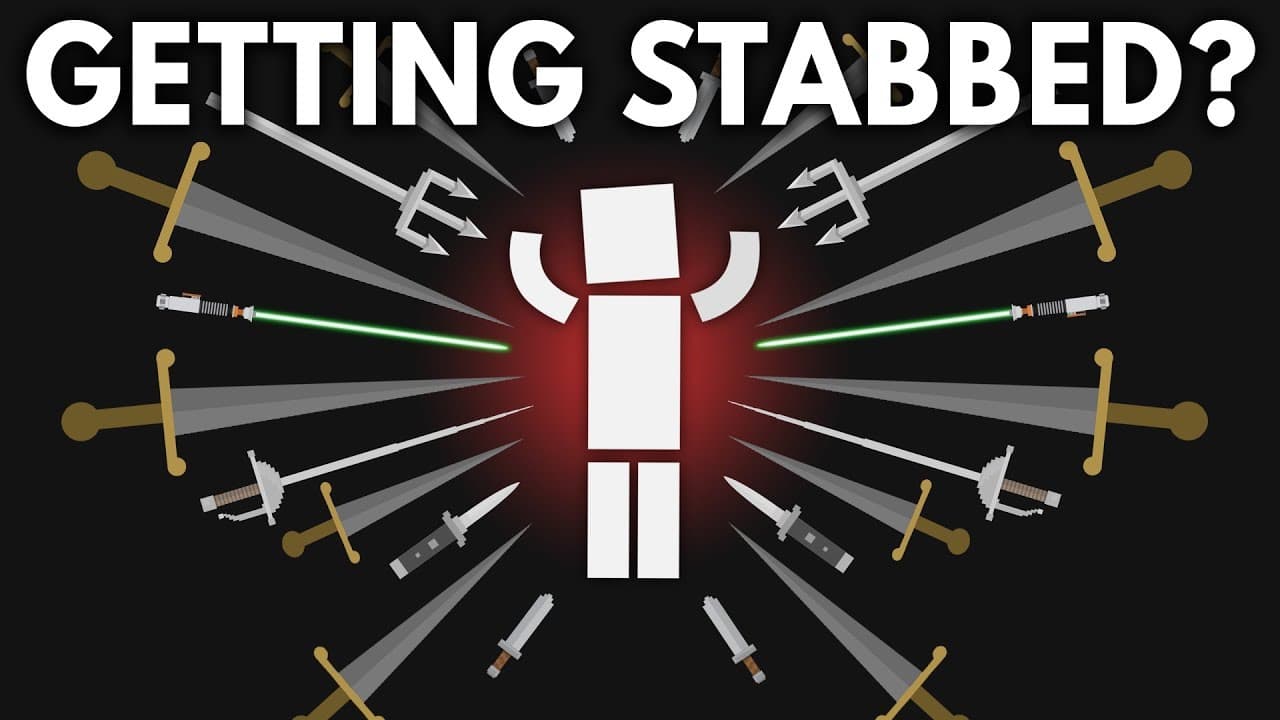
What Happens To Your Body If You Get Stabbed?
TL;DR
Stabbing can lead to hypovolemic shock, organ damage, and potential death based on blood loss and wound location.
Transcript
What happens when you get stabbed? Hey there! Welcome to Life Noggin. Oh! Two subscribe buttons! Three subscribe buttons! Ok, huh… That’s a lot! That’s a lot! In the United States, knives make up 10 percent of homicide weapons, while in Europe, they account for 43 percent. In fact, in the UK, crimes involving knives have been on the rise over the l... Read More
Key Insights
- 😮 Stabbing incidents are on the rise in the UK and Europe, with different rates of occurrence and outcomes compared to the US.
- 🫢 Stabbing injuries, mainly penetrating trauma, commonly target vital organs, leading to severe consequences like hypovolemic shock.
- 😷 Timely medical treatment, including surgery if necessary, is crucial for stab wound patients to prevent complications like infection.
- 😨 Proper wound care post-treatment and follow-up appointments are essential for stab wound healing and recovery.
- 🫢 A significant percentage of stabbing cases result in hypovolemic shock and potential fatality without prompt medical intervention.
- 👨🔬 Research and developments in healthcare aim to improve algorithms for optimal treatment of abdominal stab wounds.
- ❓ Stab wounds are more common than gunshot wounds in the US but are generally less fatal due to different injury mechanisms.
Install to Summarize YouTube Videos and Get Transcripts
Explore YouTube Video Summarizer or Get YouTube Transcript Extractor
Questions & Answers
Q: What are the potential symptoms of hypovolemic shock from a stab wound?
Symptoms can include pale, cold, clammy skin, rapid heart rate, dizziness, confusion, thirst, and nausea.
Q: How quickly can a person lose a fatal amount of blood from a stab wound?
In just 3 or 4 minutes, losing 40 percent of blood volume is considered fatal from a major artery or vein injury.
Q: What are the most common areas for stab wounds and their risks?
Stab wounds often occur in the head, chest, and abdomen, risking vital organ damage and potential hypovolemic shock.
Q: What is the initial treatment for stab wounds before reaching the hospital?
Applying pressure to the wound can help stop or lessen blood loss until medical professionals can assess the severity.
Summary & Key Takeaways
-
Stab wounds can lead to hypovolemic shock, which can cause symptoms like pale skin, rapid heart rate, dizziness, and confusion.
-
Losing a significant amount of blood quickly, especially from a major artery or vein, can be fatal.
-
Treatment for stab wounds involves applying pressure, surgery if necessary, and proper wound care for healing.
Read in Other Languages (beta)
Share This Summary 📚
Summarize YouTube Videos and Get Video Transcripts with 1-Click
Try YouTube Summary with ChatGPT & Claude or YouTube Transcript Generator
Explore More Summaries from Life Noggin 📚



Summarize YouTube Videos and Get Video Transcripts with 1-Click
Try YouTube Summary with ChatGPT & Claude or YouTube Transcript Generator