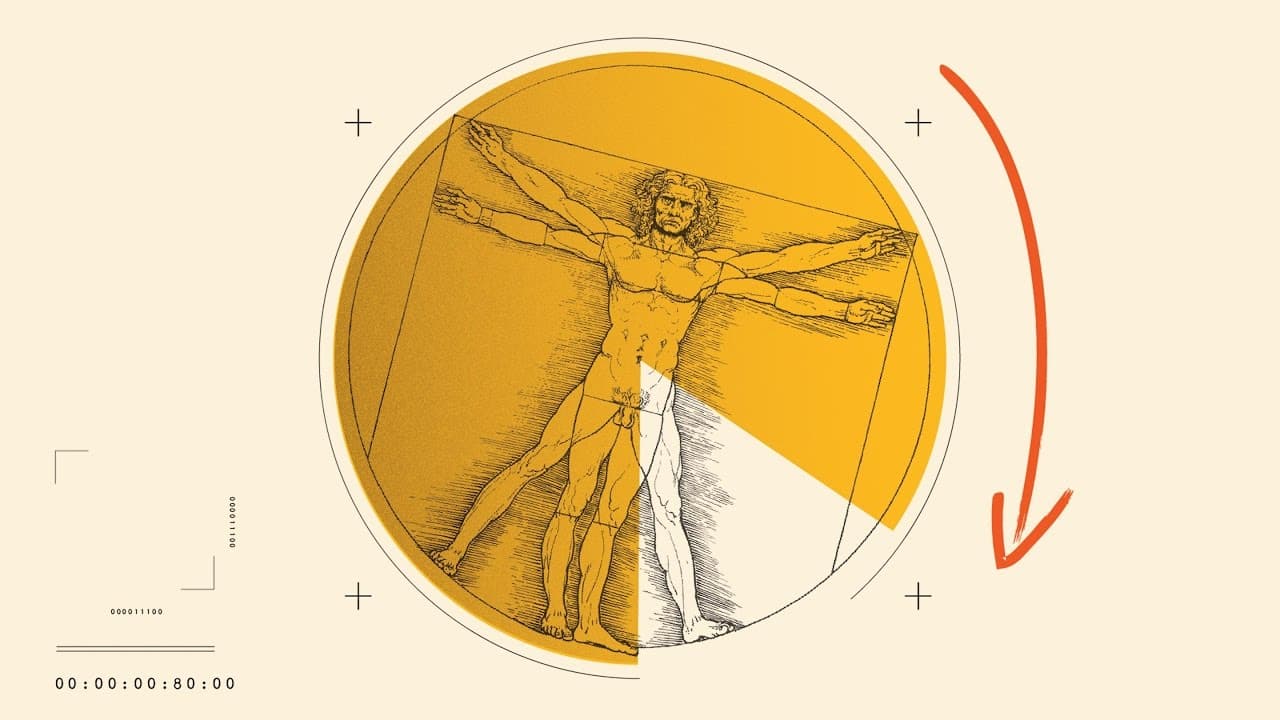
What will humans look like in 100 years? | Juan Enriquez
TL;DR
The speaker addresses the ethical dilemma of evolving the human body in the context of prosthetics and explores the potential of genetic modification and advanced technologies to shape the future of humanity.
Transcript
Here's a question that matters. [Is it ethical to evolve the human body?] Because we're beginning to get all the tools together to evolve ourselves. And we can evolve bacteria and we can evolve plants and we can evolve animals, and we're now reaching a point where we really have to ask, is it really ethical and do we want to evolve human beings? An... Read More
Key Insights
- 🧬 The ethical implications of evolving the human body are becoming increasingly relevant as advancements in prosthetics and genetic engineering continue to progress.
- 🦾 Prosthetics have evolved from simple external devices to advanced technologies integrated into the body, such as artificial knees and pacemakers, which are essential for survival.
- 🌡️ Scientists are working on extreme bionics that integrate prosthetics into bones, muscles, and skin, and are even exploring ways to connect prosthetics directly to the brain.
- 🔬 Gene editing and reprogramming cells offer the potential for enhancing human genetics, making organs more resilient, efficient, and adaptable to different environments.
- 🚀 Diversifying the human species through genetic enhancements is a moral imperative, as periodic extinctions are natural and may require humans to modify their bodies to survive in different environments, such as Mars.
- 🌌 Life One civilization focuses on altering physical appearance, while Life Two civilization alters fundamental body functions, indicating the need for a Life Three civilization to transform humans for interplanetary exploration.
- 🧫 Scientists are discovering alternate chemistries and creating organisms with different building blocks, suggesting the possibility of life and heredity on other planets.
- 🔀 Experiments involving mouse head transplants raise questions about memory, consciousness, and the potential to transplant these aspects, allowing for the transfer of consciousness into radically different bodies capable of surviving in space for extended periods of time.
Install to Summarize YouTube Videos and Get Transcripts
Explore YouTube Video Summarizer or Get YouTube Transcript Extractor
Questions & Answers
Q: Is it ethical to evolve the human body?
The speaker argues that it is important to consider the ethics of evolving the human body. With advancements in technology, we are now at a point where we can evolve ourselves. However, it is crucial to question the ethical implications and whether we truly want to alter human beings.
Q: How have prosthetics evolved over time?
Prosthetics have experienced significant advancements over time. From ancient iron hands to modern prosthetics with advanced controls, these devices have become more useful and integrated into the human body. They have evolved from external attachments to becoming essential and symbiotic with the human body.
Q: How can prosthetics enhance human capabilities?
Prosthetics have the potential to enhance human capabilities. Examples like Hugh Herr's extraordinary prosthetics showcase how they can enable activities such as climbing, running marathons, or even ballroom dancing. Moreover, as prosthetics become more integrated into the body, they can improve abilities such as reaction time by altering nerve diameter.
Q: Why would someone voluntarily want a prosthetic?
The introduction of innovative prosthetics, such as Phonak hearing aids, has made prosthetics desirable for individuals who are not traditionally considered "disabled." These devices provide enhanced hearing capabilities, focusing on specific sounds, superhearing, and even functioning as a phone. This demonstrates how prosthetics can offer additional benefits beyond compensating for disabilities.
Q: What are the potential ways to evolve the human body?
The speaker suggests various approaches to evolve the human body. These include reprogramming cells, modifying organs to be more radiation-resistant or oxygen-absorbing, changing gene expression through gene therapy, and even altering the human genome. By exploring these possibilities, humanity can adapt to survive in different environments and diversify our species beyond Earth.
Summary & Key Takeaways
-
The speaker raises the question of whether it is ethical to evolve the human body and suggests that now is the time to consider this question.
-
Prosthetics have become more advanced and integrated into the human body, becoming essential for some individuals.
-
The speaker discusses advancements in genetic engineering and how it could potentially lead to significant changes in human biology, which may be necessary for future space exploration and survival.
Read in Other Languages (beta)
Share This Summary 📚
Summarize YouTube Videos and Get Video Transcripts with 1-Click
Try YouTube Summary with ChatGPT & Claude or YouTube Transcript Generator
Explore More Summaries from TED 📚




Summarize YouTube Videos and Get Video Transcripts with 1-Click
Try YouTube Summary with ChatGPT & Claude or YouTube Transcript Generator