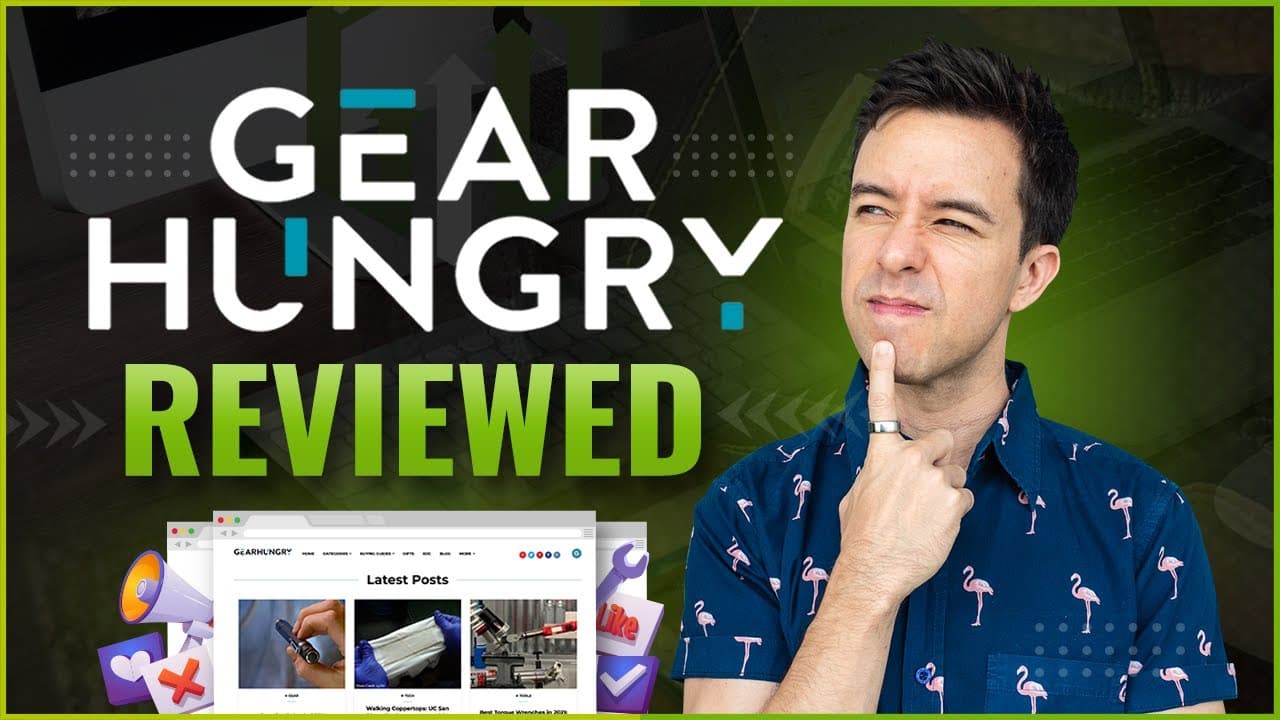
Matt Diggity Reviews Gear Hungry [Affiliate SEO Audit]
TL;DR
Gear Hungry's traffic plummeted due to Google's 2020 update.
Transcript
- In this video, I'm gonna be giving a very thorough review of the very popular affiliate SEO content website, Gear Hungry. (air whooshes) This site was once run by some acquaintances in the affiliate SEO community and in its heyday was making six figures per month, primarily focused on Amazon affiliate. Eventually it was flipped for low eight figu... Read More
Key Insights
- Gear Hungry was a successful affiliate site focusing on Amazon products, achieving high traffic and revenue before being hit by Google's update.
- The site's traffic decline began before December 2020, but the update caused a significant drop, suggesting a correlation with Google's algorithm changes.
- Gear Hungry has a wide range of content categories, potentially diluting its authority in specific niches, which may have impacted its rankings.
- The site has over 5,000 indexed pages, indicating a massive content production effort, but also challenges in maintaining quality and relevance.
- Technical SEO issues, such as missing meta descriptions and orphaned pages, were identified but are unlikely to be the primary cause of the traffic drop.
- The high percentage of monetized content with affiliate links might have contributed to its decline, as Google's update targeted such pages.
- Gear Hungry's internal linking practices showed some irrelevant connections, which could affect topical relevance and SEO performance.
- Despite the challenges, Gear Hungry has strong backlinks from reputable sites, indicating a solid link-building strategy.
Install to Summarize YouTube Videos and Get Transcripts
Explore YouTube Video Summarizer or Get YouTube Transcript Extractor
Questions & Answers
Q: What was the main reason for Gear Hungry's traffic decline?
The main reason for Gear Hungry's traffic decline appears to be the December 2020 Google core update. The site had a high percentage of monetized content, which the update targeted, leading to significant traffic loss. Additionally, its broad content categories may have diluted its authority in specific niches.
Q: How did Gear Hungry's content strategy contribute to its downfall?
Gear Hungry's content strategy involved a wide range of categories, potentially diluting its authority in specific niches. With over 5,000 indexed pages, maintaining quality and relevance across such diverse topics became challenging. The high percentage of monetized content also made it vulnerable to Google's algorithm changes targeting affiliate-heavy sites.
Q: What technical SEO issues were identified on Gear Hungry?
Technical SEO issues identified on Gear Hungry included missing meta descriptions on many pages, numerous orphaned pages without internal links, and links to broken pages. While these issues are not the primary cause of the traffic decline, they could hinder SEO performance and should be addressed for optimization.
Q: How strong is Gear Hungry's backlink profile?
Gear Hungry has a strong backlink profile with nearly 8,000 referring domains, including reputable sites like Kickstarter and LA Times. Despite having many links, the quality varies, and the high volume of links might include some lower-quality ones. Overall, the backlink strategy is solid and contributes positively to its SEO.
Q: What role did internal linking play in Gear Hungry's SEO issues?
Internal linking on Gear Hungry showed some irrelevant connections, potentially affecting topical relevance and SEO performance. For instance, links from unrelated pages to coffee-related content might confuse search engines about the page's relevance, impacting its authority and rankings in specific niches.
Q: What recommendations were made for Gear Hungry's recovery?
Recommendations for Gear Hungry's recovery include focusing on publishing informational content rather than monetized affiliate content, improving on-site SEO using tools like Surfer for optimization, and refining internal linking strategies to enhance topical relevance and authority in specific niches.
Q: How did Gear Hungry's monetized content affect its SEO?
Gear Hungry's high percentage of monetized content, with many pages containing affiliate links, made it susceptible to Google's December 2020 core update, which targeted such pages. This strategy contributed to its traffic decline, emphasizing the need for a balanced content approach with more informational content.
Q: What is the potential future for Gear Hungry's SEO strategy?
The potential future for Gear Hungry's SEO strategy involves adapting to Google's algorithm changes by reducing the proportion of monetized content and focusing on high-quality, informational content. Improving technical SEO and refining internal linking strategies are crucial steps to regain authority and improve rankings in targeted niches.
Summary & Key Takeaways
-
Gear Hungry was once a thriving affiliate site, generating significant revenue and traffic, primarily through Amazon affiliate links. However, it experienced a severe drop in traffic following Google's December 2020 core update, raising questions about its SEO strategy.
-
The site's broad content categories and high percentage of monetized pages may have contributed to its decline. Despite having strong backlinks, Gear Hungry's internal linking and technical SEO issues might have affected its performance.
-
Recommendations for recovery include focusing on publishing informational content, improving on-site SEO with tools like Surfer, and refining internal linking strategies to enhance topical relevance and authority in specific niches.
Read in Other Languages (beta)
Share This Summary 📚
Summarize YouTube Videos and Get Video Transcripts with 1-Click
Try YouTube Summary with ChatGPT & Claude or YouTube Transcript Generator
Explore More Summaries from Matt Diggity 📚



Summarize YouTube Videos and Get Video Transcripts with 1-Click
Try YouTube Summary with ChatGPT & Claude or YouTube Transcript Generator