Products
Features
YouTube Video Summarizer
Summarize YouTube videos
Web & PDF Highlighter
Highlight web pages & PDFs
Chat with PDF
Ask any PDF questions with AI
Ask AI Clone
Chat with your highlights & memories
Audio Transcriber
Transcribe audio files to text
Glasp Reader
Read and highlight articles
Kindle Highlight Export
Export your Kindle highlights
Idea Hatch
Hatch ideas from your highlights
Integrations
Obsidian Plugin
Notion Integration
Pocket Integration
Instapaper Integration
Medium Integration
Readwise Integration
Snipd Integration
Hypothesis Integration
Apps & Extensions
Chrome Extension
Safari Extension
Edge Add-ons
Firefox Add-ons
iOS App
Android App
Discover
Discover
Ideas
Discover new ideas and insights
Articles
Curated articles and insights
Books
Book recommendations by great minds
Posts
Essays and notes from readers
Quotes
Inspiring quotes collection
Videos
Curated videos and summaries
Explore Glasp
Glasp Newsletter
Weekly insights and updates
Glasp Talk
Interview series with great minds
Glasp Blog
Latest news and articles
Glasp Use Cases
Learn how others use Glasp
Build & Support
Glasp API
Access Glasp's API for developers
MCP Connector
Connect Glasp to Claude & ChatGPT
Community
Glasp Reddit Community
Students
Student discount and benefits
FAQs
Frequently Asked Questions
AboutPricing
DashboardLog inSign up

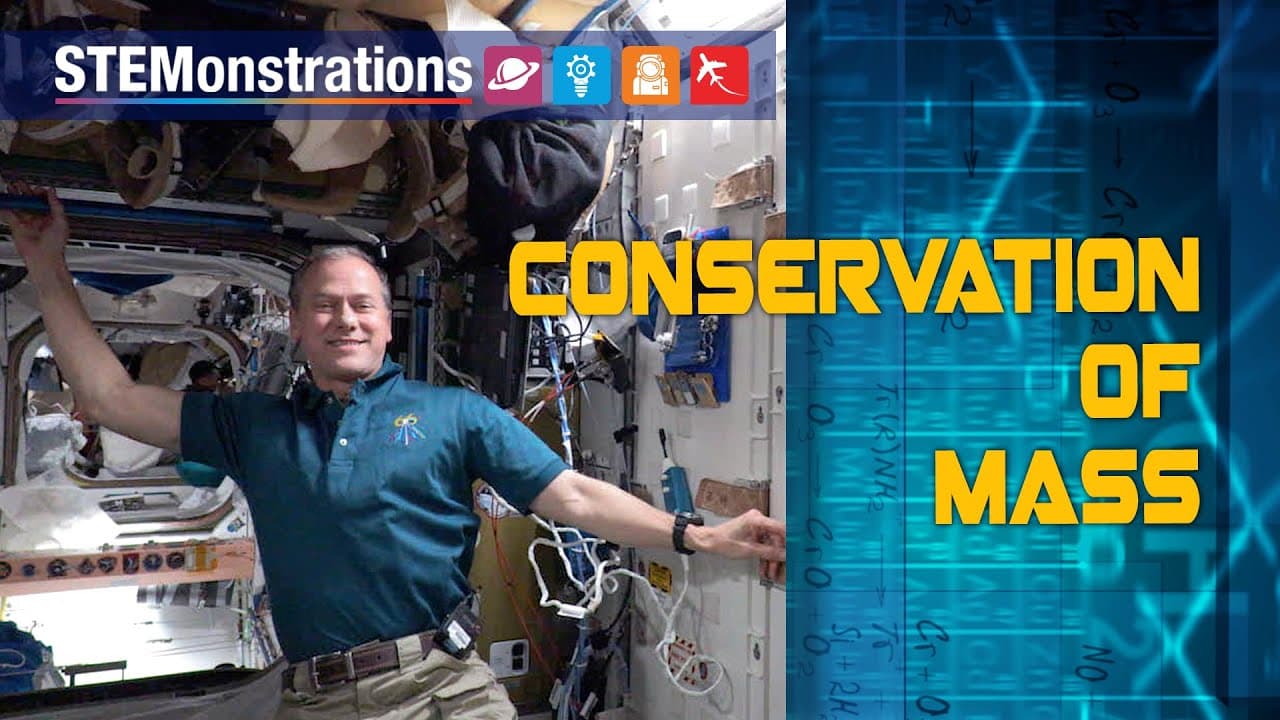
STEMonstrations: Conservation of Mass
3.1K views
•
April 12, 2023
by
NASA STEM
YouTube video player
STEMonstrations: Conservation of Mass

TL;DR

Astronauts on the ISS generate oxygen from recycled water through electrolysis, maintaining a regenerative life support system.

Transcript

[ music ] >> Hey there. I'm Tom Marshburn, an astronaut living and working aboard the International Space Station, the sole space-based proving ground and stepping stone for NASA's Artemis Program. Have you ever wondered how astronauts up here get fresh, breathable oxygen? The answer might surprise you. Come on, follow me, and let's check it out. T... Read More

Key Insights

  • 😘 Water on the ISS is recycled up to 93% to support daily operations.
  • 😒 The Oxygen Generator System uses electrolysis to produce breathable oxygen.
  • ❓ The Law of Conservation of Mass governs chemical reactions in oxygen generation.
  • 👾 Regenerative life support systems are crucial for sustained human presence in space.
  • ☠️ Efforts are ongoing to improve water recycling rates for future deep space missions.
  • 💦 Moisture from astronauts' bodies contributes to the water recovery process.
  • 🧑‍🚀 Oxygen produced through electrolysis supports the daily activities of astronauts on the ISS.

Install to Summarize YouTube Videos and Get Transcripts

Explore YouTube Video Summarizer or Get YouTube Transcript Extractor

Questions & Answers

Q: How do astronauts on the ISS generate fresh oxygen?

Astronauts recycle waste water through electrolysis, breaking down water into oxygen and hydrogen gas for breathing while in space.

Q: Why is the Law of Conservation of Mass important in oxygen generation in space?

The Law ensures that matter is not lost during chemical reactions, allowing astronauts to efficiently recycle water into breathable oxygen.

Q: What is the significance of regenerative life support systems for space missions?

Regenerative systems like the Water Recovery System are essential for sustainable life support, reducing the need to transport large amounts of water to space.

Q: How does the ISS ensure water and oxygen production for extended missions like those to Mars?

By aiming to achieve a 98% water recycling rate, astronauts on the ISS are developing technologies to sustain long-duration missions beyond Earth's orbit.

Summary & Key Takeaways

  • Astronauts on the ISS use a Water Recovery System to recycle waste water into oxygen through electrolysis.

  • Electrolysis breaks down water into hydrogen and oxygen gas, following the Law of Conservation of Mass.

  • The regenerative life support system is crucial for long-duration space missions like those of the Artemis Program.


Read in Other Languages (beta)

English

Share This Summary 📚

Summarize YouTube Videos and Get Video Transcripts with 1-Click

Download browser extensions on:

Try YouTube Summary with ChatGPT & Claude or YouTube Transcript Generator

Explore More Summaries from NASA STEM 📚
NASA Downlink: JPL/Caltech and Van Buren Elementary thumbnail
NASA Downlink: JPL/Caltech and Van Buren Elementary
NASA STEM
NASA STEM Stars: Deputy Director - Heliophysics Science Division thumbnail
NASA STEM Stars: Deputy Director - Heliophysics Science Division
NASA STEM
NASA STEM Stars: The Future of Flight With Advanced Air Mobility thumbnail
NASA STEM Stars: The Future of Flight With Advanced Air Mobility
NASA STEM
Compressor Development for Exoskeletal Turbine-Based Combined Cycle (TBCC) Engine thumbnail
Compressor Development for Exoskeletal Turbine-Based Combined Cycle (TBCC) Engine
NASA STEM
What Can You See? thumbnail
What Can You See?
NASA STEM
Data Jigsaw Student Activity: Exploring Sea Level Rise with Others thumbnail
Data Jigsaw Student Activity: Exploring Sea Level Rise with Others
NASA STEM

Summarize YouTube Videos and Get Video Transcripts with 1-Click

Download browser extensions on:

Try YouTube Summary with ChatGPT & Claude or YouTube Transcript Generator

Apps & Extensions

  • Chrome Extension
  • Safari Extension
  • Edge Add-ons
  • Firefox Add-ons
  • iOS App
  • Android App

Key Features

  • YouTube Video Summarizer
  • Web & PDF Summarizer
  • Web & PDF Highlighter
  • Chat with PDF
  • Ask AI Clone
  • Audio Transcriber
  • Glasp Reader
  • Kindle Highlight Export
  • Idea Hatch

Integrations

  • Obsidian Plugin
  • Notion Integration
  • Pocket Integration
  • Instapaper Integration
  • Medium Integration
  • Readwise Integration
  • Snipd Integration
  • Hypothesis Integration

More Features

  • APIs
  • MCP Connector
  • Blog & Post
  • Embed Links
  • Image Highlight
  • Personality Test
  • Quote Shots

Company

  • About us
  • Blog
  • Community
  • FAQs
  • Job Board
  • Newsletter
  • Pricing
Terms

•

Privacy

•

Guidelines

© 2026 Glasp Inc. All rights reserved.