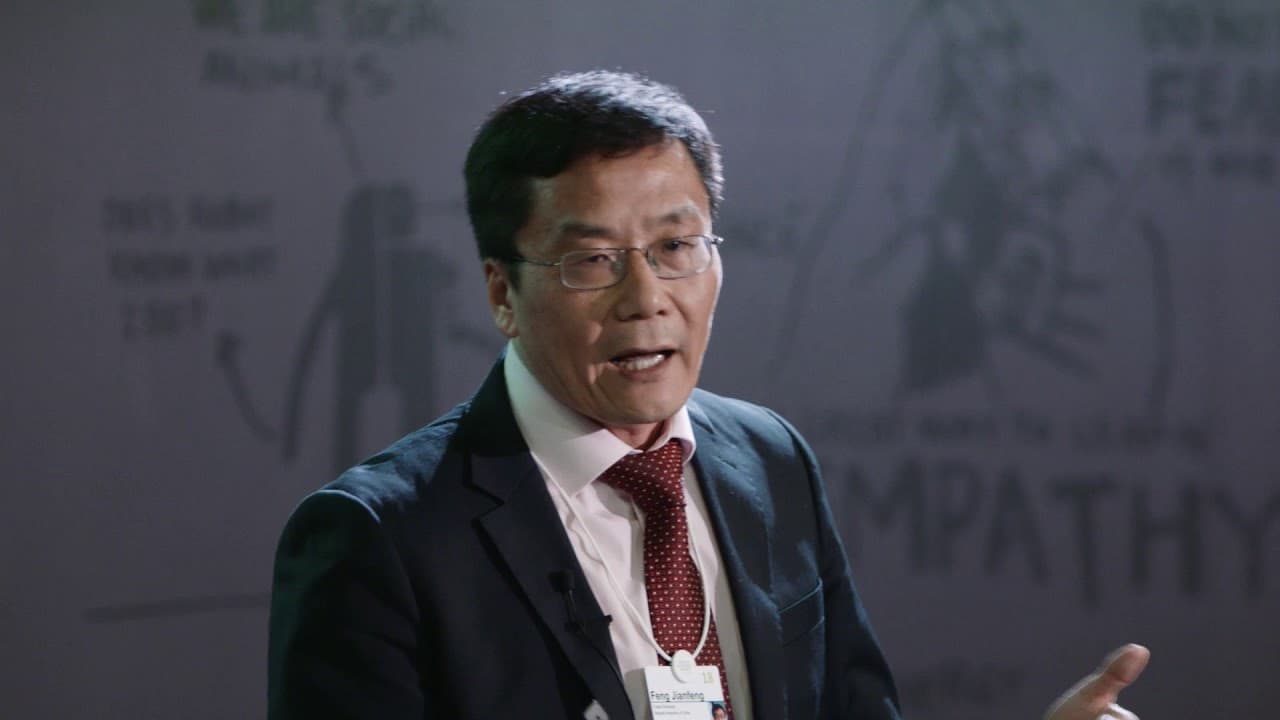
Mimicking the human brain for the next generation of AI | Feng Jianfeng
TL;DR
Artificial intelligence is advancing, but lacks emotional depth; bridging AI with brain research for human benefits.
Transcript
in the past a few years we have a witness's the greater success of artificial intelligence deepen your networker nowadays you can drive a car you organize the images and they even help you guys to make scientific discoveries that's a great in the deepening a daughter they can mimic our sensory information process the basic same as it can do or even... Read More
Key Insights
- 🖤 AI advancements lack emotional depth and critical human elements like motivation and emotion.
- 🖐️ Reward and punishment play a crucial role in regulating emotions and are essential for AI to mimic human-like responses.
- ❓ Technologies like transcranial magnetic stimulation can be enhanced through AI for more effective treatments of conditions like depression.
- 😪 Understanding emotional patterns through AI and brain research can lead to innovative applications in diverse areas like sleep disorders and substance abuse.
- 🧠 Bridging AI with brain research offers the potential for developing more human-like AI that can better understand, mimic, and respond to emotions.
- 🧠 The 'Bee Brain Project' aims to learn from biological brains to enhance artificial intelligence capabilities.
- 🥺 AI coupled with brain research can lead to intelligent advancements in medicine, robotics, and decision-making systems.
Install to Summarize YouTube Videos and Get Transcripts
Explore YouTube Video Summarizer or Get YouTube Transcript Extractor
Questions & Answers
Q: How does artificial intelligence differ from human intelligence?
Artificial intelligence excels at tasks like image processing but lacks human qualities such as emotions and motivations, making it fundamentally limited compared to humans.
Q: What is the significance of reward and punishment in emotions?
Reward and punishment play a crucial role in emotion regulation, with imbalances being linked to conditions like depression. Understanding this can lead to innovative treatments using technologies like transcranial magnetic stimulation.
Q: How can AI assist in treating conditions like depression?
AI can enhance treatment precision for conditions like depression by identifying patterns related to emotions and response to punishment, enabling targeted interventions like transcranial magnetic stimulation for effective outcomes.
Q: In what ways can AI be integrated with brain research to enhance human experiences?
Integrating AI with brain research allows for a deeper understanding of emotions, decision-making processes, and attention mechanisms, paving the way for creating more human-like AI and innovative applications in various fields.
Summary & Key Takeaways
-
Artificial intelligence has made significant strides in recent years, showcasing abilities like driving cars and organizing images with great success.
-
While AI can mimic sensory processes, it lacks emotions, motivations, and critical elements like reward and punishment, making it fundamentally limited compared to humans.
-
However, the integration of AI with brain research offers exciting possibilities for understanding emotions, treating conditions like depression, and creating a future with more human-like AI.
Read in Other Languages (beta)
Share This Summary 📚
Summarize YouTube Videos and Get Video Transcripts with 1-Click
Try YouTube Summary with ChatGPT & Claude or YouTube Transcript Generator
Explore More Summaries from World Economic Forum 📚
Summarize YouTube Videos and Get Video Transcripts with 1-Click
Try YouTube Summary with ChatGPT & Claude or YouTube Transcript Generator