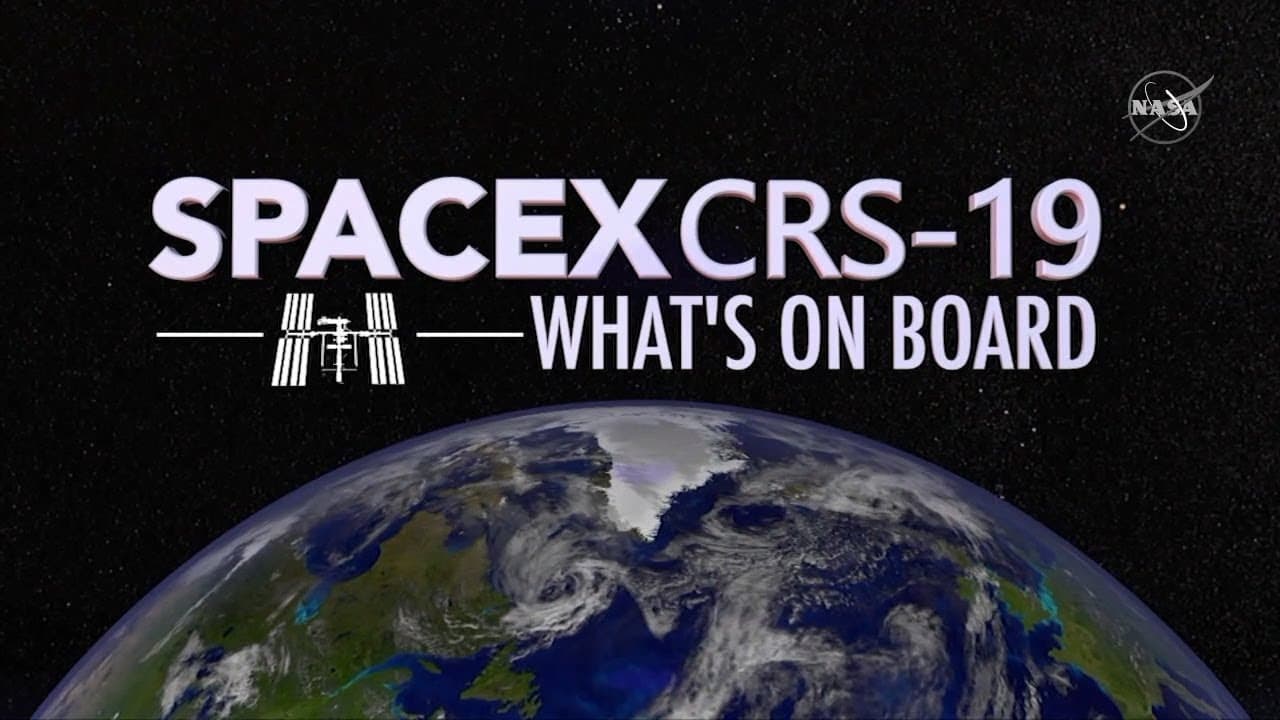
What Launches to Space On SpaceX’s 19th Cargo Mission?
TL;DR
Scientists are conducting experiments on the International Space Station to study flames in microgravity and test the effects of certain proteins and drugs on muscle and bone loss.
Transcript
We're going to burn some small fuel samples, solid fuel samples in a wind tunnel aboard the International Space Station. So what happened here is shortly before the incident the building had gone through some renovation so cladding were added to the building facade for for energy and cosmetic consideration. So when fire entered this cavity space th... Read More
Key Insights
- 👻 Flames in microgravity conditions spread differently than on Earth due to the absence of buoyancy flow, allowing researchers to study the underlying physics.
- 😘 Manipulating airflow in a wind tunnel aboard the ISS allows scientists to observe and study flames in confined spaces, providing valuable insights not possible on Earth.
- ☠️ Testing the protein myostatin in microgravity can help identify potential therapeutic methods for combating muscle and bone loss in astronauts and individuals on Earth.
- 🤗 Spaceflight collaborations with different countries, such as Mexico, provide opportunities for scientific advancements and hands-on experience for the next generation.
- 🤕 HISUI, an imaging spectrometer for Earth observation, can identify minerals and natural resources from space using over 100 spectral bands.
Install to Summarize YouTube Videos and Get Transcripts
Explore YouTube Video Summarizer or Get YouTube Transcript Extractor
Questions & Answers
Q: Why are scientists conducting experiments on burning solid fuel samples in a wind tunnel aboard the ISS?
Scientists want to understand how flames spread in microgravity conditions without the influence of buoyancy flow. By controlling and manipulating the airflow around the flames, they can study the physics of fire in a confined space.
Q: What protein are researchers testing and why?
Researchers are testing a protein called myostatin, which naturally limits muscle growth. By studying how myostatin affects muscle growth in microgravity conditions, they hope to find new ways to combat muscle and bone loss both in astronauts and for people on Earth.
Q: How are astronauts involved in the experiments?
Astronauts change the spacing between the fuel samples and the walls of the wind tunnel, effectively creating narrow or wide spaces. This allows researchers to study the effect of confinement on flames and understand how fire behaves in different conditions.
Q: What is the objective of the spaceflight collaboration between scientists and Mexico's space agency?
The objective is to demonstrate the use of existing infrastructure in space, such as the global star constellation, to download data from a satellite 24/7. It also aims to provide hands-on spaceflight project opportunities to the next generation.
Summary & Key Takeaways
-
Scientists are conducting experiments on the International Space Station to study how flames spread in microgravity conditions without the influence of buoyancy flow.
-
By burning solid fuel samples in a wind tunnel aboard the ISS, researchers can control and manipulate the airflow to study flames in a confined space.
-
The experiments also include testing a protein called myostatin, which limits muscle growth, with the aim of finding novel therapeutic methods to combat muscle and bone loss in astronauts and on Earth.
Read in Other Languages (beta)
Share This Summary 📚
Summarize YouTube Videos and Get Video Transcripts with 1-Click
Try YouTube Summary with ChatGPT & Claude or YouTube Transcript Generator
Explore More Summaries from NASA 📚

Summarize YouTube Videos and Get Video Transcripts with 1-Click
Try YouTube Summary with ChatGPT & Claude or YouTube Transcript Generator