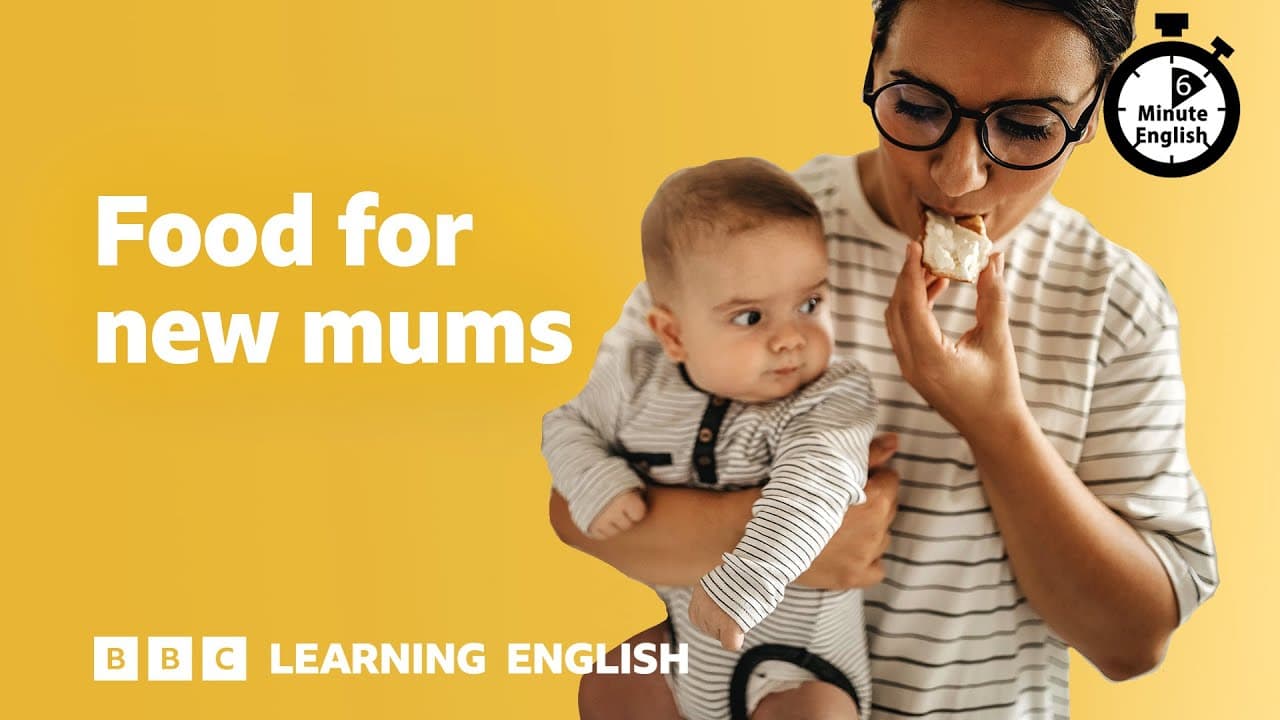
Food for new mums ⏲️ 6 Minute English
TL;DR
New mums need nourishing food postpartum for recovery and breastfeeding.
Transcript
Hello. This is 6 Minute English from BBC Learning English. I'm Georgie. And I'm Beth. Leaving home, getting married and a parent dying are three of the most important experiences in many people's lives. But perhaps the most defining moment in some women's lives is the miracle of birth. In other words, having a baby. Throughout pregnancy, a lot of c... Read More
Key Insights
- Postpartum nutrition is crucial for new mothers, especially those breastfeeding, as they require up to 650 additional calories daily compared to pregnancy.
- Different cultures have unique postpartum dietary traditions, such as Chinese roast pig trotters and Indian panjeeri, to aid recovery and milk production.
- Support from family, like Ruma's mother, is vital for new mums, providing both emotional support and nutritious meals during recovery.
- Breastfeeding is emphasized as a critical aspect of postpartum care, requiring mothers to maintain a higher caloric intake to support milk production.
- The term 'postpartum' refers to the period following childbirth, a time when mothers need enhanced nutritional support.
- The vocabulary terms 'gosh!', 'in a daze', 'hands-on', and 'fall apart' are explained, highlighting emotional and physical states postpartum.
- New mothers often juggle multiple responsibilities, including caring for the baby, recovering from childbirth, and managing sleep deprivation.
- The program emphasizes the importance of balanced nutrition and family support in preventing new mothers from becoming overwhelmed and emotionally distressed.
Install to Summarize YouTube Videos and Get Transcripts
Explore YouTube Video Summarizer or Get YouTube Transcript Extractor
Questions & Answers
Q: Why is postpartum nutrition important for new mothers?
Postpartum nutrition is essential for new mothers because it supports their recovery from childbirth and provides the necessary nutrients for breastfeeding. Mothers need up to 650 additional calories daily postpartum, more than during pregnancy, to produce sufficient breast milk and regain strength.
Q: How do cultural traditions influence postpartum nutrition?
Cultural traditions significantly influence postpartum nutrition by offering specific foods believed to aid recovery and milk production. For example, Chinese traditions include eating roast pig trotters for collagen, while Indian traditions involve consuming panjeeri, a nut mix, both of which support lactation and healing.
Q: What role does family support play in postpartum recovery?
Family support is crucial in postpartum recovery, providing both emotional and practical assistance. As seen in Ruma's story, her mother's presence and help with cooking allowed her to focus on healing and caring for her baby, preventing emotional distress and ensuring she received proper nutrition.
Q: What are some challenges new mothers face postpartum?
New mothers face numerous challenges postpartum, including physical exhaustion, emotional stress, and sleep deprivation. They must balance caring for a newborn with recovery from childbirth. Adequate nutrition and family support are vital to help them manage these challenges effectively.
Q: What is the significance of breastfeeding in postpartum nutrition?
Breastfeeding is a significant aspect of postpartum nutrition because it requires mothers to consume more calories to produce enough milk. Proper nutrition is crucial to support lactation and ensure that both mother and baby receive the necessary nutrients for health and development.
Q: How does the program explain the term 'postpartum'?
The program explains 'postpartum' as the period following childbirth, a critical time when mothers need enhanced nutritional support to recover and care for their newborns. This period involves significant physical and emotional changes, requiring adequate calories and nutrients for recovery and breastfeeding.
Q: Why is it important for new mothers to avoid becoming 'in a daze'?
Avoiding being 'in a daze' is important for new mothers because it allows them to think clearly and manage the demands of caring for a newborn. Emotional and physical support, along with proper nutrition, help prevent confusion and overwhelm, enabling mothers to handle their responsibilities effectively.
Q: What does the term 'hands-on' mean in the context of postpartum support?
In the context of postpartum support, 'hands-on' refers to being actively involved in helping a new mother with decision-making and daily tasks. This involvement can include assisting with childcare, household duties, and providing emotional support, ensuring the mother doesn't feel isolated or overwhelmed.
Summary & Key Takeaways
-
The program discusses the importance of postpartum nutrition for new mothers, highlighting the need for additional calories, especially for those breastfeeding. Cultural dietary traditions like Chinese pig trotters and Indian panjeeri are explored for their nutritional benefits.
-
Family support plays a crucial role in postpartum recovery, as illustrated by Ruma's experience. Her mother's help with cooking and emotional support was invaluable during her recovery from a C-section, preventing emotional distress.
-
Key vocabulary terms related to postpartum experiences are explained, including 'postpartum', 'breastfeeding', and emotional states like 'in a daze'. The episode underscores the challenges new mothers face and the critical role of nutrition and support.
Read in Other Languages (beta)
Share This Summary 📚
Summarize YouTube Videos and Get Video Transcripts with 1-Click
Try YouTube Summary with ChatGPT & Claude or YouTube Transcript Generator
Explore More Summaries from BBC Learning English 📚

Summarize YouTube Videos and Get Video Transcripts with 1-Click
Try YouTube Summary with ChatGPT & Claude or YouTube Transcript Generator