NASA Premieres ‘Trial By Fire’ video on Orion’s Flight Test

TL;DR
NASA's Orion spacecraft undergoes flight testing to ensure its systems can withstand the extreme conditions of space, paving the way for future human exploration missions.
Transcript
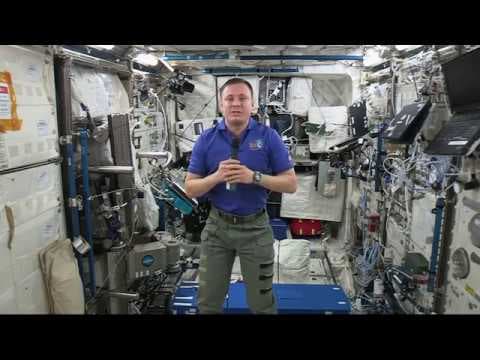
Orion is getting ready to launch. My name is Kelly Smith and I work on navigation and guidance for Orion. Orion is NASA’s next generation spacecraft. Built with versatility in mind, it can take astronauts deeper into space than we’ve ever gone before to an asteroid or even on to Mars For these missions, Orion has to be one tough spacecraft withstan... Read More
Key Insights
- 👾 Orion's flight test is crucial for verifying the spacecraft's system performance in the extreme conditions of space exploration.
- 💨 The Launch Abort System provides an important safety measure for pulling Orion and its crew away from a malfunctioning rocket during ascent.
- 👨🚀 The Van Allen Belts pose a radiation challenge that must be solved before sending astronauts through this region of space.
- 🥵 Orion's heat shield is the largest of its kind ever made and plays a critical role in protecting the spacecraft during re-entry.
- 🎟️ Flight data collected during the mission provides valuable insights for future human exploration missions.
- 🐢 Parachutes are used to slow down Orion's descent and ensure a safe splashdown in the ocean.
- ✈️ Flight testing builds confidence in the design and performance of Orion's systems under real flight conditions.
Install to Summarize YouTube Videos and Get Transcripts
Explore YouTube Video Summarizer or Get YouTube Transcript Extractor
Questions & Answers
Q: What is the purpose of the flight testing for NASA's Orion spacecraft?
Flight testing is essential to ensure that Orion's systems are capable of withstanding the high speeds, extreme temperatures, and radiation of space exploration missions. It helps verify that the spacecraft performs as expected before sending astronauts.
Q: Why doesn't the first flight of Orion have astronauts on board?
The first flight of Orion is conducted without astronauts to prioritize safety. Instead, the spacecraft is loaded with sensors to collect data on all aspects of the flight and provide valuable insights for future missions.
Q: What is the role of the Launch Abort System in Orion's flight?
The Launch Abort System is a safety feature that can pull Orion and its crew away from a malfunctioning rocket during ascent. This system provides an added layer of protection for the spacecraft and the astronauts in case of an emergency.
Q: How does Orion protect itself from dangerous radiation in space?
Orion is designed with shielding to protect its guidance systems, onboard computers, and electronics from the dangerous radiation in space. Sensors on board record radiation levels to help scientists study and address these challenges.
Summary & Key Takeaways
-
Orion, NASA's next generation spacecraft, is designed to take astronauts deeper into space to destinations like asteroids and Mars.
-
Before sending astronauts, Orion must undergo extensive testing of its systems, including its launch, orbit, radiation shielding, re-entry, and landing.
-
The flight test records data to verify that the spacecraft's systems perform effectively under real flight conditions.
Read in Other Languages (beta)
Share This Summary 📚
Summarize YouTube Videos and Get Video Transcripts with 1-Click
Try YouTube Summary with ChatGPT & Claude or YouTube Transcript Generator
Explore More Summaries from NASA 📚

Summarize YouTube Videos and Get Video Transcripts with 1-Click
Try YouTube Summary with ChatGPT & Claude or YouTube Transcript Generator