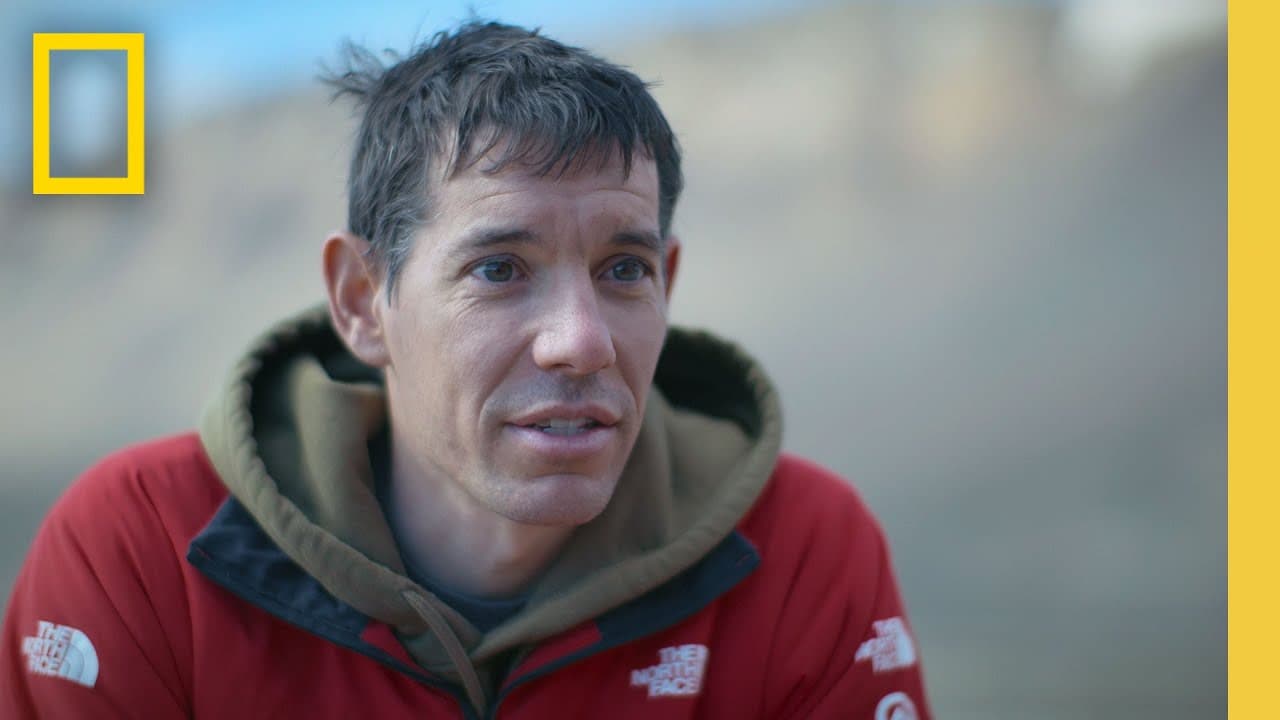
Alex Honnold Rappels The Moulin | Arctic Ascent with Alex Honnold | National Geographic
TL;DR
Daring descent into glaciers' moulin reveals accelerated melting due to water levels, presenting heightened environmental concerns.
Transcript
[Alex] Deep enough that it just turns black. [Heidi] Yeah. [Alex] Yeah, it's pretty far. [Heidi] This huge hole is called a moulin. It acts like a drain funneling meltwater to the base of the glacier. This is the abyss, it's all pretty big and pretty intimidating. This moulin should allow us to figure out what's happening beneath the glacier, so we... Read More
Key Insights
- 🫠 Glaciers can accelerate their movement and melting due to increased water beneath them.
- 💦 Descending into glacial moulins provides crucial data on water levels and glacier behavior.
- 💦 Monitoring glacial water levels is essential for assessing climate change impacts on glaciers.
- ♻️ Entering glacial moulins is considered one of the most dangerous environments on Earth.
- 😤 Collaboration between adventure and science teams helps in gathering valuable data on glaciers.
- 🦺 The presence of Aldo Kane ensures safety and logistical support during glacier expeditions.
- 😒 Heidi's use of piezometers helps measure water levels beneath glaciers accurately.
Install to Summarize YouTube Videos and Get Transcripts
Explore YouTube Video Summarizer or Get YouTube Transcript Extractor
Questions & Answers
Q: What is the significance of water levels beneath glaciers in relation to their movement and melting?
Water beneath glaciers can accelerate their movement and melting, akin to how ice slides faster on a thin layer of water. Understanding these water levels is crucial for assessing the impact of climate change on glaciers.
Q: How does descending into a moulin help in gathering important data about glaciers?
Descending into a moulin allows for the collection of data on water levels and glacier movement, providing insights into the factors influencing glacier acceleration and melting rates.
Q: Why is it considered dangerous to enter glacial moulins?
Entering glacial moulins is dangerous due to the unpredictable nature of the environment, with risks of collapsing ice, shifting structures, and the powerful forces of flowing water.
Q: What do the team's findings about water levels beneath the glacier indicate for future monitoring?
The team's findings suggest the need for increased monitoring of water levels beneath glaciers to track glacier movement, melting rates, and environmental impacts more effectively.
Summary & Key Takeaways
-
Glaciers, like rivers of ice, can speed up due to increased water beneath, affecting melting rates.
-
Descending into a moulin, a drain in glaciers, allows for data collection on water levels and glacier movement.
-
The team's findings highlight the significance of monitoring glacial water levels for climate impact assessment.
Read in Other Languages (beta)
Share This Summary 📚
Summarize YouTube Videos and Get Video Transcripts with 1-Click
Try YouTube Summary with ChatGPT & Claude or YouTube Transcript Generator
Explore More Summaries from National Geographic 📚



Summarize YouTube Videos and Get Video Transcripts with 1-Click
Try YouTube Summary with ChatGPT & Claude or YouTube Transcript Generator