Raoul Pal on the Changing Landscape of the Economy: The Impact of Technology and Globalization
TL;DR
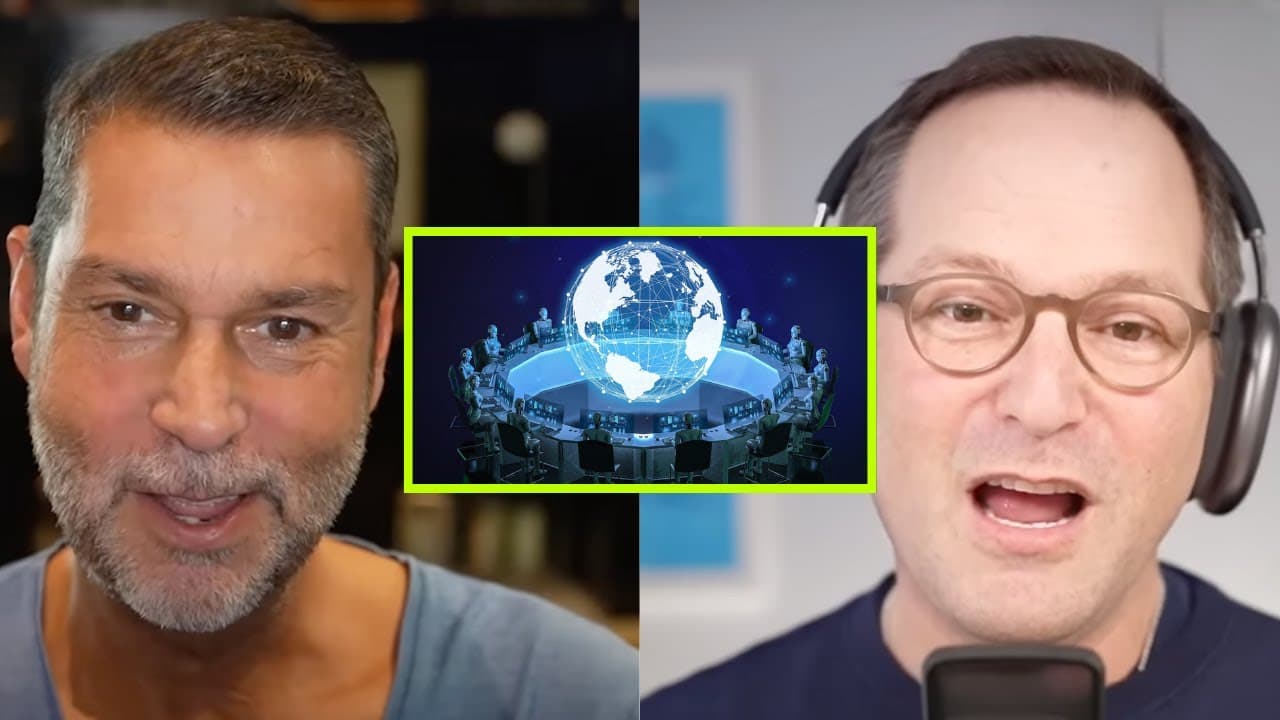
The world has transitioned from stability in the 1950s to an interconnected, unpredictable, and fast-paced economy shaped by technology and globalization.
Transcript
if you try to predict in advance or get attention in advance it's becoming increasingly hard um and yeah so that's that's what's happening today we're no longer in the 1950s uh and we can talk about the reason the reasons why but that's basically where we are yeah I mean that's that super interesting and it's very right and why is that why why is t... Read More
Key Insights
- 🖕 The stable 1950s economy was shaped by constraints, a strong middle class, specific demographics, and clear governance by dominant countries.
- 🥺 Today's economy is fast-paced, interconnected, and driven by technology and globalization, leading to rapid changes and nonlinear dynamics.
- 🧑💼 COVID-19 has accelerated the shift towards remote work, challenging traditional office spaces and management structures.
- 🐕🦺 The shift to a nonlinear economy has implications for real estate markets, requiring them to adapt and potentially offer more services.
- 💯 Companies are increasingly splitting their core activities geographically to tap into larger talent pools.
- 🌐 Specialization and competition in the global economy require companies to hire from a pool of talent that can match increasingly specialized tasks.
- 👾 The transition from a stable economy to a fast-paced, interconnected one is impacting various industries beyond real estate.
Install to Summarize YouTube Videos and Get Transcripts
Explore YouTube Video Summarizer or Get YouTube Transcript Extractor
Questions & Answers
Q: Why was the world stable in the 1950s?
The stability in the 1950s was due to strong constraints, a broad middle class, specific demographics, and clear governance by dominant countries.
Q: How has technology and globalization transformed today's economy?
Technology and globalization have made the economy fast-paced and interconnected, leading to rapid changes and nonlinear dynamics in various industries.
Q: How has COVID-19 impacted the way people work?
COVID-19 has shown that many crucial office jobs can be done remotely, challenging the need for traditional management structures and physical office spaces.
Q: What implications does the shift to a nonlinear economy have on real estate markets?
The shift to a nonlinear economy requires real estate markets to adapt, potentially becoming more like hotels or hospitality assets that offer services and require higher capex and Opex.
Summary & Key Takeaways
-
The world in the 1950s was stable due to strong constraints, a broad middle class, specific demographics, and clear governance by dominant countries.
-
Today's economy is fast-paced, interconnected, and governed by nonlinear dynamics, with technology and globalization driving rapid changes.
-
The shift has implications on real estate markets, tenant quality, and the need for businesses to adapt to changing economic dynamics.
Read in Other Languages (beta)
Share This Summary 📚
Summarize YouTube Videos and Get Video Transcripts with 1-Click
Try YouTube Summary with ChatGPT & Claude or YouTube Transcript Generator
Explore More Summaries from Raoul Pal on Real Vision 📚

Summarize YouTube Videos and Get Video Transcripts with 1-Click
Try YouTube Summary with ChatGPT & Claude or YouTube Transcript Generator