How to Optimize Publisher SEO for Long-Term Growth
TL;DR
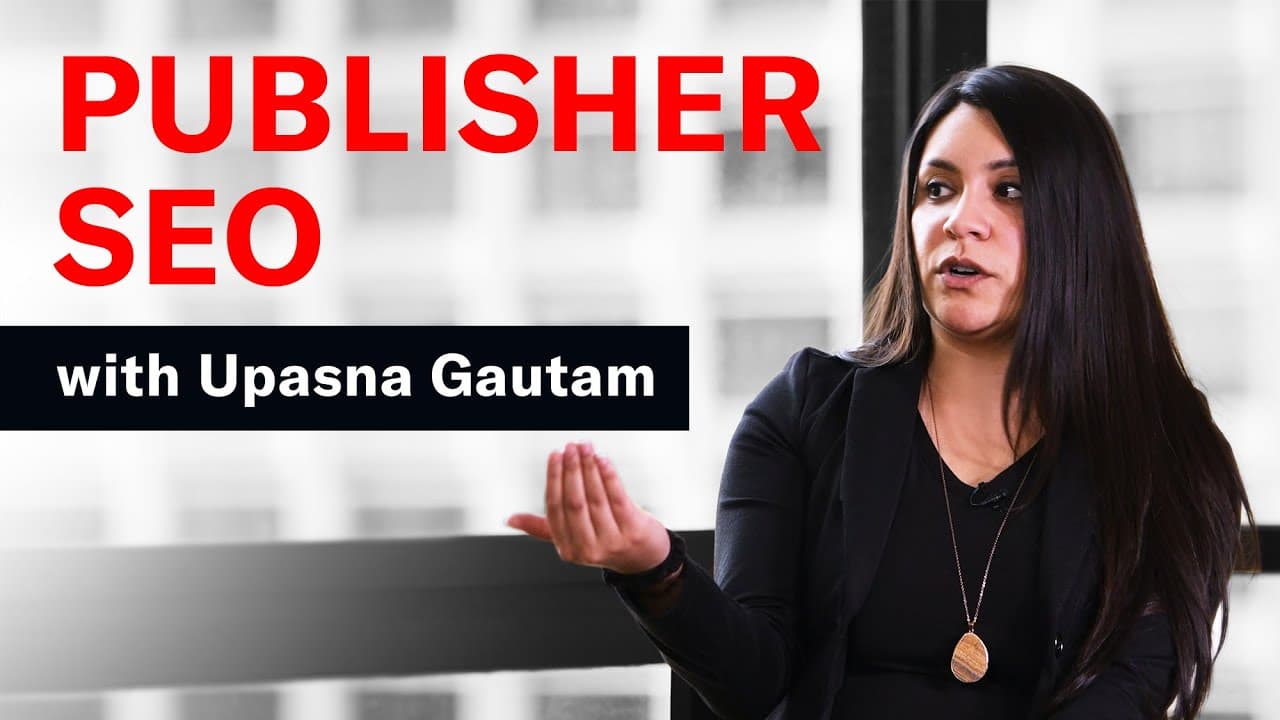
To optimize SEO for publisher websites, de-compartmentalize content into categories like news, evergreen, and commerce. This helps build a cohesive information architecture. Internal linking is more crucial than external link building for publishers. Regular content audits and strategic use of metadata enhance search visibility. Training writing teams in SEO best practices is essential for maintaining editorial integrity while being search-friendly.
Transcript
everyone welcome to another great episode of content and conversation today I'm excited to be welcoming to pass on our Gotham product manager at CNN formerly as if Davis worked on PC Mag and Nashville a great publisher organization there and today we're excited be talking about publisher SEO welcome thank you for having me excited to be here one of... Read More
Key Insights
- Publisher websites should categorize content into news, evergreen, and commerce for better SEO.
- Internal linking is crucial for publishers to improve SEO more than acquiring external backlinks.
- Regular content audits help identify pages to update, redirect, or remove, enhancing site performance.
- SEO training for editorial teams should focus on headline optimization and meta descriptions.
- A well-structured CMS is essential for efficient content publication and optimization.
- Information architecture should minimize page depth to improve crawlability and user experience.
- Deck copy, or summary text, under headlines can enhance user engagement and search visibility.
- Time-stamped updates on articles can improve relevancy and placement in search results.
Install to Summarize YouTube Videos and Get Transcripts
Explore YouTube Video Summarizer or Get YouTube Transcript Extractor
Questions & Answers
Q: How to categorize content for publisher SEO?
Categorize content into news, evergreen, and commerce types. This classification helps create a cohesive information architecture, making it easier to manage and optimize for SEO. Understanding these categories aids in structuring the site to enhance search visibility and user navigation.
Q: Why is internal linking important for publishers?
Internal linking is crucial for publishers as it improves site navigation, helps retain users, and enhances SEO by distributing page authority across the site. It is often more effective than acquiring external backlinks, particularly for large news sites with high authority.
Q: What is the role of content audits in SEO?
Content audits help identify outdated or irrelevant pages that can be updated, redirected, or removed. This process enhances site performance by ensuring content remains relevant and accessible, improving both user experience and search engine crawlability.
Q: How should SEO training be conducted for editorial teams?
SEO training should focus on best practices for headline optimization and meta descriptions, ensuring content remains search-friendly without compromising editorial integrity. Regular workshops and check-ins can help editors stay updated on SEO techniques and performance metrics.
Q: What makes a good content management system (CMS) for publishers?
A good CMS should facilitate efficient content publication and optimization, allowing editors to quickly implement SEO elements. It should support workflow efficiency, enabling seamless integration of search-friendly practices without hindering editorial processes.
Q: How does information architecture affect SEO?
Information architecture impacts SEO by determining how content is structured and accessed on a site. Minimizing page depth improves crawlability and user experience, making it easier for search engines to index content and for users to navigate the site.
Q: What is deck copy and its value in publishing?
Deck copy is the summary text under headlines that provides a brief overview of the article. It enhances user engagement by offering a quick insight into the content, and it can improve search visibility by serving as a meta description in some CMS setups.
Q: How do time-stamped updates affect article relevancy?
Time-stamped updates can improve article relevancy by indicating freshness to search engines, which is crucial for news content. Regular updates help maintain a presence in search results, particularly in fast-changing news environments where timeliness is critical.
Summary & Key Takeaways
-
Publisher websites benefit from categorizing content into specific types like news, evergreen, and commerce. This classification aids in creating a cohesive information architecture, enhancing SEO performance.
-
Internal linking is more impactful for publishers than acquiring backlinks, as it improves site navigation and user retention. Regular content audits help maintain site relevancy and performance.
-
SEO training for writing teams should include best practices for headline and meta description optimization, balancing editorial integrity with search-friendliness. A well-structured CMS supports efficient content management.
Read in Other Languages (beta)
Share This Summary 📚
Summarize YouTube Videos and Get Video Transcripts with 1-Click
Try YouTube Summary with ChatGPT & Claude or YouTube Transcript Generator
Explore More Summaries from Content and Conversation 📚





Summarize YouTube Videos and Get Video Transcripts with 1-Click
Try YouTube Summary with ChatGPT & Claude or YouTube Transcript Generator