Is it Possible to Share Too Much Info with Your Team During a Time of Crisis? Leading Through Crisis
TL;DR
Balance transparency and optimism when sharing information during crises.
Transcript
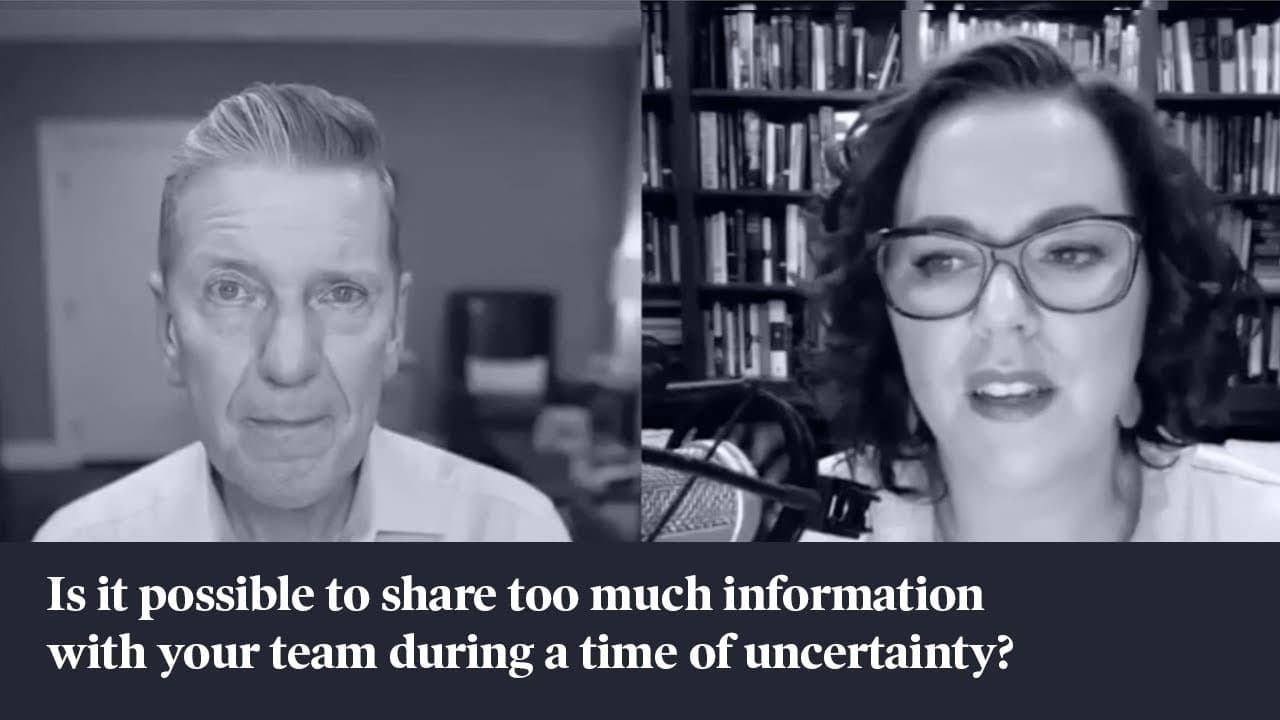
Joshua said that's right it really is he said is there too much that you can share with your staff right now he said I was very open this week that all of things including layoffs were on the table in this time of uncertainty is that the right approach well I do think you got to be careful you can't you know verbalize or give voice to your worst fe... Read More
Key Insights
- Transparency is crucial, but avoid sharing speculative or overly negative information that can cause panic among team members.
- Focus communication on short-term actions and plans rather than long-term uncertainties to maintain clarity and direction.
- Adopt the Stockdale Paradox: maintain faith in the ultimate success while confronting the brutal facts of the current reality.
- Communicate clearly about potential layoffs or other significant changes, but emphasize that they are not planned unless absolutely necessary.
- Assessing risks and vulnerabilities is vital, but equally important is identifying and communicating potential opportunities to the team.
- Engage team members in innovative thinking to leverage their ideas for improving efficiency, developing new products, or exploring new markets.
- Encouraging a focus on serving customers and clients can energize the team and reduce fear during challenging times.
- Utilize structured processes, such as a four-quadrant matrix, to guide the team in identifying and pursuing opportunities during a crisis.
Install to Summarize YouTube Videos and Get Transcripts
Explore YouTube Video Summarizer or Get YouTube Transcript Extractor
Questions & Answers
Q: What is the main challenge when sharing information during a crisis?
The main challenge is balancing transparency with optimism. Leaders must avoid sharing speculative or overly negative information that can cause panic, while ensuring that the team is well-informed about the current reality and short-term plans. This requires careful communication to maintain clarity and direction.
Q: How can leaders maintain morale during uncertain times?
Leaders can maintain morale by focusing on opportunities and engaging their team in innovative thinking. Encouraging team members to identify ways to improve efficiency, develop new products, or explore new markets can shift the focus from fear to constructive action, fostering a sense of purpose and energy.
Q: What is the Stockdale Paradox and how does it apply to crisis communication?
The Stockdale Paradox involves maintaining faith in ultimate success while confronting the brutal facts of the current reality. In crisis communication, it means being honest about challenges while also expressing confidence in the team's ability to overcome them, providing a balanced perspective that can inspire resilience and determination.
Q: Why is it important to communicate about potential layoffs even if they are not planned?
Communicating about potential layoffs is important to maintain transparency and trust. It reassures the team that they will be informed about any significant changes, reducing uncertainty and speculation. Emphasizing that layoffs are not planned unless absolutely necessary can help alleviate fears while preparing the team for potential scenarios.
Q: How can structured processes help in identifying opportunities during a crisis?
Structured processes, such as a four-quadrant matrix, provide a systematic approach to assessing risks and identifying opportunities. They guide the team in evaluating various aspects of the business, helping to uncover hidden opportunities and prioritize actions. This organized method fosters strategic thinking and effective decision-making.
Q: What role does serving customers play in crisis management?
Serving customers at a higher level during a crisis can energize the team and provide a sense of purpose. It shifts the focus from internal fears to external contributions, encouraging team members to be part of the solution. This outward focus can reduce anxiety and foster a positive, proactive mindset.
Q: How can innovative thinking benefit teams during crises?
Innovative thinking can help teams uncover new ways to improve efficiency, develop products, or explore markets. By leveraging the collective ideas and creativity of team members, organizations can pivot and adapt to changing circumstances, turning challenges into opportunities and fostering resilience and agility.
Q: What should leaders avoid when communicating about the future during a crisis?
Leaders should avoid speculative or overly negative communication about the future. Making dire predictions or voicing worst-case scenarios can cause unnecessary panic and fear. Instead, leaders should focus on short-term plans and actions, providing a clear and realistic perspective while maintaining confidence in the team's ability to navigate challenges.
Summary & Key Takeaways
-
During a crisis, leaders must balance transparency with optimism, avoiding speculation that can lead to panic. It's essential to focus on short-term actions and communicate clearly about potential changes, such as layoffs, while emphasizing that they are not planned unless necessary.
-
Identifying and communicating opportunities is as important as assessing risks. Engaging team members in innovative thinking can uncover new ways to improve efficiency, develop products, or explore markets, helping to redirect focus from fear to constructive action.
-
Encouraging the team to serve customers at a higher level can be energizing and help reduce fear. Structured processes, like a four-quadrant matrix, can guide the team in identifying and pursuing opportunities, leveraging their collective ideas and resources effectively.
Read in Other Languages (beta)
Share This Summary 📚
Summarize YouTube Videos and Get Video Transcripts with 1-Click
Try YouTube Summary with ChatGPT & Claude or YouTube Transcript Generator
Explore More Summaries from Michael Hyatt 📚






Summarize YouTube Videos and Get Video Transcripts with 1-Click
Try YouTube Summary with ChatGPT & Claude or YouTube Transcript Generator