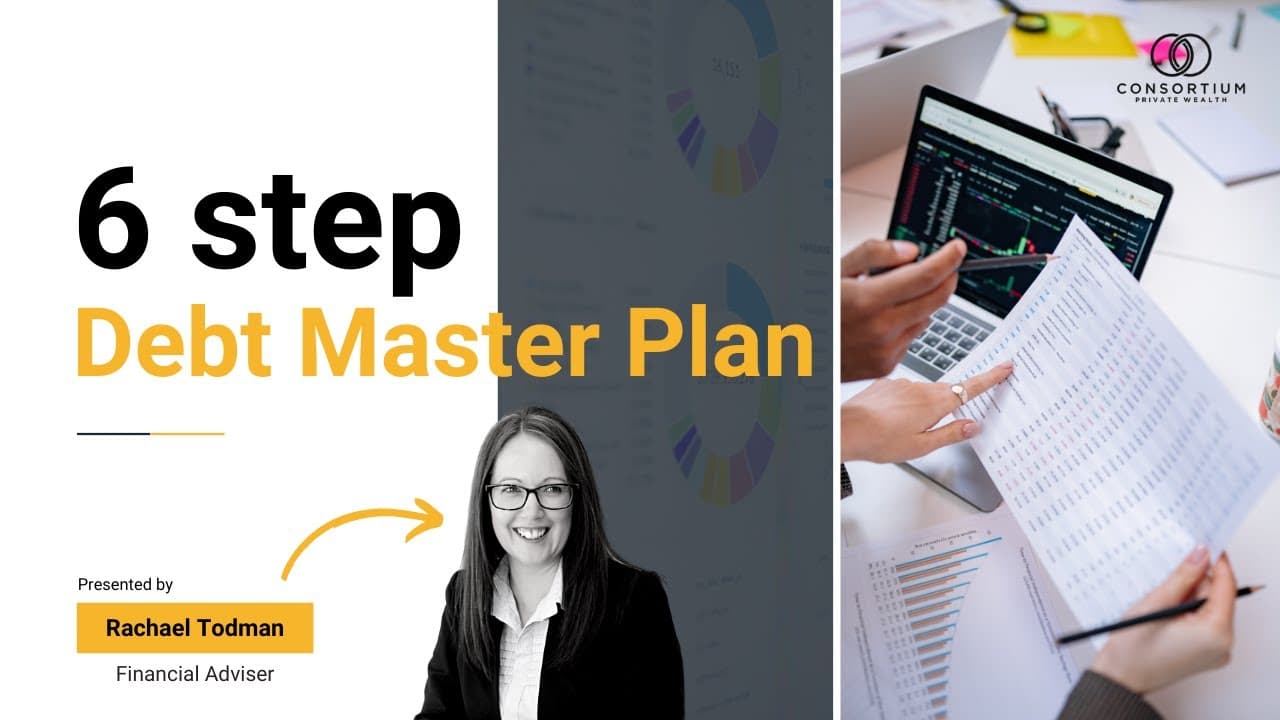
6 step Debt Master Plan
TL;DR
Learn how to improve cash flow and manage debt through steps such as understanding your financial situation, creating a budget, prioritizing debt repayment, avoiding bad debt, and seeking help when needed.
Transcript
hi my name's rachel todman i'm a financial advisor at consortium private wealth today just looking at some steps to help get cash flow back on track and manage your debt that little bit better if you're feeling a bit under the pressure australian households are the fifth most indebted in the world so you're not alone if you're starting to feel a bi... Read More
Key Insights
- 😀 Australian households face significant debt levels and mortgage stress, emphasizing the need to manage debt effectively.
- 💐 Understanding your financial situation is the first step in improving cash flow and managing debt.
- 🆘 Creating a budget helps determine disposable income and identify areas where expenses can be reduced.
- 🦡 Prioritizing debts, avoiding bad debt, and building an emergency savings fund are crucial in achieving financial stability.
- 🆘 Seeking help from financial advisors, counselors, or helplines can provide valuable guidance and support.
- 👪 Managing financial stress is essential for overall well-being and the well-being of your family.
Install to Summarize YouTube Videos and Get Transcripts
Explore YouTube Video Summarizer or Get YouTube Transcript Extractor
Questions & Answers
Q: Why is it important to know your financial situation when managing debt?
Knowing your financial situation, including the total debt you have, is crucial because it allows you to make informed decisions about managing your debt and improving your cash flow. Without this understanding, it is challenging to make effective improvements.
Q: How can a budget help in managing debt?
Creating a budget helps in managing debt by identifying monthly income, essential expenses, and non-essential expenses. This allows you to determine your disposable income, which can be used to reduce debt. Budgeting tools, such as those available on the MoneySmart website, can assist in this process.
Q: How should one prioritize their debt?
It is essential to prioritize debt repayment by focusing on critical debts such as mortgage repayments, council rates, and utility bills. If you are unable to pay these debts, open communication with your bank or service provider can help in establishing a financial hardship request and creating a repayment plan.
Q: What is the difference between good debt and bad debt?
Good debt refers to investments that can create wealth or generate an income stream, such as a home loan. Bad debt, on the other hand, includes non-essential items or expenses that can be lived without, such as overseas holidays or certain entertainment expenses. It is important to avoid falling into bad debt when paying off loans.
Summary & Key Takeaways
-
Australian households are among the most indebted in the world, with many experiencing mortgage stress and financial pressure.
-
To regain control of your finances, start by understanding your debt and creating a budget to determine income and essential expenses.
-
Prioritize your debt, avoid bad debt, build an emergency savings fund, and don't hesitate to seek help if needed.
Read in Other Languages (beta)
Share This Summary 📚
Summarize YouTube Videos and Get Video Transcripts with 1-Click
Try YouTube Summary with ChatGPT & Claude or YouTube Transcript Generator
Explore More Summaries from Investor Motivation 📚





Summarize YouTube Videos and Get Video Transcripts with 1-Click
Try YouTube Summary with ChatGPT & Claude or YouTube Transcript Generator