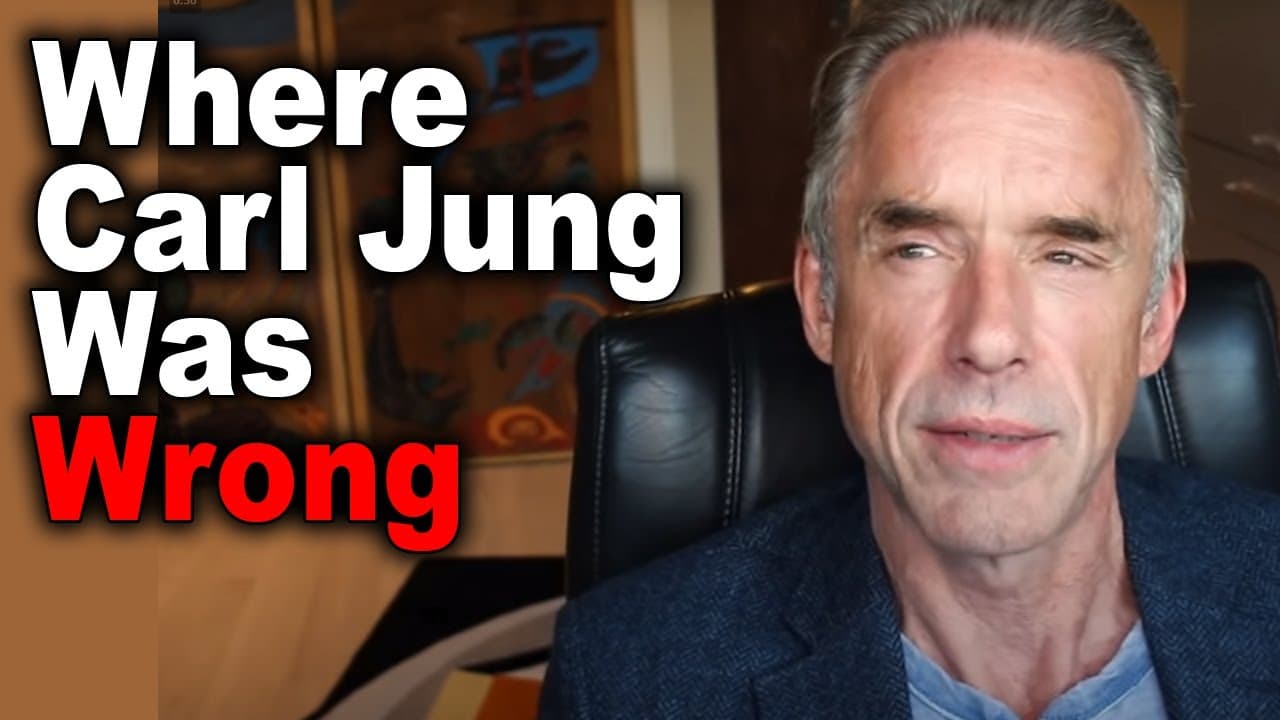
Jordan Peterson: Where Carl Jung was Wrong!
TL;DR
Carl Jung's overgeneralization of his clinical experiences and disregard for social interactions limited his perspective. To avoid nihilistic behaviors, cultivating good habits across multiple dimensions of life is essential.
Transcript
you discuss almost any thinker's flaws in their thinking except for jung's what what were his well i think jung over generalized his experiences his clinical experiences he conceptualized the hero's journey as something that was fundamentally creative and interior and i think that that's probably true only for people who are really high in trait op... Read More
Key Insights
- 🦸 Jung's experiences and his attraction to creative individuals skewed his perspective on the hero's journey.
- 🅰️ Different personality types find meaning in diverse areas, such as literature, relationships, or career accomplishments.
- 🫵 Jung's view of the psyche focused more on internal organization, neglecting the role of social interactions and societal influences in maintaining sanity.
- 🤔 Neuroticism, the tendency to feel negative emotions, was overlooked by Jung in his thinking.
- 👋 Cultivating good habits and practices across various dimensions of life can help avoid falling into nihilistic behaviors.
- 👪 Establishing intimate relationships, maintaining contact with family and friends, and having a structured schedule are essential for well-being.
- 🛟 Balancing attainment, ambition, pleasure, and responsibility contributes to a fulfilling life.
Install to Summarize YouTube Videos and Get Transcripts
Explore YouTube Video Summarizer or Get YouTube Transcript Extractor
Questions & Answers
Q: How did Jung's clinical experiences and personality influence his conceptualization of the hero's journey?
Jung overgeneralized his experiences and believed the hero's journey to be predominantly creative and interior. This perspective was likely influenced by his high openness and the nature of creative individuals who were attracted to his practice.
Q: What were the primary sources of meaning for different personality types in Jung's practice?
Creative individuals framed their lives in literary terms, while more agreeable types found meaning in intimate relationships. Conscientious clients focused on career accomplishments. Each personality type emphasized different aspects of life.
Q: How did Jung's view on the psyche differ from Adler's perspective?
Jung focused more on the psyche's internal organization and ethics, while Adler emphasized the role of social interactions and intimate relationships in maintaining sanity. Jung underestimated the importance of social adaptation and societal influences on one's well-being.
Q: Did Jung consider the role of neuroticism in his thinking?
No, Jung did not formalize the idea of neuroticism in his thinking, which was a major oversight. Exaggerated negative emotions are often central to psychopathology, and it is crucial to address this aspect of personality.
Summary & Key Takeaways
-
Jung's conceptualization of the hero's journey as fundamentally creative and interior only applies to those high in trait openness.
-
Jung attracted a disproportionate number of creative individuals to his practice, which shaped his view.
-
Different personality types find meaning in different areas of life, such as literature, relationships, or career accomplishments.
Read in Other Languages (beta)
Share This Summary 📚
Summarize YouTube Videos and Get Video Transcripts with 1-Click
Try YouTube Summary with ChatGPT & Claude or YouTube Transcript Generator
Explore More Summaries from PhilosophyInsights 📚

Summarize YouTube Videos and Get Video Transcripts with 1-Click
Try YouTube Summary with ChatGPT & Claude or YouTube Transcript Generator