Computers Without Memory - Computerphile
TL;DR
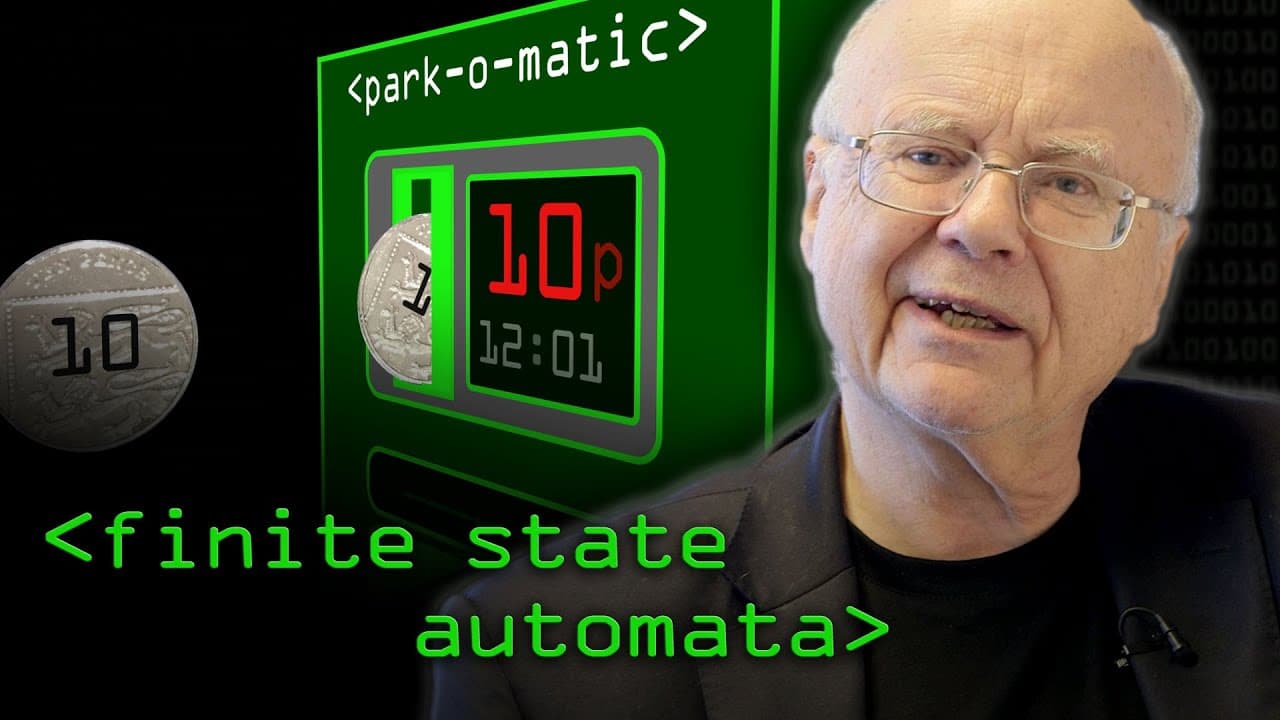
Vending machines and parking machines are examples of simple finite state automata, which do not require memory to function.
Transcript
for years and years there have been as part of our civilization special purpose electromechanical computers and classic example of these is vending machines if you put in the right combination of money they will vend you a bar of chewing gum or whatever and they've been around for so long that they really are largely mechanical they're a bit more s... Read More
Key Insights
- 🎰 Vending machines and parking machines are examples of special purpose electromechanical computers.
- ⚾ These machines function based on finite state automata principles, which involve progressing through different states based on inputs.
- 🎰 Memory is not necessary for vending machines and parking machines, as they only need to know their current state and the rules for accepting inputs.
- ❓ Valid variable naming in programming languages follows similar principles to finite state automata.
- 🎰 Overpayment in vending machines and parking machines can have varying outcomes depending on the specific machine's design.
- ⌛ These machines have been part of our civilization for a long time and have become more sophisticated with technology advancements.
- 🎰 Vending machines and parking machines are examples of how simple systems can be modeled using finite state automata.
Install to Summarize YouTube Videos and Get Transcripts
Explore YouTube Video Summarizer or Get YouTube Transcript Extractor
Questions & Answers
Q: How do vending machines and parking machines work?
Vending machines and parking machines operate based on finite state automata principles. They progress through different states depending on the inputs they receive and eventually reach a final state when the desired outcome is achieved.
Q: Do vending machines and parking machines require memory?
No, these machines do not require memory. They do not retain any information about the coins or inputs they have received. They only need to know their current state and the rules for accepting inputs.
Q: Can vending machines and parking machines handle overpayment?
Vending machines and parking machines may have different responses to overpayment. Some machines may continue to function and provide the desired outcome, while others may malfunction or reject the payment. It depends on the design and programming of the specific machine.
Q: Are vending machines and parking machines considered computers?
While vending machines and parking machines can be seen as special purpose computers, they are relatively simple compared to general-purpose computers. They do not require complex memory systems or processing capabilities.
Summary & Key Takeaways
-
Vending machines and parking machines are special purpose electromechanical computers that have been around for a long time, though they have become more sophisticated with the addition of microchips.
-
These machines operate based on finite state automata principles, where the different states represent the machine's progress towards a specific goal.
-
The machines do not require any memory, as they only need to know their current state and the rules for accepting inputs.
Read in Other Languages (beta)
Share This Summary 📚
Summarize YouTube Videos and Get Video Transcripts with 1-Click
Try YouTube Summary with ChatGPT & Claude or YouTube Transcript Generator
Explore More Summaries from Computerphile 📚

Summarize YouTube Videos and Get Video Transcripts with 1-Click
Try YouTube Summary with ChatGPT & Claude or YouTube Transcript Generator