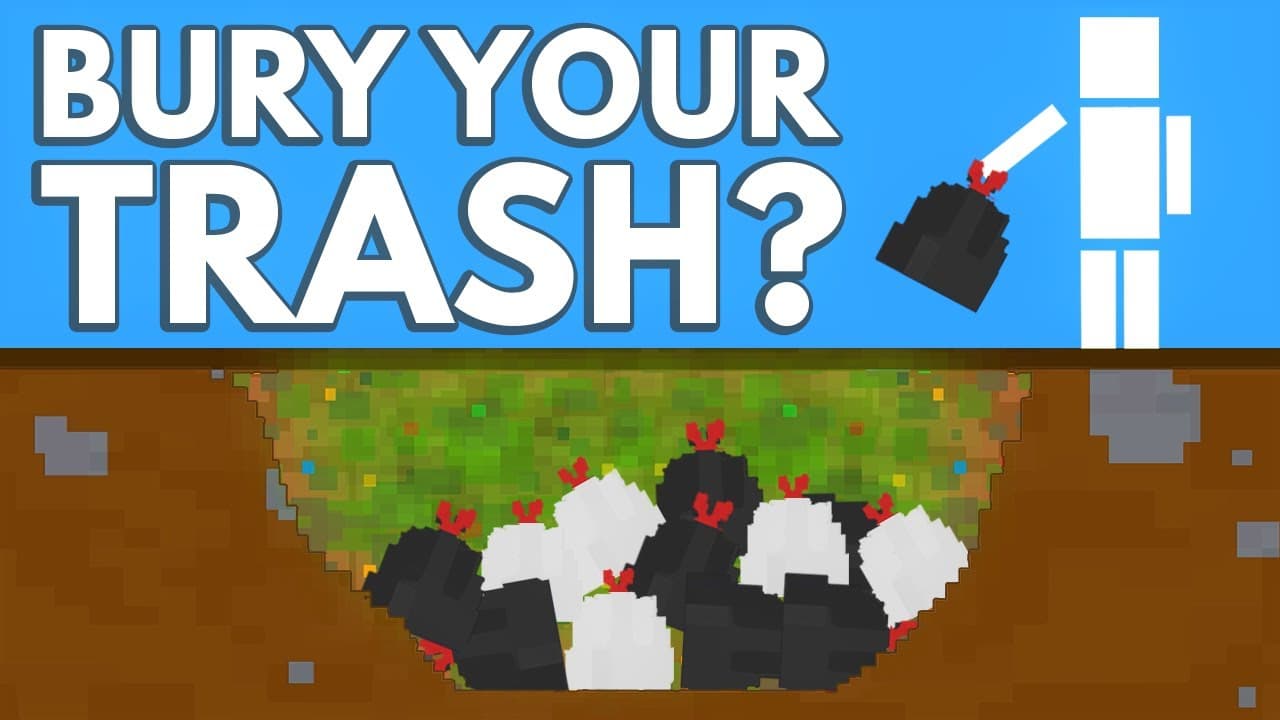
Why Don't We Just Bury Our Trash in Landfills?
TL;DR
Burying trash in landfills is complex due to the need to manage harmful substances like leachate and methane gas. Landfills are designed with liners and monitoring systems to prevent pollution and protect groundwater. They require careful planning and management, making recycling and composting important alternatives to reduce waste.
Transcript
Triangle Bob. Are you trying to grow a garbage tree again? We’ve been over this buddy, planting 1 Diet Dr.Blocker drink will not give you a whole tree of them! Hmm…that does give me a good idea for a video though! Queue the intro! Hey there! Welcome to Life Noggin. Today we're going to answer the question that I just made up: Why don’t we b... Read More
Key Insights
- 🗑️ Landfills are essential for managing waste but require careful planning and monitoring to prevent environmental damage.
- 🫢 Proper landfill management involves liners, collection systems, and monitoring to control toxic liquids and gases.
- 🫢 Landfills play a role in producing methane gas and carbon dioxide, which need to be managed to prevent environmental harm.
- ♻️ Recycling and composting are crucial in reducing reliance on landfills and minimizing environmental impact.
- 💉 Landfills can pose health risks due to leaks and degradation of liners, emphasizing the need for alternative waste disposal methods.
- 💦 The decomposition of waste in landfills creates a toxic liquid called leachate, which can harm plants and contaminate drinking water sources.
- 🫢 Methane gas produced in landfills is flammable and must be collected to prevent environmental hazards.
Install to Summarize YouTube Videos and Get Transcripts
Explore YouTube Video Summarizer or Get YouTube Transcript Extractor
Questions & Answers
Q: Why do landfills have liners?
Landfills have liners made of clay and plastic to prevent toxic liquids like leachate from contaminating the soil and groundwater. These liners are crucial for protecting the environment from harmful pollutants.
Q: How are methane gas and carbon dioxide managed in landfills?
Methane gas and carbon dioxide produced during decomposition in landfills are collected using pipes and transported to treatment facilities. This prevents the gases from escaping into the atmosphere and posing environmental risks.
Q: What are the drawbacks of using landfills for waste disposal?
Landfills take up a significant amount of land, can degrade over time leading to leaks, and pose health risks to nearby residents. This highlights the importance of reducing reliance on landfills through recycling and composting.
Q: How long are landfills monitored after they are full?
Landfills are monitored for an additional 30 years after reaching full capacity. This monitoring includes checking liners, collecting systems, and ensuring no hazardous substances escape into the environment.
Summary & Key Takeaways
-
Landfills are more than just big holes where trash is thrown; they have liners and systems to collect toxic liquids and gases.
-
Rainfall and decomposition in landfills create leachate, a toxic liquid that can harm plants and groundwater.
-
Proper landfill management involves liners, collection systems, and monitoring to prevent environmental damage.
Read in Other Languages (beta)
Share This Summary 📚
Summarize YouTube Videos and Get Video Transcripts with 1-Click
Try YouTube Summary with ChatGPT & Claude or YouTube Transcript Generator
Explore More Summaries from Life Noggin 📚




Summarize YouTube Videos and Get Video Transcripts with 1-Click
Try YouTube Summary with ChatGPT & Claude or YouTube Transcript Generator