Sean Carroll: Capacity of the Human Mind to Understand Physics
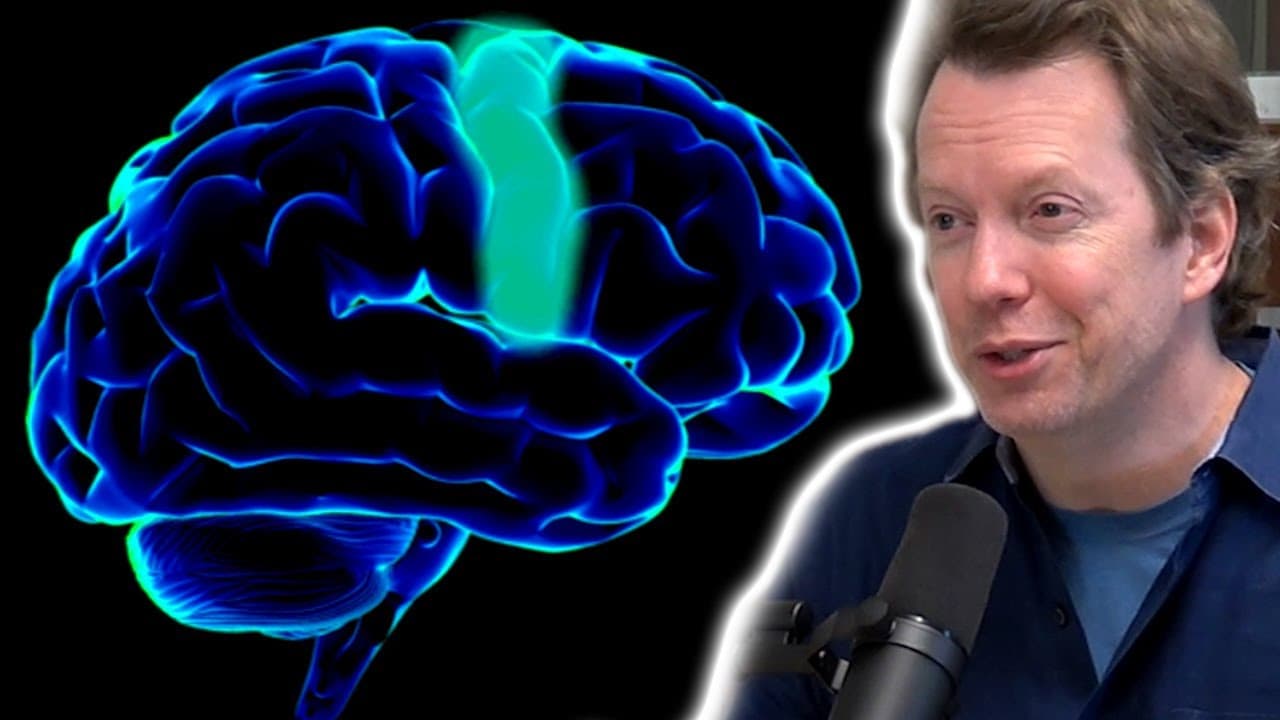
TL;DR
Isaac Newton's classical mechanics raised questions about action at a distance, but these concerns were addressed by Pierre Simone Laplace's field theory and later by Albert Einstein's theory of general relativity. There may be limits to human understanding, but there is still much to learn.
Transcript
Isaac Newton developed what we now call classical mechanics that you describe very nice in your new book because you do with a lot of basic concepts and physics so was classical mechanics I can throw a rock and can predict the trajectory of that rocks flight but if we could put ourselves back into Newton's time his theories work to predict things b... Read More
Key Insights
- 🤨 Classical mechanics, as developed by Isaac Newton, raised questions about action at a distance.
- 🏑 Pierre Simone Laplace's field theory provided an alternative explanation for gravity that did not rely on action at a distance.
- 🙂 Albert Einstein's theory of general relativity further expanded our understanding of gravity, introducing the concept of a gravitational field and the speed of light as a limit.
- ❓ There is ongoing debate and uncertainty about the existence and limitations of action at a distance in physics.
- ⛔ Human understanding of the universe is not limited to intuition alone but can be enhanced through training and mathematical reasoning.
- 🏑 The idea of action at a distance challenges our intuition about forces and fields.
- ⛔ While there may be limits to our ability to calculate certain things, there is no reason to believe that we are close to the limits of our understanding of the natural world.
Install to Summarize YouTube Videos and Get Transcripts
Explore YouTube Video Summarizer or Get YouTube Transcript Extractor
Questions & Answers
Q: Did Isaac Newton find his own theories on classical mechanics absurd?
Yes, Newton himself found the idea of action at a distance, as described by classical mechanics, to be absurd. He believed that his theories were just interpretations of predictions and that they did not make sense on a human level.
Q: How did Pierre Simone Laplace address the concern of action at a distance?
Laplace developed a field theory for gravity, which described the gravitational force as a field in between two objects rather than an instantaneous action at a distance. This field theory provided a more logical and intuitive explanation for gravitational interactions.
Q: Did Albert Einstein's theory of general relativity solve the problem of action at a distance?
While general relativity introduced a gravitational field and the speed of light as a limit, it still does not completely eliminate the possibility of action at a distance. However, it does provide a more comprehensive framework for understanding gravity and has been successful in making predictions and explaining observations.
Q: Are there limits to human understanding?
It is possible that there are limits to our understanding of the universe, but there is no definitive answer. Human cognition and mathematical abilities allow for abstract thinking and the manipulation of logical structures, which could potentially lead to a deep understanding of the natural world. However, there may always be new puzzles and unknowns that challenge our current understanding.
Summary & Key Takeaways
-
Isaac Newton's classical mechanics allowed for the prediction of the trajectory of objects, but he himself found the concept of action at a distance absurd.
-
Newton's religious beliefs led him to believe that God occasionally intervened to maintain the stability of the solar system due to the gravitational effects of other planets.
-
Pierre Simone Laplace's field theory and Albert Einstein's theory of general relativity provided alternative explanations for gravity that did not rely on action at a distance.
Read in Other Languages (beta)
Share This Summary 📚
Summarize YouTube Videos and Get Video Transcripts with 1-Click
Try YouTube Summary with ChatGPT & Claude or YouTube Transcript Generator
Explore More Summaries from Lex Fridman 📚
Summarize YouTube Videos and Get Video Transcripts with 1-Click
Try YouTube Summary with ChatGPT & Claude or YouTube Transcript Generator