What Is the Circular Economy and Why Is It Important?
TL;DR
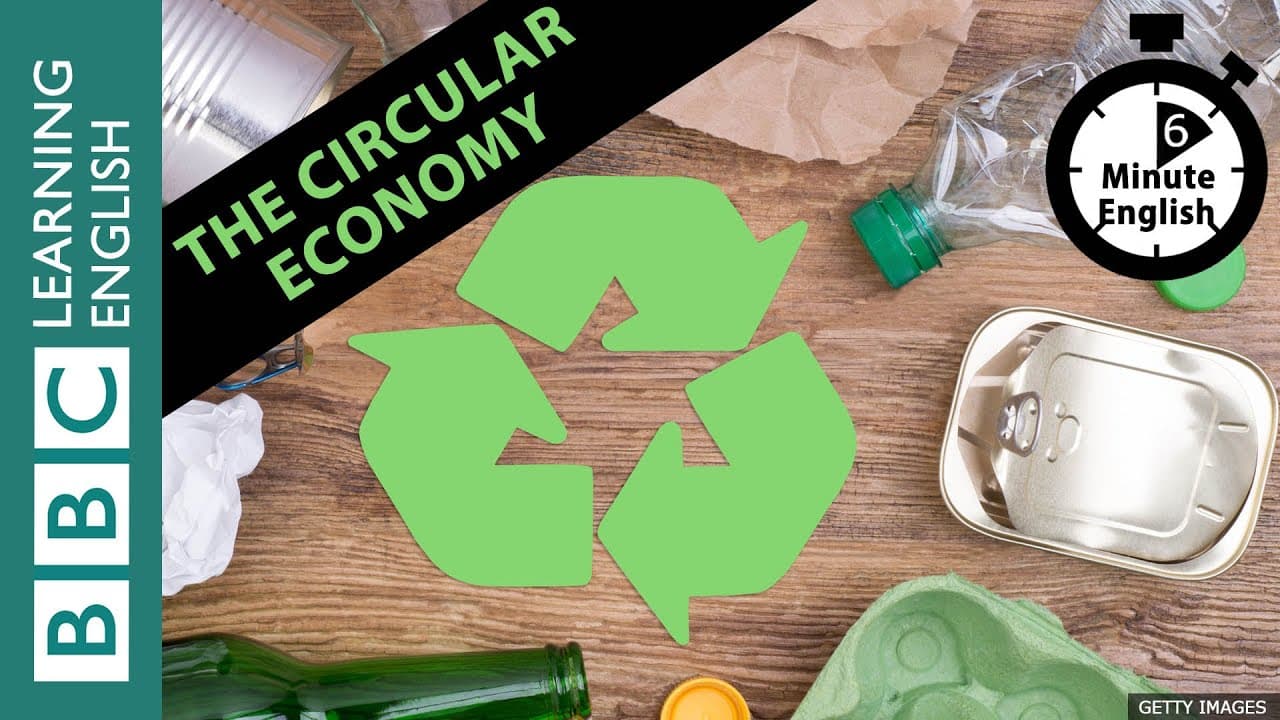
The circular economy shifts responsibility for product life cycles from consumers to manufacturers, encouraging sustainability by enabling reuse, repair, and recycling. This model aims to reduce overall waste and combat environmental issues by making manufacturers accountable for the products they create, leading to more durable and sustainable goods.
Transcript
Hello. This is 6 Minute English with me, Neil. And me, Sam. Today, we’re talking rubbish. Ooh, that’s a bit harsh – I thought it was going to be interesting. I mean our topic is about rubbish, not that we are rubbish. I see. Do go on. Thank you. So the amount of waste we produce around the world is huge and it’s a growing problem. But, there are so... Read More
Key Insights
- The global waste problem is significant and growing, with recycling being a partial but insufficient solution.
- Recycling is not the ultimate solution due to inefficiencies in waste separation and treatment.
- The concept of 'out of sight, out of mind' highlights how waste is often ignored once it is removed from view.
- A circular economy involves manufacturers taking responsibility for the entire lifecycle of their products.
- In a circular economy, products can be returned to manufacturers for reuse, repair, or recycling.
- The responsibility shift from consumers to manufacturers may encourage the production of more durable goods.
- Germany is recognized for recycling the highest percentage of its waste, showcasing effective waste management practices.
- Vocabulary related to waste management includes terms like 'separate', 'treat', 'manufacturer', 'consumer', and 'lifecycle'.
Install to Summarize YouTube Videos and Get Transcripts
Explore YouTube Video Summarizer or Get YouTube Transcript Extractor
Questions & Answers
Q: What is the main problem with relying solely on recycling?
Recycling alone is insufficient due to inefficiencies in waste separation and treatment. Many recyclable materials are not properly separated, leading to difficulties in processing and ultimately resulting in waste that is hidden from view, thus ignored by society.
Q: How does the concept of 'out of sight, out of mind' relate to waste management?
The concept 'out of sight, out of mind' in waste management refers to the tendency of people to ignore waste once it is removed from their immediate environment. This mindset contributes to the lack of awareness and responsibility toward waste disposal and recycling efforts.
Q: What is a circular economy and how does it differ from traditional models?
A circular economy is a model where the manufacturer retains responsibility for the product's lifecycle, including reuse, repair, and recycling. This contrasts with traditional models where consumers assume responsibility after purchase, often leading to waste when products reach the end of their lifecycle.
Q: What role do manufacturers play in a circular economy?
In a circular economy, manufacturers are responsible for their products throughout the entire lifecycle. They must design products that are durable, repairable, and recyclable, and they handle the return, refurbishment, or recycling of products when they are no longer usable by consumers.
Q: Why might a circular economy encourage more durable product design?
A circular economy encourages manufacturers to design more durable products because they are responsible for the product's end-of-life management. This responsibility incentivizes them to create goods that last longer and are easier to repair or recycle, reducing waste and resource consumption.
Q: Which country is recognized for its effective recycling practices?
Germany is recognized for its effective recycling practices, recycling the highest percentage of its waste. This success is attributed to efficient waste management systems and policies that promote recycling and sustainability.
Q: What vocabulary terms are introduced in the episode related to waste management?
The episode introduces vocabulary terms such as 'separate', meaning to divide waste into categories; 'treat', referring to processing waste; 'manufacturer', the entity that produces goods; 'consumer', the buyer of goods; and 'lifecycle', the duration a product is designed to last.
Q: How does the episode suggest we can improve waste management?
The episode suggests that adopting a circular economy can improve waste management by making manufacturers responsible for the lifecycle of their products. This shift can lead to more sustainable practices, encouraging manufacturers to create products that are easier to repair, reuse, and recycle.
Summary & Key Takeaways
-
The episode discusses the growing global waste problem and the limitations of recycling as a solution. It introduces the concept of a circular economy, where manufacturers are responsible for their products' lifecycle, encouraging more sustainable practices.
-
Recycling inefficiencies are highlighted, as waste separation and treatment can be challenging. The phrase 'out of sight, out of mind' is used to describe how people ignore waste once it's out of view, emphasizing the need for better waste management strategies.
-
Germany leads in recycling efforts, setting an example in waste management. The circular economy model is explained, where products are returned to manufacturers for reuse or repair, shifting responsibility from consumers to producers and promoting sustainability.
Read in Other Languages (beta)
Share This Summary 📚
Summarize YouTube Videos and Get Video Transcripts with 1-Click
Try YouTube Summary with ChatGPT & Claude or YouTube Transcript Generator
Explore More Summaries from BBC Learning English 📚

Summarize YouTube Videos and Get Video Transcripts with 1-Click
Try YouTube Summary with ChatGPT & Claude or YouTube Transcript Generator