"The Self Sabotage Manifesto" by Julien Blanc (How To Overcome Self Sabotage)
TL;DR
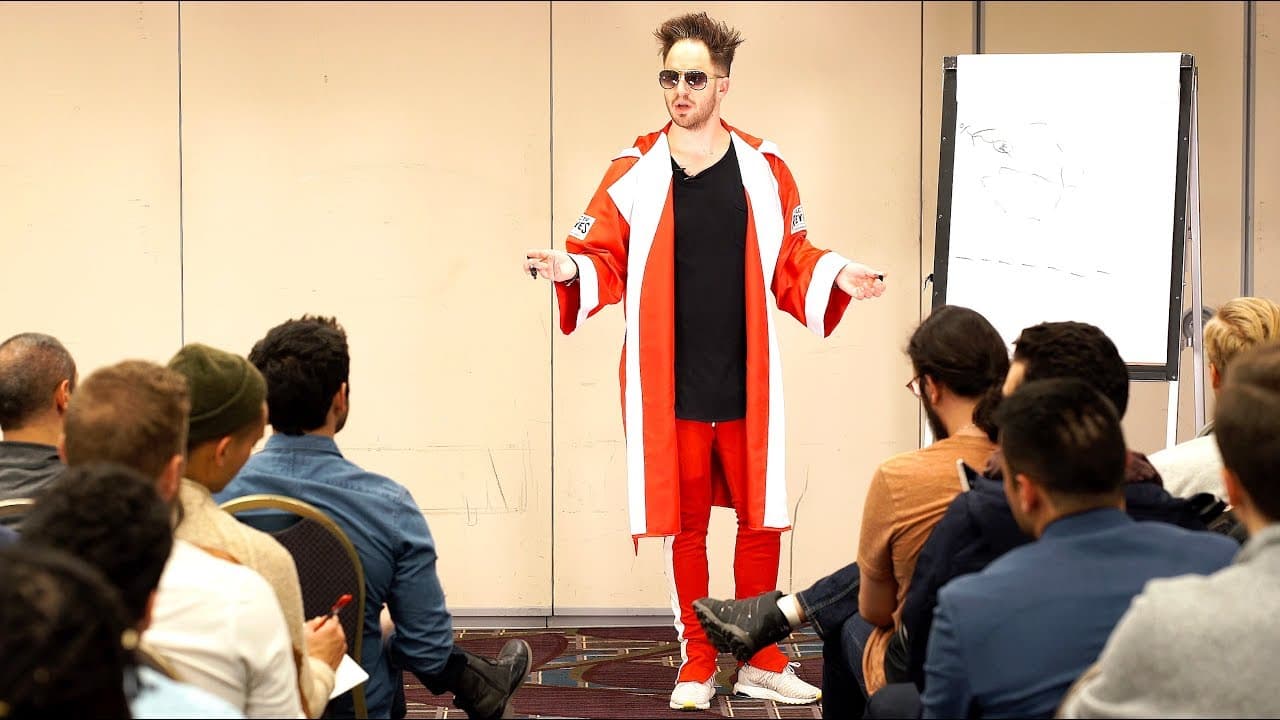
Our beliefs are shaped by secondhand experiences, often from childhood, affecting our adult behavior and self-sabotage.
Transcript
- There are two ways that we learn. Okay, there's firsthand experience and secondhand experience. Firsthand experience is you try it and you learn for yourself. Right, you touch the stove, you burn yourself, lesson learned. Click. (clicking sound) Right? (ding) Now, do you have enough time in your life to try everything yourself? No. So you're also... Read More
Key Insights
- 💠 Our beliefs are shaped by both firsthand and secondhand experiences.
- 💯 Childhood influences, including parental teachings, peers, and societal norms, form our core beliefs.
- 💯 Self-sabotage often stems from unexamined core beliefs from childhood.
- 💯 Identifying and questioning our core beliefs is essential for personal growth.
- 🥺 Processing underlying emotions and challenging our beliefs can lead to lasting transformation.
- 💯 Overcoming self-sabotage requires understanding the origins of our core beliefs.
- 🤢 Affirmations alone cannot overwrite deep-seated core beliefs.
Install to Summarize YouTube Videos and Get Transcripts
Explore YouTube Video Summarizer or Get YouTube Transcript Extractor
Questions & Answers
Q: How do firsthand and secondhand experiences shape our core beliefs?
Both firsthand experiences and secondhand experiences from childhood influence our core beliefs, impacting our perception of the world and ourselves.
Q: How do childhood influences from parents and peers affect our core beliefs?
Childhood influences, including parental teachings and societal norms, contribute to our core beliefs and assumptions that guide our behaviors and decisions in adulthood.
Q: What role does self-sabotage play in our lives, and how is it linked to core beliefs?
Self-sabotage often stems from unexamined core beliefs formed in childhood, leading to repetitive patterns and behaviors that hinder personal growth and success.
Q: How can we overcome self-sabotage and challenge our core beliefs?
By identifying and questioning our core beliefs, understanding their origins, and processing underlying emotions, we can break free from self-sabotage and create lasting personal transformation.
Summary & Key Takeaways
-
Firsthand and secondhand experiences shape our core beliefs and assumptions.
-
Childhood influences from parents, peers, and society form our core beliefs.
-
Self-sabotage often stems from unexamined core beliefs programmed in childhood.
Read in Other Languages (beta)
Share This Summary 📚
Summarize YouTube Videos and Get Video Transcripts with 1-Click
Try YouTube Summary with ChatGPT & Claude or YouTube Transcript Generator
Explore More Summaries from JulienHimself 📚

Summarize YouTube Videos and Get Video Transcripts with 1-Click
Try YouTube Summary with ChatGPT & Claude or YouTube Transcript Generator