20 (Every) Time Batman Killed Someone And Broke His Moral Code - Stories Explored
TL;DR
Examines instances where Batman broke his no-killing rule throughout comic history.
Transcript
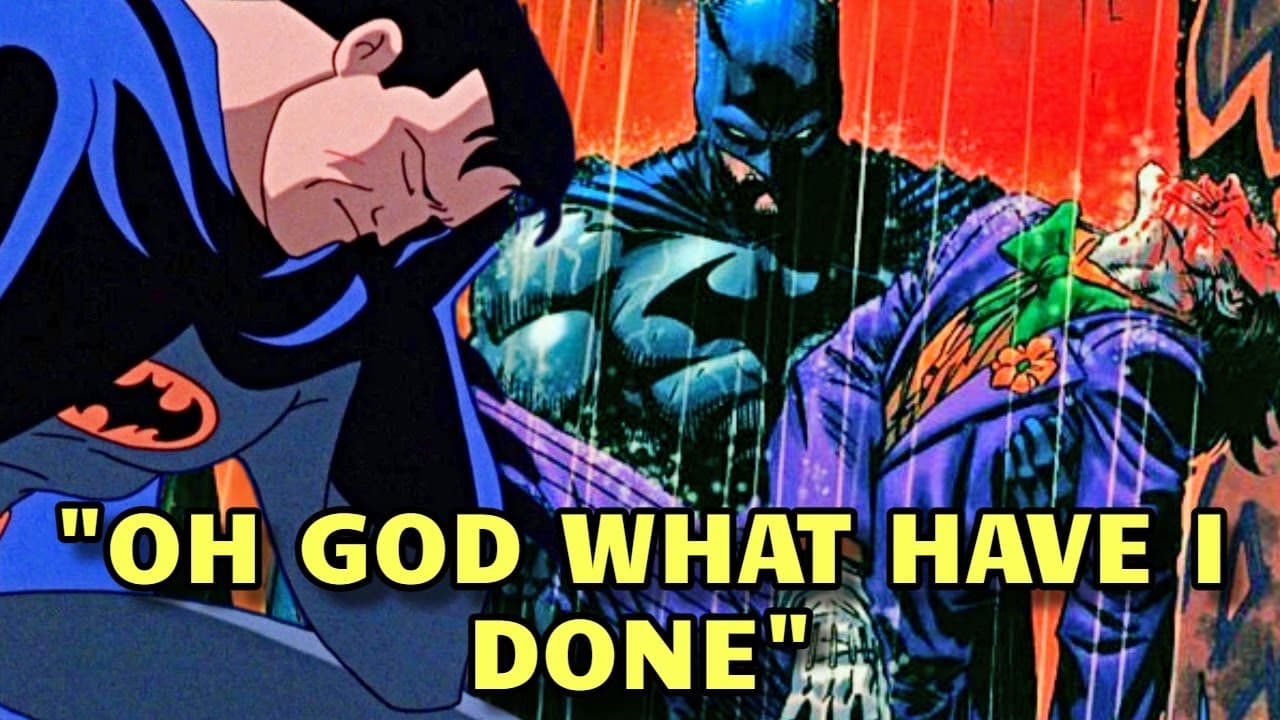
foreign welcome back to marvelous videos I'm Rylan and this is every time Batman killed someone and it broke his moral code the iconic DC superhero Batman is known as a man of principle he has always had a strong no killing Rule and follows it to the point where he's even avoided killing his arch nemesis The Joker on multiple occasions now while th... Read More
Key Insights
- 🥳 Batman's character has evolved significantly from his early days, where he frequently killed foes, showcasing a more brutal and less restrained version of justice.
- 😨 The "Dark Knights" storyline presents multiple versions of Batman, exploring darker themes such as power, fear, and moral ambiguity in heroism.
- 🥺 Instances like "The Killing Joke" demonstrate how personal trauma and emotional turmoil can lead Batman to temporarily break his moral code.
- 🤨 Alternate storylines often raise questions about the morality of vengeance and justice, complicating Batman’s role as a traditional hero.
- 🦹 As Batman’s character matured, a more defined no-killing rule emerged, emphasizing rehabilitation over lethal force in his dealings with villains.
- 🦹 Encounters with iconic villains like the Joker often reveal the complexities and paradoxes in Batman's moral framework, challenging his commitment to non-lethality.
- 🫥 Batman's interactions with supernatural entities, such as Dracula, expand the narrative considerations of morality, further blurring the lines of heroism.
Install to Summarize YouTube Videos and Get Transcripts
Explore YouTube Video Summarizer or Get YouTube Transcript Extractor
Questions & Answers
Q: What compels Batman to kill his enemies when he typically avoids it?
Batman’s moral code is challenged by extreme circumstances, particularly when the lives of innocents or his allies are at stake. His deep-seated fear of losing loved ones, especially when faced with relentless villains, leads him to take drastic measures. Although he strives to maintain a non-lethal approach, moments of emotional turmoil often drive him to violence as a means of ensuring justice and preventing future threats.
Q: How does the portrayal of Batman in early comics differ from modern interpretations?
Early Batman comics portrayed him as a more ruthless vigilante who wasn’t afraid to kill his enemies. These depictions highlighted a Batman willing to use lethal force as a means of justice. Over time, especially in modern interpretations, Batman's character evolved to emphasize a strict no-killing policy, focusing on rehabilitation of villains and maintaining his moral integrity, even in the face of overwhelming evil.
Q: In "Dark Knights: Metal," how does Batman's character evolve?
"Dark Knights: Metal" introduces alternate versions of Batman that embody his darker impulses, showcasing how near-absolute power can corrupt. These versions engage in ruthless killings, illustrating what Batman could become if he allowed his fear and anger to dominate his choices. This storyline serves to remind fans of Batman's fragile moral code and the constant battle between his heroic ideals and darker temptations.
Q: What were fans' reactions to Batman's actions in stories like "The Killing Joke" and "Justice League: The Nail"?
Fans had mixed reactions to Batman's violent actions in "The Killing Joke," notably when he seemingly kills the Joker. Some saw it as a justified act of vengeance given the Joker's brutality, while others felt it betrayed the essence of Batman's moral code. In "Justice League: The Nail," Batman’s execution of the Joker after the deaths of Robin and Batgirl also sparked debates among fans about whether vengeance can be justified or if it undermines Batman’s role as a hero.
Q: Can you elaborate on a specific early instance where Batman killed a villain?
In his debut in "Detective Comics #27," Batman kills Alfred Striker by inadvertently causing him to fall into an acid vat. This incident reflects Batman's initial characterization as a vigilante who lacks a hesitation to use lethal force to defeat evil. Throughout his early stories, such instances were not uncommon, as writers explored the darker nuances of justice and morality through the character of Batman.
Q: What does Batman's encounter with Dracula reveal about his character?
In "Batman and Dracula: Red Rain," Batman confronts the vampire Dracula and ultimately kills him, demonstrating his relentless commitment to fighting evil, regardless of the form it takes. This crossover illustrates Batman’s willingness to step beyond human foes and engage with supernatural threats, showcasing an adaptability in his moral code that challenges the idea of what constitutes life and death in the realm of comic narratives.
Summary & Key Takeaways
-
Batman, known for his strong moral code against killing, has deviated from this principle in various comic storylines, particularly in his early days where he displayed a ruthless side.
-
Notable examples include the "Dark Knights" saga featuring brutal alternate versions of Batman, and instances where he killed key villains like Joker and Dr. Hugo Strange without remorse.
-
Batman's murderous actions often reflect the darker themes of vengeance and justice, showcasing the character's complexity and moral struggles over the years.
Read in Other Languages (beta)
Share This Summary 📚
Summarize YouTube Videos and Get Video Transcripts with 1-Click
Try YouTube Summary with ChatGPT & Claude or YouTube Transcript Generator
Explore More Summaries from Marvelous Videos 📚




Summarize YouTube Videos and Get Video Transcripts with 1-Click
Try YouTube Summary with ChatGPT & Claude or YouTube Transcript Generator