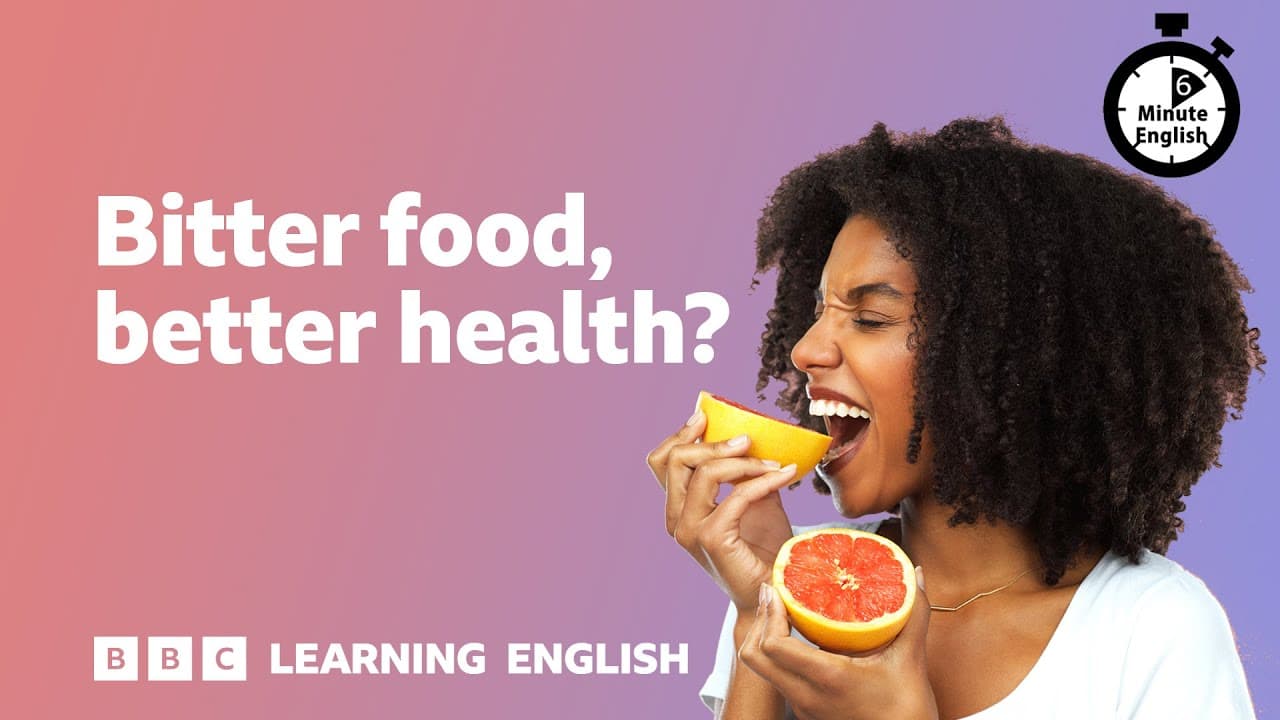
Bitter food, better health? ⏲️ 6 Minute English
TL;DR
Bitter foods may offer numerous health benefits.
Transcript
Hello. This is 6 minute English from BBC Learning English. I'm Phil... and I'm Beth. Phil, I'm going to start this episode with grapefruit. I've got some here. Do you want some? I'm not that keen on grapefruit. They're too bitter for me. Oh, that's a shame, because this episode is all about bitter food. It has actually been linked to a number of he... Read More
Key Insights
- Bitter foods have been linked to various health benefits, including interacting with the gut microbiome, suppressing hunger, controlling glucose release, and reducing chronic inflammation.
- The gut microbiome consists of microorganisms that play a crucial role in digestion and overall health, and bitter foods may positively influence this system.
- Suppressing feelings of hunger can be beneficial for weight management, and bitter foods may help in achieving this by reducing appetite.
- Tastebuds are the receptors on the tongue that detect flavors, including bitterness, which is often perceived negatively despite its potential benefits.
- Many mainstream foods and drinks, like chocolate, coffee, and alcohol, contain a degree of bitterness, challenging the perception that bitterness is undesirable.
- The episode discusses the five basic flavors humans can taste: sweet, salty, sour, bitter, and umami, with umami often found in savory foods.
- Bitter foods are not always favored due to their strong taste, but their health benefits make them worth considering for a balanced diet.
- Understanding and incorporating bitter flavors into the diet can offer health advantages and expand the palate, despite common perceptions of bitterness as negative.
Install to Summarize YouTube Videos and Get Transcripts
Explore YouTube Video Summarizer or Get YouTube Transcript Extractor
Questions & Answers
Q: What are some health benefits of bitter foods?
Bitter foods offer several health benefits, such as interacting with the gut microbiome, which is crucial for digestion and overall health. They can also suppress hunger, making them useful for weight management, and help in controlling glucose release and reducing chronic inflammation in the body.
Q: How do bitter foods interact with the gut microbiome?
Bitter foods interact with the gut microbiome by influencing the collection of microorganisms in the digestive tract. This interaction can enhance digestive health and support the body's ability to process nutrients, potentially leading to improved overall health and well-being.
Q: Why might people consume more bitter foods than they realize?
People might consume more bitter foods than they realize because many mainstream items, like chocolate, coffee, and alcohol, contain a degree of bitterness. These foods are widely consumed and often enjoyed despite their bitter taste, challenging the perception that bitterness is undesirable.
Q: What are the five basic flavors humans can taste?
Humans can taste five basic flavors: sweet, salty, sour, bitter, and umami. Each flavor offers unique sensory experiences and can contribute to a balanced diet. Umami, in particular, is a savory flavor often found in foods like grilled meats and broths.
Q: How can bitter foods help with weight management?
Bitter foods can aid in weight management by suppressing feelings of hunger. This suppression can reduce overall calorie intake, making it easier to maintain or achieve a healthy weight. Incorporating bitter foods into the diet may support appetite control and promote healthier eating habits.
Q: What is an undesirable trait in the context of this discussion?
In this discussion, an undesirable trait refers to a characteristic that is generally viewed negatively. Bitterness is often considered an undesirable trait in foods due to its strong taste, but this perception overlooks the potential health benefits that bitter foods can provide.
Q: What role do tastebuds play in detecting bitter flavors?
Tastebuds are receptors located on the tongue and in the mouth that detect different flavors, including bitterness. They play a crucial role in the sensory experience of eating, allowing individuals to perceive and appreciate a wide range of tastes, including those that may offer health benefits.
Q: How does the perception of bitterness affect its consumption?
The perception of bitterness as a negative trait can affect its consumption, as people may avoid bitter foods due to their strong taste. However, recognizing the health benefits of bitter foods and understanding that many popular items contain bitterness can encourage more people to include them in their diets.
Summary & Key Takeaways
-
Bitter foods have been shown to offer various health benefits, including interacting with the gut microbiome and suppressing hunger. These foods can also help control glucose levels and reduce inflammation, making them valuable for health-conscious individuals.
-
Despite their health benefits, bitter foods are often seen as undesirable due to their strong taste. However, many mainstream foods like chocolate, coffee, and alcohol contain bitterness, suggesting that people may consume more bitter flavors than they realize.
-
The episode highlights the five basic flavors humans can taste, including umami, which is often found in savory foods. Understanding these flavors and their health implications can help people make informed dietary choices and appreciate a wider range of tastes.
Read in Other Languages (beta)
Share This Summary 📚
Summarize YouTube Videos and Get Video Transcripts with 1-Click
Try YouTube Summary with ChatGPT & Claude or YouTube Transcript Generator
Explore More Summaries from BBC Learning English 📚

Summarize YouTube Videos and Get Video Transcripts with 1-Click
Try YouTube Summary with ChatGPT & Claude or YouTube Transcript Generator