Why Does Borosilicate Glass Shatter in Water?
TL;DR
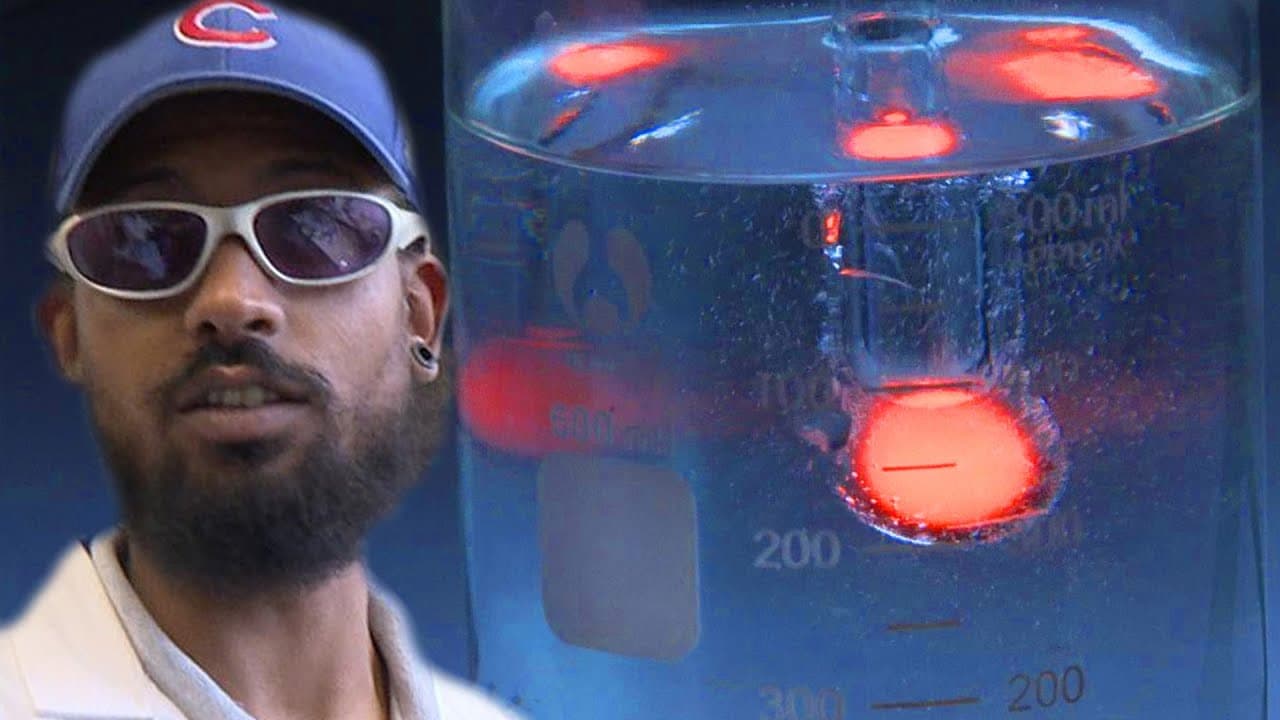
Borosilicate glass shatters in water due to significant thermal gradients that create strains when rapidly cooled, while quartz remains stable under the same conditions. The differing thermal expansion properties between the two materials are the key factors; quartz's lower expansion minimizes stress during temperature changes, making it more suitable for high-temperature applications.
Transcript
connor one of our glassblowers has got really nice demonstration and the difference between so-called borosilicate glass the sort of glass that's used for chemical apparatus and quartz which is silicon dioxide which is used for very high temperature applications like powerful street lights and things like that and so what he did it's very simple is... Read More
Key Insights
- 😎 Borosilicate glass cracks due to thermal gradients, while quartz remains stable when rapidly cooled.
- 😘 Quartz has lower expansion properties than borosilicate, making it ideal for high heat applications.
- 🥵 Sodium content in borosilicate glass emits an orange glow when heated.
- 😒 Quartz is more challenging to manufacture and costly, limiting its use compared to borosilicate.
- ⚡ High-temperature applications like powerful bulbs and street lights use quartz due to its heat resistance.
- 😎 Nature produces beautiful glass structures like prince rupert's drops with unique properties.
- 🈸 Material composition and heating processes determine the durability and applications of glassware.
Install to Summarize YouTube Videos and Get Transcripts
Explore YouTube Video Summarizer or Get YouTube Transcript Extractor
Questions & Answers
Q: What causes borosilicate glass to crack when plunged into water?
Borosilicate glass cracks due to the difference in temperatures between the hot glass and the water, creating strains that lead to fractures as the glass cools.
Q: Why does quartz remain stable when immersed in water after being heated?
Quartz has a low coefficient of expansion, causing minimal strain when cooled rapidly, making it ideal for high-temperature applications without cracking.
Q: What is the significance of sodium in borosilicate glass during the heating process?
Sodium in borosilicate glass evaporates when heated, emitting an orange glow similar to old street lights, indicating the presence of sodium in the material.
Q: Why is quartz considered a more robust material compared to borosilicate for certain applications?
Quartz is more difficult to manufacture and expensive, making borosilicate more commonly used for intricate glassware, while quartz is preferred for high-temperature applications due to its stability.
Summary & Key Takeaways
-
Glassblower demonstrates differences between borosilicate glass and quartz in heat resistance.
-
Borosilicate glass cracks due to thermal gradients while quartz remains stable when plunged into water.
-
Quartz contains less sodium and has lower expansion properties, making it suitable for high-temperature applications.
Read in Other Languages (beta)
Share This Summary 📚
Summarize YouTube Videos and Get Video Transcripts with 1-Click
Try YouTube Summary with ChatGPT & Claude or YouTube Transcript Generator
Explore More Summaries from Periodic Videos 📚


Summarize YouTube Videos and Get Video Transcripts with 1-Click
Try YouTube Summary with ChatGPT & Claude or YouTube Transcript Generator