Sources of Comparative Advantage
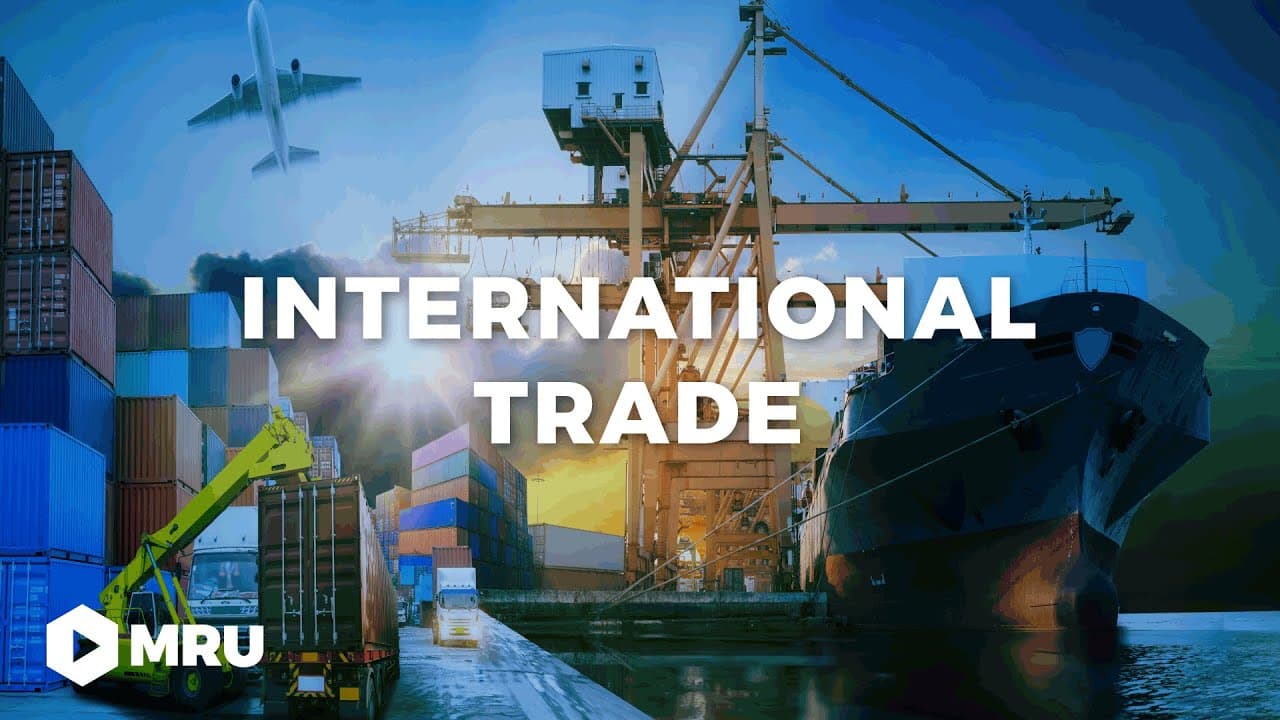
TL;DR
Comparative advantage arises from geography, labor, and institutions.
Transcript
Hi. In earlier lectures on comparative advantage, we assumed that different countries had different productivities in different industries. Today, what we want to do is just briefly fill that in a little bit and explain why productivities might differ in different industries, in different countries. Let's go. The most obvious differences are those... Read More
Key Insights
- Geographic and climatic conditions significantly influence a country's comparative advantage by affecting productivity in industries like agriculture, mining, and tourism.
- Labor mobility restrictions lead to different proportions of capital and labor skills, affecting comparative advantage in producing goods requiring varying skill levels.
- Increasing returns to scale can create comparative advantages post-trade, leading to specialization and enhanced productivity.
- Similar countries often trade extensively due to specialization and economies of scale, despite initial similarities.
- Specialization of knowledge, such as in medical fields or regional industries, enhances productivity and contributes to comparative advantage.
- Institutions like labor market flexibility and contract enforcement impact a country's ability to specialize in high-value or complex products.
- Financial institutions provide a comparative advantage by enabling easy access to capital, crucial for capital-intensive industries.
- Comparative advantage is dynamic and can evolve through trade, specialization, and institutional development.
Install to Summarize YouTube Videos and Get Transcripts
Explore YouTube Video Summarizer or Get YouTube Transcript Extractor
Questions & Answers
Q: How do geography and climate affect comparative advantage?
Geography and climate influence comparative advantage by determining the suitability of a region for specific industries, such as agriculture or tourism. These natural conditions can make certain areas more productive in specific sectors, providing them a comparative advantage over regions with less favorable conditions.
Q: What role does labor mobility play in comparative advantage?
Labor mobility restrictions result in varying proportions of capital to labor or skill levels across countries. These differences influence comparative advantage, as countries with abundant low-skill labor may excel in producing labor-intensive goods, while those with high-skill labor may specialize in technology-intensive products.
Q: How do increasing returns to scale create comparative advantage?
Increasing returns to scale lead to comparative advantage by allowing countries to specialize in certain industries, thus enhancing productivity. Specialization results in lower production costs and higher efficiency, enabling countries to trade based on newly developed comparative advantages, even with similar nations.
Q: Why do similar countries trade extensively?
Similar countries trade extensively due to the benefits of specialization and economies of scale. Despite their similarities, these countries can specialize in different industries, enhancing productivity and allowing for beneficial trade based on increased efficiency and lower production costs.
Q: How does knowledge specialization contribute to comparative advantage?
Knowledge specialization contributes to comparative advantage by increasing productivity through expertise in specific fields. Specialization allows individuals and regions to focus on particular areas, such as specialized medical fields or regional industries, leading to enhanced efficiency and a competitive edge in global markets.
Q: What is the impact of institutions on comparative advantage?
Institutions significantly impact comparative advantage by influencing a country's ability to specialize in high-value or complex products. Factors like labor market flexibility, finance, and contract enforcement determine how effectively a country can adapt to changing demands and leverage its strengths in global trade.
Q: How does finance provide a comparative advantage?
Finance provides a comparative advantage by facilitating access to capital, essential for industries requiring significant investment. Countries with robust financial institutions can support capital-intensive sectors, enabling them to specialize and compete effectively in global markets, thus enhancing their comparative advantage.
Q: Can comparative advantage evolve over time?
Yes, comparative advantage can evolve over time through trade, specialization, and institutional development. As countries engage in trade and specialize in certain industries, they can enhance productivity and develop new comparative advantages, adapting to changing global economic conditions and opportunities.
Summary & Key Takeaways
-
The video explores various factors contributing to comparative advantage, including geography, labor skill proportions, and institutional structures. These elements impact productivity and specialization across different industries, influencing trade patterns.
-
Increasing returns to scale, achieved through trade and specialization, create post-trade comparative advantages, allowing countries to enhance productivity and engage in beneficial trade with similar nations.
-
Institutions such as labor market flexibility, finance, and contract enforcement play crucial roles in determining a country's comparative advantage, affecting its ability to specialize in high-value or complex products.
Read in Other Languages (beta)
Share This Summary 📚
Summarize YouTube Videos and Get Video Transcripts with 1-Click
Try YouTube Summary with ChatGPT & Claude or YouTube Transcript Generator
Explore More Summaries from Marginal Revolution University 📚


Summarize YouTube Videos and Get Video Transcripts with 1-Click
Try YouTube Summary with ChatGPT & Claude or YouTube Transcript Generator