Capitalismo ou socialismo: qual a melhor opção?
TL;DR
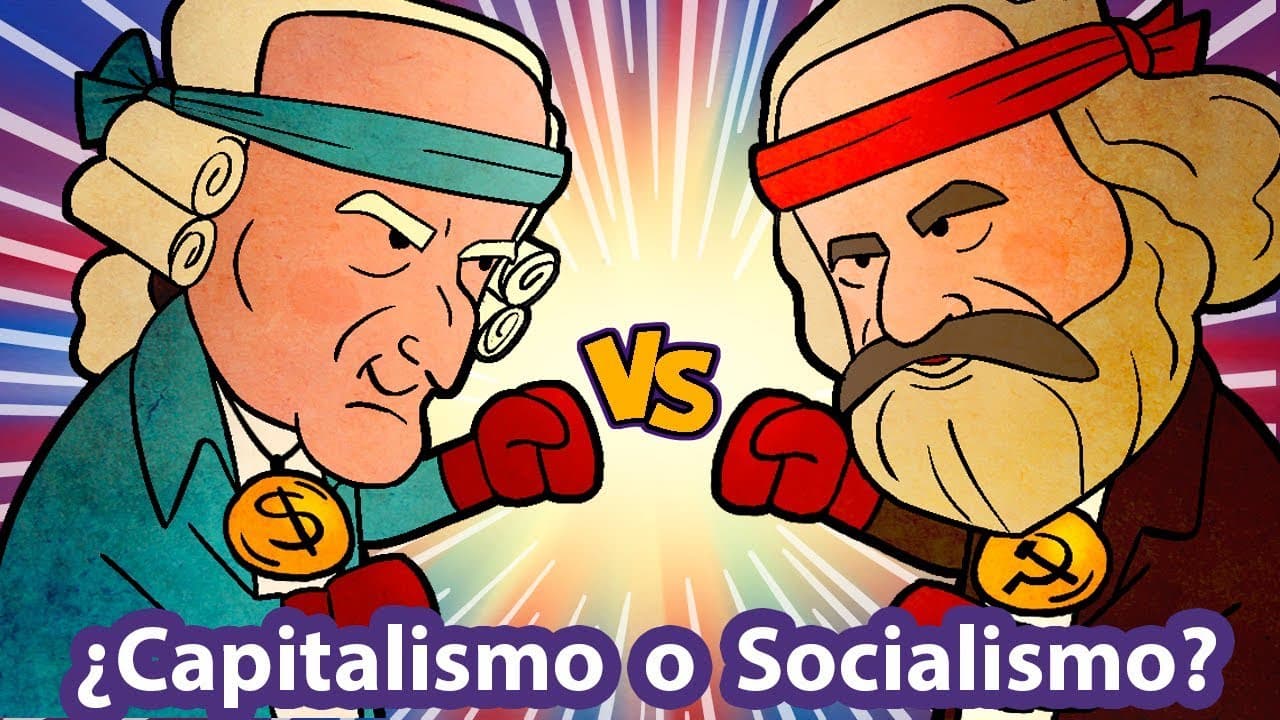
A discussão entre capitalismo e socialismo é fundamental para entender as transformações econômicas e sociais ao longo da história. O vídeo explora as críticas de Karl Marx sobre o capitalismo, analisando suas características, desigualdades e os impactos sociais gerados pela lógica de mercado. Este conflito ideológico continua a afetar nossas sociedades contemporâneas.
Transcript
Platzi provided the capital for this video of social interest... It's a heated debate that's confronted friends, families, and social classes. It's turned entire countries upside down. This was the basis for the Cold War in the 20th century that demanded you pick a side: Capitalism, led by the United States, or socialism, led by the Soviet Union? E... Read More
Key Insights
- 🌐 The ideological conflict between capitalism and socialism has shaped global economic systems throughout history, influencing political and social structures.
- ✊ Karl Marx introduced a critical framework for understanding the dynamics of power, class struggle, and social evolution, emphasizing that societal development emerges from conflicting ideals.
- 😮 The transition from feudalism to capitalism marked a significant shift in how labor and economic resources were organized, giving rise to a distinct capitalist class.
- 🤨 Capitalism promotes innovation and competition but also leads to wealth disparities and social inequalities, raising questions about equity and justice in modern economies.
- 🥶 Historical revolutions, such as the French Revolution, played crucial roles in dismantling the old order and establishing capitalist ideals around liberty, democracy, and private property.
- 🫥 The Invisible Hand theory suggests that individual economic pursuits can inadvertently benefit society, although the practicality of this remains debated.
- 🥺 Capital gain concerns within capitalism can lead to exploitation, challenging the ideal of fair labor practices and equitable wealth distribution.
Install to Summarize YouTube Videos and Get Transcripts
Explore YouTube Video Summarizer or Get YouTube Transcript Extractor
Questions & Answers
Q: How did Karl Marx's ideas influence the perception of capitalism and socialism?
Karl Marx's critique of capitalism highlighted its inherent inequalities, particularly the exploitation of workers. His belief that societies evolve through conflict led him to argue that capitalism would eventually create a class struggle, necessitating the need for socialism as a means to achieve equality and justice for the working class.
Q: What are the main characteristics of capitalism as described in the content?
Capitalism is characterized by private ownership of the means of production, a free market system where individuals can buy, sell, and negotiate freely, and minimal state intervention. This fosters competition and innovation, but can also create significant disparities between the wealthy and the impoverished within society.
Q: How does the stage of capitalism differ from earlier stages like feudalism and slavery?
Unlike feudalism, where serfs were bound to land controlled by lords, capitalism allows individuals the freedom to own property and start businesses. The transition from slavery to feudalism involved a shift in social structures, but capitalism brought about a system where labor and capital could be negotiated independently, leading to further social changes.
Q: What issues did workers face during the rise of capitalism in the 19th century?
During the rise of capitalism, workers experienced harsh conditions such as long working hours, low wages, child labor, and dangerous environments in factories. Many lacked basic rights and benefits like health insurance and vacations, fueling social unrest and calls for reform throughout industrializing nations.
Summary & Key Takeaways
-
The video examines the ideological conflict between capitalism and socialism, starting from the Industrial Revolution in 19th-century Europe. It highlights how this debate transformed economies and societies.
-
It reviews Karl Marx's analysis of social development, identifying four stages: primitive communism, slavery, feudalism, and capitalism, detailing the consequences of each on social classes and economic systems.
-
The complexities of capitalism are explored, including its characteristics such as private property, free markets, and innovation, while also addressing the challenges and inequalities it produced in urban centers.
Read in Other Languages (beta)
Share This Summary 📚
Summarize YouTube Videos and Get Video Transcripts with 1-Click
Try YouTube Summary with ChatGPT & Claude or YouTube Transcript Generator
Explore More Summaries from CuriosaMente 📚





Summarize YouTube Videos and Get Video Transcripts with 1-Click
Try YouTube Summary with ChatGPT & Claude or YouTube Transcript Generator