Migration Math | National Geographic
TL;DR
Mathematical ecologist studies wildebeest migration patterns to understand their survival in Serengeti; superorganism behavior and dung beetles play key roles.
Transcript
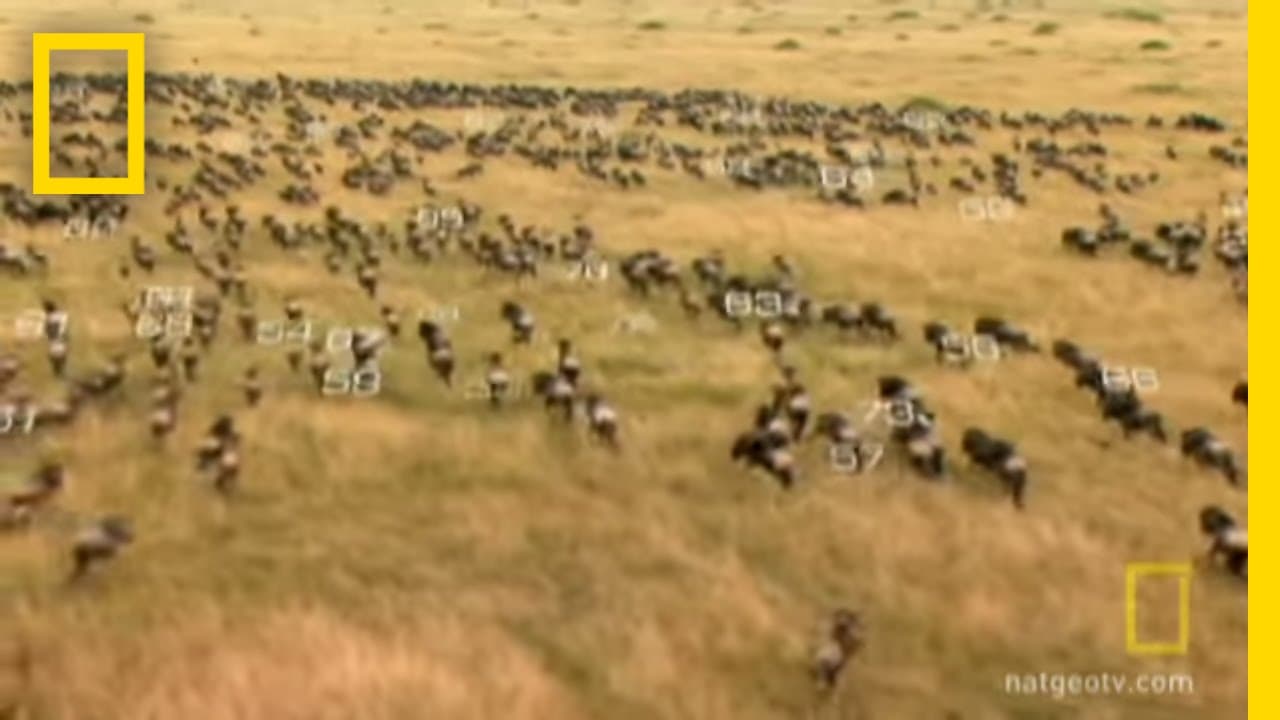
for mathematical ecologist John Frick cell migration is math in motion where we see animals he sees mathematical patterns and he's using these patterns to unlock the key to wildebeest survival and migration in the Serengeti grasslands of Tanzania wildebeest are on there 480 kilometers Ernie this annual event is among the great natural spectacles on... Read More
Key Insights
- ❓ Wildebeest migration in the Serengeti is a complex system influenced by mathematical patterns observed by ecologists like John Frick.
- 🖐️ Superorganism behavior plays a vital role in the survival of wildebeest herds despite challenging odds.
- 🪲 Dung beetles contribute to the ecosystem by fertilizing the soil with wildebeest manure, supporting the grazing needs of the herds.
- 👥 Leaders in the wildebeest herd influence the behavior of the entire group, creating a cohesive migratory pattern.
- ❓ Understanding the mathematical ecology of wildebeest migration can provide insights into their survival strategies in the wild.
- ❓ Wildebeest herds exhibit a collective behavior that mimics a superorganism, ensuring their survival during migration.
- 🔓 Ecologists like Frick study wildlife ecosystems to unlock the secrets of animal survival and behavior in challenging environments.
Install to Summarize YouTube Videos and Get Transcripts
Explore YouTube Video Summarizer or Get YouTube Transcript Extractor
Questions & Answers
Q: How does mathematical ecologist John Frick study wildebeest migration patterns?
Frick studies wildebeest migration by observing the behavior from the air, looking for patterns in the movement of the herds. He notes a streaming behavior where individuals follow a key leader blindly, forming a superorganism.
Q: Why do wildebeest migrate in such large numbers despite high mortality rates?
The survival of wildebeest in great numbers is attributed to the superorganism behavior, where the actions of key individuals influence the entire group, creating a collective survival strategy.
Q: What role do dung beetles play in the wildebeest ecosystem?
Dung beetles thrive on wildebeest manure, which they collect and store underground, fertilizing the soil. This activity allows more wildebeest to graze and ensures a balanced ecosystem in the Serengeti.
Q: How does the behavior of leaders in the wildebeest herd impact the entire group?
The behavior of leaders in the wildebeest herd influences the rest of the group, as their actions are replicated by others, creating a cohesive superorganism that follows a collective migratory path.
Summary & Key Takeaways
-
Mathematical ecologist John Frick studies wildebeest migration in Serengeti using mathematical patterns.
-
Wildebeest migration is a great spectacle, but five out of six young do not survive.
-
Frick observes superorganism behavior and the role of dung beetles in shaping wildebeest survival.
Read in Other Languages (beta)
Share This Summary 📚
Summarize YouTube Videos and Get Video Transcripts with 1-Click
Try YouTube Summary with ChatGPT & Claude or YouTube Transcript Generator
Explore More Summaries from National Geographic 📚
Summarize YouTube Videos and Get Video Transcripts with 1-Click
Try YouTube Summary with ChatGPT & Claude or YouTube Transcript Generator