Why Is There a Labor Shortage in 2021?
TL;DR
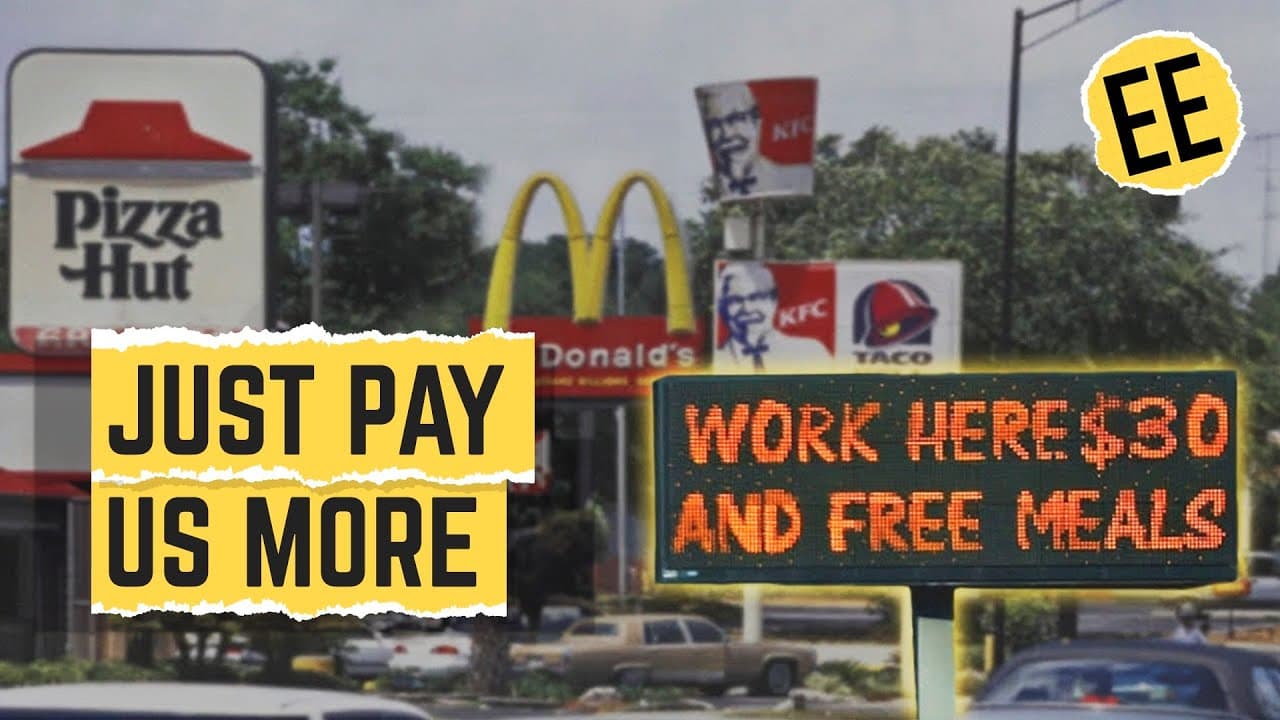
The U.S. is experiencing a labor shortage despite high unemployment rates. This is due to a shift in the non-accelerating inflation rate of unemployment (NAIRU) and generous government aid during the pandemic. Employers are now competing for workers by offering higher wages and better conditions, causing concern about potential inflation and economic imbalance.
Transcript
just over a year ago in march of 2020 unemployment in the u.s spiked to 15 percent as the fallout of the coronavirus forced many businesses to close and many more to take drastic cost-cutting measures to survive the turbulent times that lay ahead today thanks in part to government stimulus and a new acceptance of the status quo in the workplace... Read More
Key Insights
- The U.S. unemployment rate spiked to 15% in March 2020 but has since fallen to 6%.
- Labor shortages are causing employers to offer incentives like higher wages and bonuses.
- Full employment doesn't mean zero unemployment; it includes frictional and structural unemployment.
- NAIRU is the unemployment rate at which inflation does not accelerate, and it has shifted due to the pandemic.
- Government stimulus and unemployment benefits have made not working more financially viable for some.
- Labor shortages can lead to inflation as businesses pass increased wage costs to consumers.
- The labor market is currently favorable for employees, offering opportunities for better job conditions.
- Some economists believe the labor market will stabilize as businesses and workers adjust post-pandemic.
Install to Summarize YouTube Videos and Get Transcripts
Explore YouTube Video Summarizer or Get YouTube Transcript Extractor
Questions & Answers
Q: Why is there a labor shortage despite high unemployment?
The labor shortage is partly due to the shift in the non-accelerating inflation rate of unemployment (NAIRU) and the impact of generous government stimulus and unemployment benefits during the pandemic. These factors have made it more financially viable for some people to remain unemployed, leading to fewer available workers despite high unemployment rates.
Q: What is NAIRU and how does it affect the economy?
NAIRU stands for the non-accelerating inflation rate of unemployment. It is the level of unemployment at which inflation does not increase. When unemployment falls below this rate, it can lead to inflation as businesses compete for scarce labor by raising wages, which can then lead to higher prices for goods and services.
Q: How are businesses responding to the labor shortage?
Businesses are responding to the labor shortage by offering higher wages, signing bonuses, and other incentives to attract workers. Some companies are even paying potential recruits just to attend job interviews. This competition for employees is driving up labor costs, which may be passed on to consumers in the form of higher prices.
Q: What role does government stimulus play in the labor shortage?
Government stimulus, including unemployment benefits and direct payments, has provided financial support to individuals during the pandemic. For some, this support exceeds what they would earn in certain industries, reducing the incentive to return to work, thereby contributing to the labor shortage.
Q: How can workers take advantage of the current labor market?
Workers can take advantage of the current labor market by seeking new job opportunities with better salaries and conditions. Employers are competing for employees, which gives workers greater negotiating power. Job hopping can lead to significant pay increases compared to staying with the same employer for extended periods.
Q: What are the potential long-term effects of the labor shortage?
The potential long-term effects of the labor shortage include sustained inflation if wage increases lead to higher prices. If businesses cannot sustain higher labor costs, some may close, reducing supply in the market. Additionally, if wages fall back, workers who overextended financially may face difficulties.
Q: Why do some economists disagree about the labor shortage's impact?
Some economists argue that the labor shortage is a temporary issue that will resolve as the economy adjusts post-pandemic. They believe that as businesses reopen and workers return or new workers enter the market, the labor supply will stabilize. Others worry about long-term inflation and economic distortions.
Q: How does the labor shortage affect inflation?
The labor shortage can lead to inflation as businesses increase wages to attract workers and then pass these higher costs onto consumers in the form of increased prices for goods and services. If wage growth outpaces productivity, it can create sustained inflationary pressure in the economy.
Summary & Key Takeaways
-
The U.S. labor market is experiencing a paradoxical shortage despite a 6% unemployment rate. Employers are offering higher wages and bonuses to attract workers, leading to concerns about inflation and economic imbalance. The NAIRU has shifted, causing labor market distortions.
-
Generous government stimulus and unemployment benefits have made staying home more financially viable for some workers. This has led to a situation where businesses are struggling to find employees, despite the high unemployment rate.
-
The current labor market situation presents an opportunity for workers to negotiate better wages and conditions. However, there are concerns that this could lead to inflation and long-term economic issues if not managed properly.
Read in Other Languages (beta)
Share This Summary 📚
Summarize YouTube Videos and Get Video Transcripts with 1-Click
Try YouTube Summary with ChatGPT & Claude or YouTube Transcript Generator
Explore More Summaries from Economics Explained 📚




Summarize YouTube Videos and Get Video Transcripts with 1-Click
Try YouTube Summary with ChatGPT & Claude or YouTube Transcript Generator