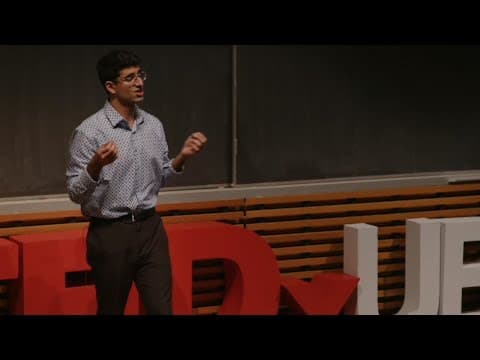
Reciprocate to Transform: The Power of Emotional Intelligence | Etka Vyas | TEDxSantaBarbaraSalon

TL;DR
Emotional intelligence is crucial for effective leadership during organizational transformations, emphasizing balance between thinking and feeling.
Transcript
um I have been um a transformational leader uh which happened accidentally but I kept going and ended up finding out I am a transformation leader uh for over two decades um and the last two decades have specifically been in healthcare uh but my overall career spans across 28 years um and my uh doctoral research actually was very much um specific to... Read More
Key Insights
- 🤝 Transformational leadership involves challenging existing norms, shaking up organizations, and fostering learning new behaviors.
- 🤔 Emotional intelligence, measured by EQ, plays a significant role in effective decision-making by balancing thinking and feeling.
- 🚨 Empathy emerges as a crucial competency in leadership, contributing to staff engagement and positive outcomes.
- 🤕 Generational differences impact emotional intelligence, highlighting the need for education and training across different age groups.
- ❓ Organizational transformations require leaders to be aware of emotions, navigate them effectively, and consider the impact of their actions on others.
- 🤔 Emotional intelligence is a balance between thinking and feeling, influencing behaviors and decision-making in personal and professional relationships.
- 👶 Transformations require leaders to step out of their comfort zones, challenge the status quo, and create a vision for a new future.
Install to Summarize YouTube Videos and Get Transcripts
Explore YouTube Video Summarizer or Get YouTube Transcript Extractor
Questions & Answers
Q: What is the role of emotional intelligence in transformational leadership?
Emotional intelligence plays a crucial role in transformational leadership by allowing leaders to balance thinking and feeling, make optimal decisions, and navigate emotions for successful outcomes during organizational changes.
Q: How does transformation differ from ordinary change processes?
Transformation involves shaking up existing norms, challenging the status quo, and learning new behaviors, making it more disruptive and impactful compared to regular change processes.
Q: Why is emotional intelligence important in leadership, especially during times of extreme transformational change?
Emotional intelligence is vital as it enables leaders to understand, navigate, and influence emotions effectively, ensuring optimal decision-making and fostering positive relationships during times of organizational transformation.
Q: How can organizations help leaders develop empathy, a crucial component of emotional intelligence?
Organizations can provide training and support to help leaders develop empathy, a key component of emotional intelligence, even if it is not their natural competency, contributing to improved staff engagement and successful outcomes.
Summary & Key Takeaways
-
The speaker discusses her accidental journey into becoming a transformational leader, particularly in healthcare, spanning over 28 years.
-
Transformation involves shaking up existing norms, challenging the status quo, and learning new behaviors.
-
Emotional intelligence (EQ) is essential for optimal decision-making, balancing thinking and feeling in leadership roles.
Read in Other Languages (beta)
Share This Summary 📚
Summarize YouTube Videos and Get Video Transcripts with 1-Click
Try YouTube Summary with ChatGPT & Claude or YouTube Transcript Generator
Explore More Summaries from TEDx Talks 📚





Summarize YouTube Videos and Get Video Transcripts with 1-Click
Try YouTube Summary with ChatGPT & Claude or YouTube Transcript Generator