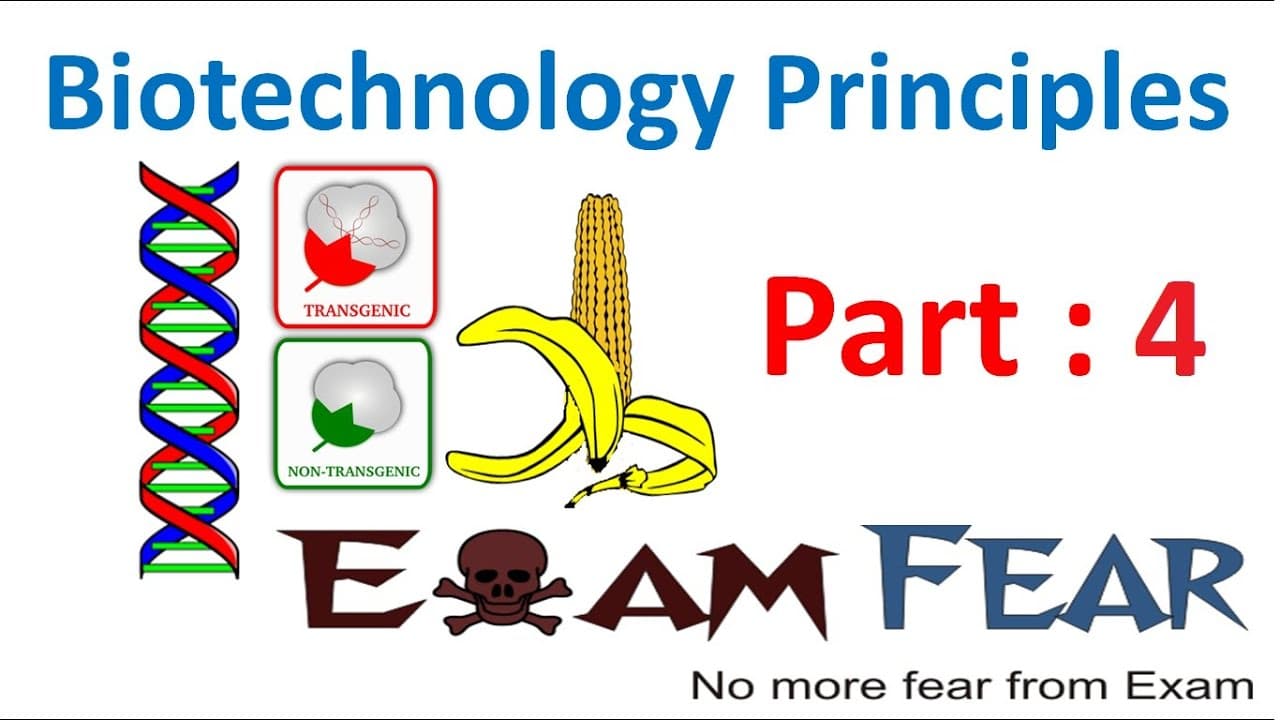
Biology Biotechnology Principles part 4 (Disadvantage of traditional Hybridization) class 12 XII
TL;DR
This video discusses the principles of genetic engineering and the two modes of reproduction, sexual and asexual. It also highlights the advantages of genetic engineering over traditional hybridization techniques.
Transcript
hello friends this video on biotechnology principles part 4 is brought to you by exam feel calm no more fear from exam now when they talk about reproduction because when we are talking about generating or producing organisms of desirable traits so how do we produce organisms now orgasms are produced by the process of reproduction but there are two ... Read More
Key Insights
- ©️ Sexual reproduction results in unique organisms with beneficial variations, while asexual reproduction produces exact copies.
- 😑 Traditional hybridization methods can lead to the expression and multiplication of undesirable genes.
- 👻 Genetic engineering allows for the selection and transfer of specific genes to create desired traits in organisms.
- ❓ Genetic engineering overcomes the limitations of traditional hybridization methods.
- 🔨 DNA manipulation in genetic engineering is a complex process involving various tools and techniques.
- 🎯 The desired gene is extracted from an organism and transferred to a target organism in genetic engineering.
- 💁 Genetic engineering is a form of biotechnology that manipulates genetic material to bring about desired modifications.
Install to Summarize YouTube Videos and Get Transcripts
Explore YouTube Video Summarizer or Get YouTube Transcript Extractor
Questions & Answers
Q: What are the two modes of reproduction discussed in the video?
The video explains that the two modes of reproduction are sexual reproduction and asexual reproduction. Sexual reproduction is common in higher animals and involves variations that can be beneficial. Asexual reproduction, more common in lower animals and plants, produces exact copies with no variations.
Q: What are the advantages of genetic engineering over traditional hybridization?
Genetic engineering allows for the selection of specific genes to be transferred to target organisms, ensuring only the desired genes are present. This overcomes the limitations of traditional hybridization, where undesirable genes can be expressed and multiplied.
Q: How is genetic engineering defined?
Genetic engineering is defined as the manipulation of genetic material, particularly DNA, to bring about desired modifications in an organism. It involves the selection, isolation, and transfer of specific genes using various tools and techniques.
Q: What are the processes involved in genetic engineering?
The video mentions the extraction of a desired gene from an organism as one of the processes involved in genetic engineering. However, it emphasizes that the manipulation of DNA is a complex process requiring a range of tools and techniques.
Summary & Key Takeaways
-
The video explains the two modes of reproduction: sexual reproduction and asexual reproduction, and their characteristics, such as uniqueness and clone production.
-
It mentions the limitations of traditional hybridization methods, including the expression of undesirable genes and the multiplication of undesirable genes.
-
The video introduces genetic engineering as a solution to overcome the limitations of traditional hybridization, allowing for the selection and transfer of specific genes to create desired traits in organisms.
Read in Other Languages (beta)
Share This Summary 📚
Summarize YouTube Videos and Get Video Transcripts with 1-Click
Try YouTube Summary with ChatGPT & Claude or YouTube Transcript Generator
Explore More Summaries from LearnoHub - Class 11, 12 📚



Summarize YouTube Videos and Get Video Transcripts with 1-Click
Try YouTube Summary with ChatGPT & Claude or YouTube Transcript Generator