Mary Lou Jepsen: Could future devices read images from our brains?
TL;DR
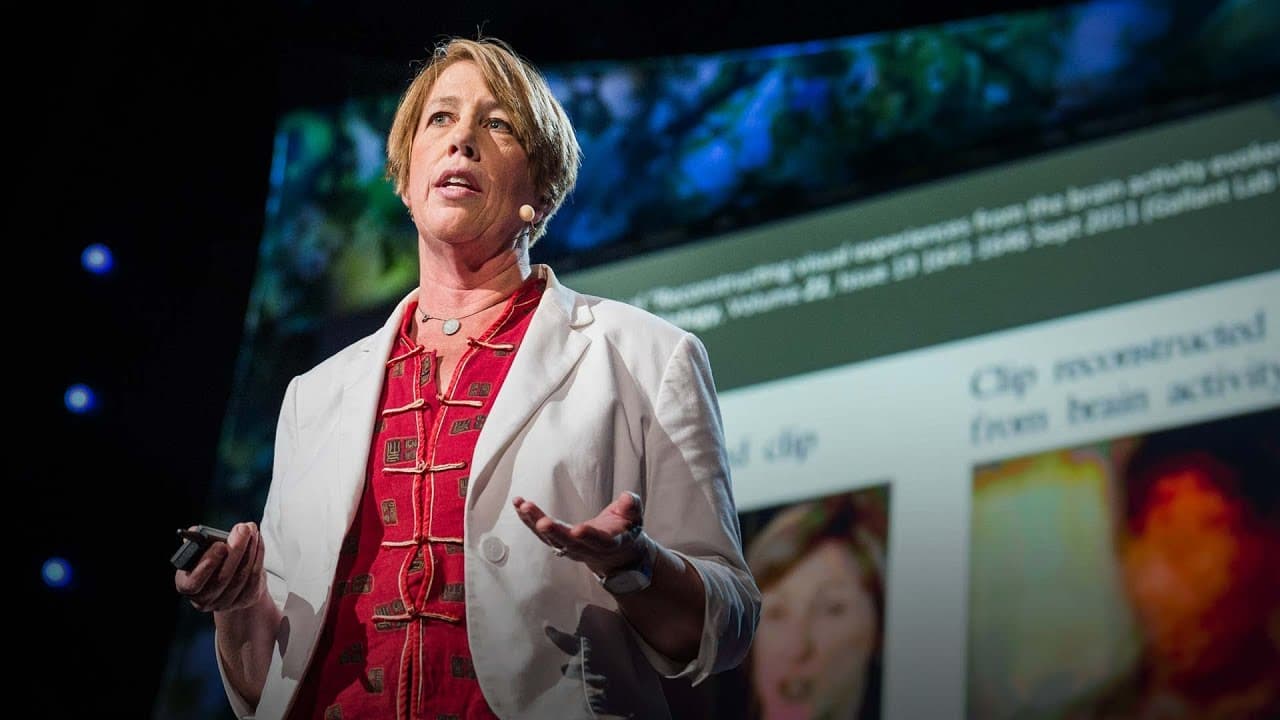
In this talk, the speaker shares their personal journey of brain surgery and explores the possibilities and challenges of using brain scan technology to enhance human communication and intelligence.
Transcript
I had brain surgery 18 years ago, and since that time, brain science has become a personal passion of mine. I'm actually an engineer. And first let me say, I recently joined Google's Moonshot group, where I had a division, the display division in Google X, and the brain science work I'm speaking about today is work I did before I joined Google and ... Read More
Key Insights
- 💡 Brain surgery stigma: There is a societal stigma associated with brain surgery, with questions about intelligence and ability. This stigma can affect individuals who have undergone surgery, leading to self-doubt and insecurity.
Install to Summarize YouTube Videos and Get Transcripts
Explore YouTube Video Summarizer or Get YouTube Transcript Extractor
Questions & Answers
Q: What part of the brain was missing after the speaker's neurosurgery?
After the speaker's neurosurgery, part of the brain that makes key hormones and neurotransmitters, located in the gooey part dead center, was missing.
Q: How did the speaker try to determine the combinations and mixtures of chemicals needed to stay alive?
The speaker had to experiment and try different mixtures of chemicals to determine their optimal dosages since there wasn't a clear road map available. Every day for 18 years, the speaker had to decide the amounts of each chemical to take to stay alive.
Q: What did the speaker discover when experimenting with different dosages of chemicals?
The speaker discovered that tiny changes in dosages of chemicals dramatically altered their sense of self, thinking, behavior, and overall sense of who they were. One example was trying dosages typical of a man in his early 20s, which led to increased anger, constant thoughts about sex, and exaggerated feelings of being the smartest person in the world.
Q: What is one of the goals the speaker has regarding brain science?
One of the goals the speaker has is to find ways to get their mental images, which are central in their inventive and creative thinking process, out to a computer screen faster. They believe that being able to share these mental images with others at light speed could have incredible possibilities for creative individuals.
Q: What have recent neuroscience experiments shown in terms of brain scanning technology?
Recent experiments using fMRI technology have shown that there is a minimal difference between the brain scans of a person looking at an image and the brain scans of that same person imagining seeing that image. Another experiment was able to decode brainwaves into recognizable visual fields, showing that it is possible to interpret brain scans to determine what individuals are seeing or imagining.
Summary & Key Takeaways
-
The speaker had brain surgery 18 years ago and has since become passionate about brain science, conducting personal experiments with chemicals to optimize brain function.
-
The speaker believes that mental images are crucial for creative and inventive thinking, and discusses recent experiments using fMRI technology to decode brainwaves and visualize thoughts.
-
The speaker proposes using nanoscience and magnetic patterns to increase the resolution of brain scan systems, potentially allowing for direct communication of human thought and advancements in treating brain diseases.
Read in Other Languages (beta)
Share This Summary 📚
Summarize YouTube Videos and Get Video Transcripts with 1-Click
Try YouTube Summary with ChatGPT & Claude or YouTube Transcript Generator
Explore More Summaries from TED 📚


Summarize YouTube Videos and Get Video Transcripts with 1-Click
Try YouTube Summary with ChatGPT & Claude or YouTube Transcript Generator