What Makes Trappist-1 Exoplanets Unique for Life?
TL;DR
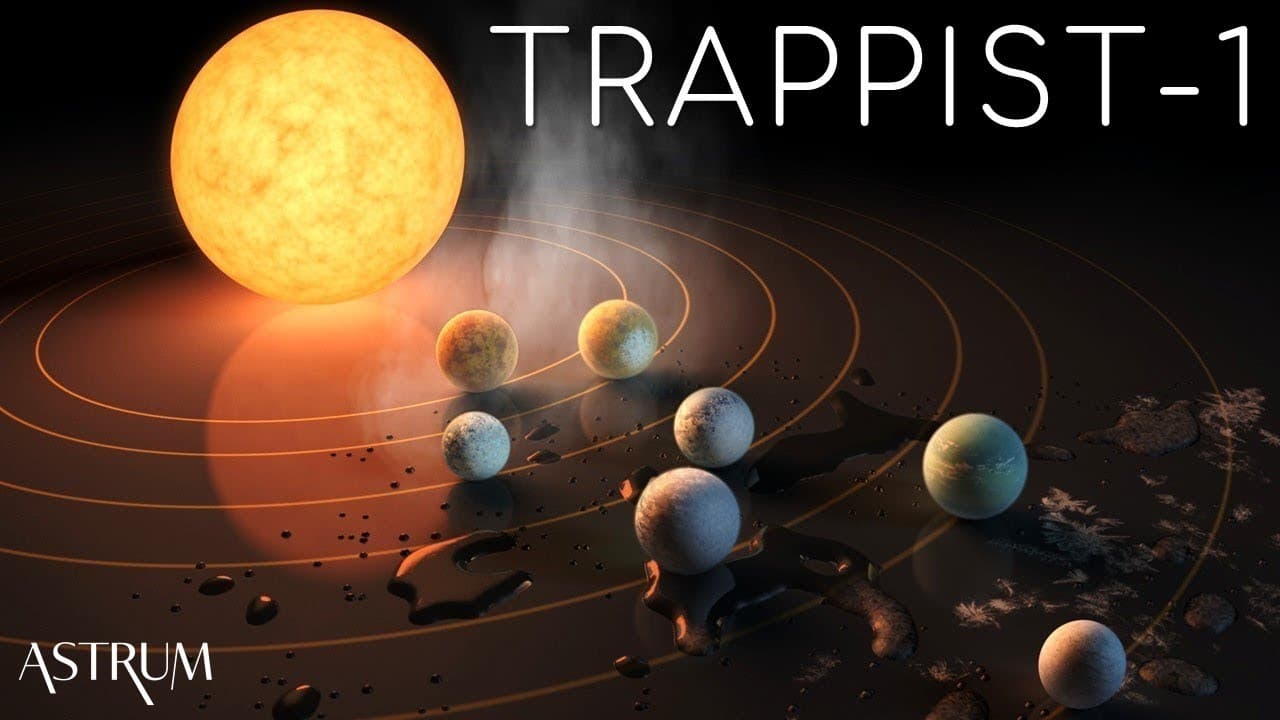
The Trappist-1 system, only 40 light years away, contains seven Earth-sized planets, with several located in the habitable zone. Trappist-1d stands out for its potential as an ocean world, which may support life, while the host star, a relatively quiescent red dwarf, provides a more stable environment than typical red dwarfs.
Transcript
Alright everyone, here is one of your most asked for videos, everything you could want to know about the Trappist system. And I can see why there is so much interest, it is such a unique system compared to anything else that we know of, an entire solar system contained well within the distance of Mercury and the Sun. It is one of the closest places... Read More
Key Insights
- 🌍 The Trappist system, with its seven Earth-sized planets, is a unique and intriguing solar system.
- 😪 Red dwarf stars like Trappist-1 are common in the galaxy but may not be ideal for hosting life due to their flaring behavior and the challenges faced by tidally locked planets.
- 🍧 Trappist-1d, Trappist-1e, and Trappist-1f are potential candidates for habitability, with each having unique characteristics that make them interesting for further study.
- 💦 Water has been detected on most, if not all, of the Trappist-1 planets, increasing the chances of finding habitable conditions.
- 🤘 The James Webb Space Telescope will provide valuable insights into the Trappist system and potentially detect signs of life.
- 💝 Gifting a subscription to Brilliant.org can nurture curiosity and develop problem-solving skills related to topics like gravity, the size of the universe, and exoplanets.
Install to Summarize YouTube Videos and Get Transcripts
Explore YouTube Video Summarizer or Get YouTube Transcript Extractor
Questions & Answers
Q: Why are red dwarf stars like Trappist-1 less likely to harbor life?
Red dwarf stars often have planets in their "goldilocks zone" that are tidally locked and subject to flares, making it challenging for life to develop and atmospheres to be retained.
Q: What is unique about Trappist-1d?
Trappist-1d is smaller than Earth but lies in the goldilocks zone, making it a potential ocean world with a volatile layer on the surface and a thick atmosphere that might regulate temperature.
Q: How do the Trappist-1 planets distribute heat despite being tidally locked?
Planets with large oceans or atmospheres, like Venus, can distribute heat from the star better, making them potentially habitable across the twilight zone where temperatures may be moderate.
Q: What makes Trappist-1e the most Earth-like exoplanet in the system?
Trappist-1e has a rock-iron composition like Earth, a compact atmosphere that allows for water pooling on the surface, and a temperature range similar to Earth's.
Summary & Key Takeaways
-
The Trappist system is a unique solar system with seven known Earth-sized planets orbiting a red dwarf star called Trappist-1.
-
The planets are tidally locked, meaning one side always faces the star, but they may still have mechanisms for distributing heat and supporting life.
-
Trappist-1d, in particular, is interesting as it might be an ocean world with a large amount of water, making it a potential candidate for habitability.
Read in Other Languages (beta)
Share This Summary 📚
Summarize YouTube Videos and Get Video Transcripts with 1-Click
Try YouTube Summary with ChatGPT & Claude or YouTube Transcript Generator
Explore More Summaries from Astrum 📚




Summarize YouTube Videos and Get Video Transcripts with 1-Click
Try YouTube Summary with ChatGPT & Claude or YouTube Transcript Generator