What Is Intuition in Philosophy?
TL;DR
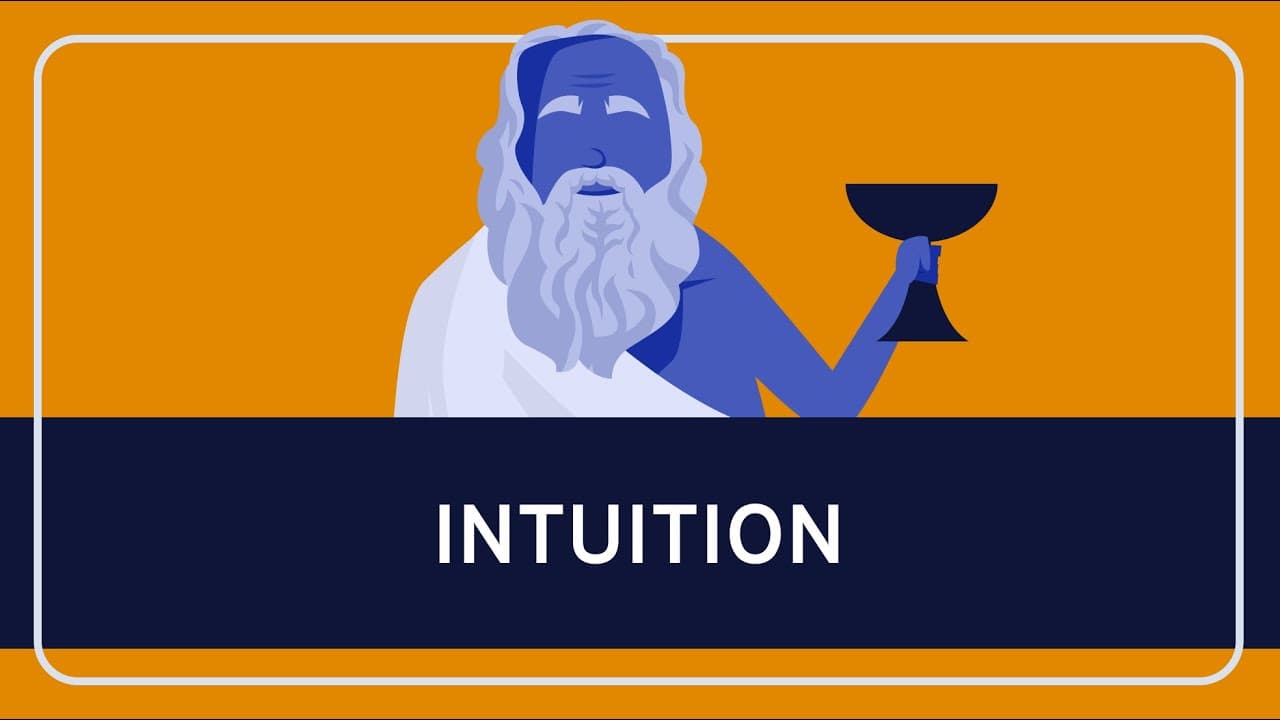
Intuition is an immediate form of judgment that does not rely on conscious reasoning or sensory perception. It plays a significant role in philosophy by providing insights into abstract concepts such as causation, justice, and knowledge. Philosophers use intuitive scenarios to test ideas, and while intuition can be a reliable source of knowledge, it is not infallible and may sometimes lead us astray.
Transcript
my name is Jennifer Nagel I teach philosophy at the University of Toronto and today I want to talk to you about intuition we'll talk about what makes a judgment count as intuitive and we'll also talk about the role played by intuition in philosophy many philosophers over the centuries have recognized intuition as a way to gain knowledge alongside o... Read More
Key Insights
- Intuition is an immediate judgment not mediated by conscious reasoning or sensory perception.
- John Locke distinguished intuition from sensory perception and demonstration, noting its immediacy.
- Intuition provides knowledge of abstract concepts like geometry, numbers, and philosophical ideas.
- Philosophers use intuitive scenarios to test and explore philosophical concepts and theories.
- Intuition can sometimes fail, leading to incorrect judgments or conflicting intuitions.
- Different philosophers have varying theories on how intuition works, from memory of forms to ordinary language grasp.
- Experimental philosophers advocate for formal studies of intuitions to understand them better.
- Intuition is valuable in philosophy, but its ultimate effectiveness and reliability remain to be fully understood.
Install to Summarize YouTube Videos and Get Transcripts
Explore YouTube Video Summarizer or Get YouTube Transcript Extractor
Questions & Answers
Q: What is intuition in philosophy?
In philosophy, intuition is an immediate form of judgment that does not rely on conscious reasoning or sensory perception. It provides insights into abstract concepts such as causation, justice, and knowledge. Philosophers use intuitive scenarios to test ideas and explore philosophical concepts, although intuition is not infallible and can sometimes lead to incorrect judgments.
Q: How does John Locke differentiate intuition from other forms of knowledge?
John Locke differentiates intuition from other forms of knowledge by noting its immediacy. Unlike sensory perception, which involves particular things, or demonstration, which requires conscious steps, intuition provides direct knowledge of abstract concepts without mediation. For example, understanding that no round things are square is an intuitive judgment according to Locke.
Q: What role does intuition play in philosophical inquiry?
Intuition plays a crucial role in philosophical inquiry by providing immediate judgments about abstract concepts, aiding in the exploration and testing of philosophical ideas. Philosophers use intuitive scenarios to evaluate theories and concepts, although they acknowledge that intuition is not infallible and may sometimes lead to conflicting judgments.
Q: Can intuition be considered a reliable source of knowledge?
Intuition can be considered a reliable source of knowledge in many cases, providing immediate insights into abstract concepts. However, it is not infallible and may sometimes lead to incorrect judgments or conflicting intuitions. Philosophers recognize the need to critically evaluate intuitive judgments and consider them alongside other forms of reasoning.
Q: What are some different theories about how intuition works?
Philosophers have various theories about how intuition works. Plato believed intuition is guided by memory of the forms, while Locke thought it responds to features of our ideas. Some 20th-century philosophers argue intuition is guided by ordinary language grasp, and others propose a more direct grip on concepts like knowledge and morality.
Q: How do experimental philosophers study intuition?
Experimental philosophers study intuition by conducting formal studies to understand how intuitions are formed and how they function. They emphasize the importance of empirical research to gain insights into people's intuitive judgments, moving beyond armchair philosophy to gather systematic data on how intuitions operate in different contexts.
Q: What challenges arise from relying on intuition in philosophy?
Relying on intuition in philosophy presents challenges such as the potential for incorrect judgments and conflicting intuitions. Intuition is not infallible, and different people may have varying intuitive responses to the same scenario. Philosophers must critically evaluate intuitive judgments and consider their potential biases or limitations.
Q: How can intuition be trained or improved?
Intuition can be trained or improved by repeated exposure and practice in specific areas, leading to more reliable intuitive judgments. Philosophers suggest that recognizing common patterns and understanding the underlying principles of intuitive responses can enhance intuition. However, training intuition requires careful consideration of biases and potential cognitive illusions.
Summary & Key Takeaways
-
Intuition is an immediate form of judgment that does not require conscious reasoning or sensory perception. It plays a crucial role in philosophy by providing insights into abstract concepts such as causation, justice, and knowledge. Philosophers often use intuitive scenarios to test and explore philosophical ideas.
-
John Locke distinguished intuition from sensory perception and demonstration, noting that intuition provides immediate knowledge without the need for conscious steps. Intuition allows us to understand abstract truths, such as the difference between circles and squares, or complex philosophical concepts.
-
While intuition can be a reliable source of knowledge, it is not infallible. Intuitions may sometimes lead to incorrect judgments or conflict with each other. Philosophers have different theories on how intuition works, and experimental philosophers emphasize the importance of studying intuitions formally.
Read in Other Languages (beta)
Share This Summary 📚
Summarize YouTube Videos and Get Video Transcripts with 1-Click
Try YouTube Summary with ChatGPT & Claude or YouTube Transcript Generator
Explore More Summaries from Wireless Philosophy 📚
Summarize YouTube Videos and Get Video Transcripts with 1-Click
Try YouTube Summary with ChatGPT & Claude or YouTube Transcript Generator