Debating veganism: How to change someone's opinion - 6 Minute English
TL;DR
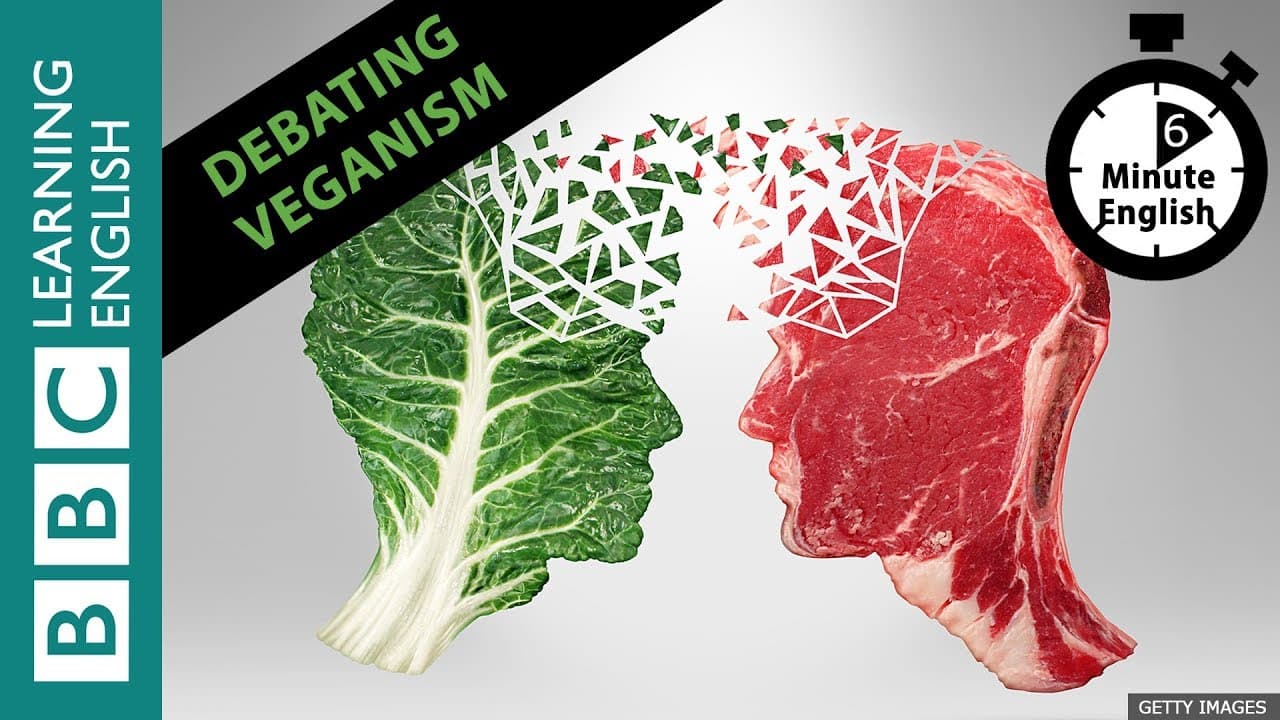
Discussing veganism's impact and how beliefs shape opinions.
Transcript
Dan: Hello and welcome to 6 Minute English. I'm Dan and joining me is Rob. Rob: Hello. Dan: Here at BBC Learning English, we're always discussing diets. Rob: I am on a see-food diet. When I see food, I just have to eat it! Dan: I suppose there's no chance of converting you to a vegan diet, is there? That seems be the most talked about food fad at t... Read More
Key Insights
- Veganism is often viewed as a fad, but it may be a lasting lifestyle that benefits health and the planet.
- The number of vegans in the UK is increasing, with 3.5 million full-time vegans currently.
- Debates about veganism often revolve around personal beliefs rather than facts, highlighting moral values.
- Beliefs, rather than facts, often dominate discussions on veganism, reflecting personal values of right and wrong.
- Winning arguments about veganism may be more effective through finding common ground and focusing on peripheral issues.
- A lacto-ovo-vegetarian diet includes vegetables, eggs, and dairy, but excludes meat and fish.
- The debate over veganism is polarized, dividing people into opposing groups based on their beliefs.
- Respecting differing views on veganism emphasizes valuing individuals as decent human beings.
Install to Summarize YouTube Videos and Get Transcripts
Explore YouTube Video Summarizer or Get YouTube Transcript Extractor
Questions & Answers
Q: What is the current trend of veganism in the UK?
Veganism is on the rise in the UK, with approximately 3.5 million people identifying as full-time vegans. This increase reflects a shift from veganism being seen as a radical lifestyle choice to becoming more mainstream and accepted by a larger portion of the population.
Q: How are debates about veganism often characterized?
Debates about veganism are often characterized by a focus on personal beliefs and values rather than empirical facts. People tend to argue based on their moral values, which dictate their views on what is right or wrong, leading to polarized discussions with strong opinions on both sides.
Q: What approach is suggested for convincing someone to change their opinion on veganism?
To convince someone to change their opinion on veganism, it may be more effective to focus on peripheral issues rather than central facts. This involves finding common ground and understanding shared values, which helps create a connection and mutual respect, making it easier to discuss differing viewpoints.
Q: What dietary choices does a lacto-ovo-vegetarian make?
A lacto-ovo-vegetarian diet includes the consumption of vegetables, eggs, and dairy products, while excluding meat and fish. This type of diet allows for some animal-derived products, like cheese and eggs, but avoids the consumption of any animal flesh, aligning with certain ethical or health beliefs.
Q: Why is it important to respect different views on veganism?
Respecting different views on veganism is important because it reflects valuing individuals as decent human beings, regardless of differing opinions. Recognizing and appreciating diverse perspectives fosters a more inclusive and understanding society, where people can coexist peacefully despite having opposing beliefs.
Q: What does the term 'fad' mean in the context of veganism?
In the context of veganism, the term 'fad' refers to a trend or lifestyle choice that is popular for a short period. However, there is debate about whether veganism is merely a fad or a sustainable lifestyle that offers long-term benefits for health and the environment, indicating its potential permanence.
Q: What role do values play in the veganism debate?
Values play a crucial role in the veganism debate, as they shape individuals' beliefs about what is right or wrong. These values often guide opinions and arguments, leading to polarized discussions where people stand firmly on their moral beliefs rather than relying solely on factual evidence.
Q: How does the concept of 'mainstream' apply to veganism?
The concept of 'mainstream' applies to veganism as it transitions from being a radical lifestyle choice to a widely accepted practice. As more people adopt vegan diets, it becomes normalized and integrated into everyday life, reflecting a broader societal shift towards plant-based living and environmental consciousness.
Summary & Key Takeaways
-
Veganism is increasingly popular in the UK, with 3.5 million full-time practitioners. It is often debated whether it is a mere fad or a sustainable lifestyle benefiting health and the environment. The discussion is deeply rooted in personal beliefs and values, rather than empirical facts.
-
The debate around veganism is polarized, with people divided into opposing groups based on their beliefs about what is moral or immoral. Winning someone over to a different viewpoint can be more effective by focusing on peripheral issues and finding common ground.
-
A lacto-ovo-vegetarian diet includes vegetables, eggs, and dairy products but excludes meat and fish. Understanding and respecting different dietary choices is crucial, as it reflects valuing others as decent human beings, regardless of differing opinions.
Read in Other Languages (beta)
Share This Summary 📚
Summarize YouTube Videos and Get Video Transcripts with 1-Click
Try YouTube Summary with ChatGPT & Claude or YouTube Transcript Generator
Explore More Summaries from BBC Learning English 📚

Summarize YouTube Videos and Get Video Transcripts with 1-Click
Try YouTube Summary with ChatGPT & Claude or YouTube Transcript Generator