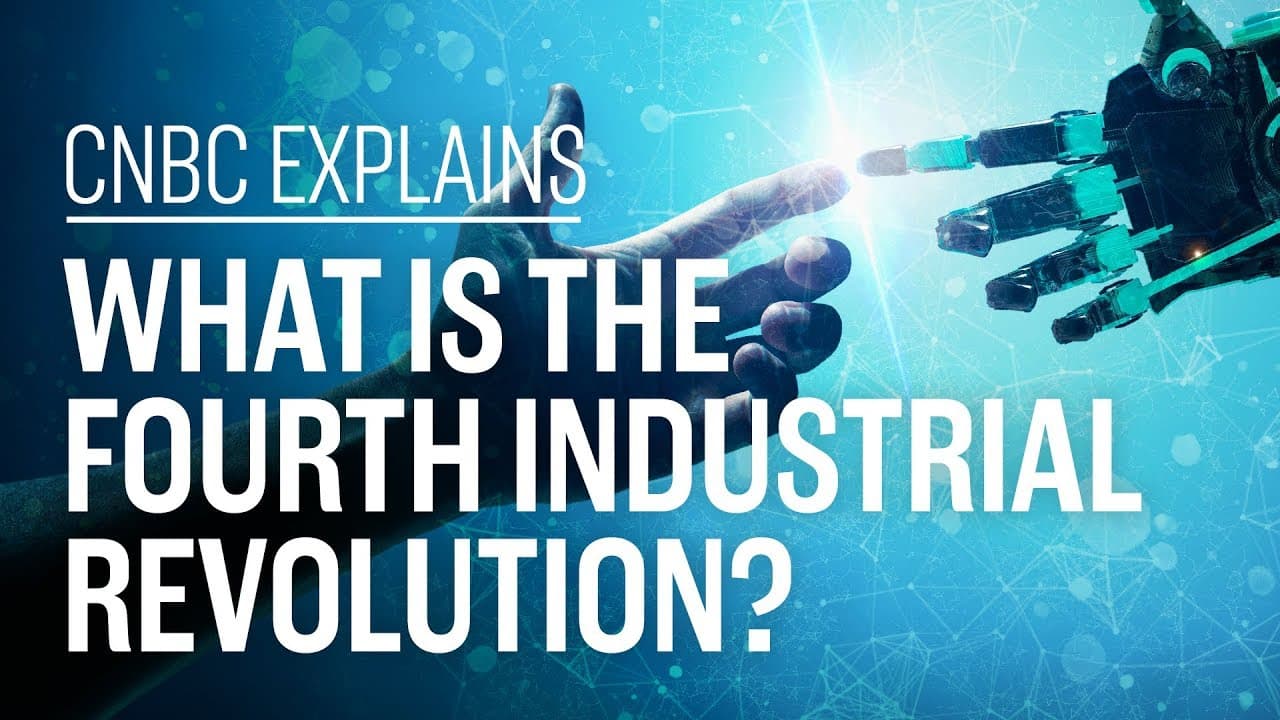
What is the Fourth Industrial Revolution? | CNBC Explains
TL;DR
The Fourth Industrial Revolution is the merging of technology with human lives and societies, bringing faster technological changes and potential challenges in inequality and privacy.
Transcript
It was in these Swiss mountains that the world was first introduced to the phrase the “Fourth Industrial Revolution," and it’s been a hot topic among academics, politicians and business leaders ever since. But what exactly does it mean? The term “Fourth Industrial Revolution” was coined by the founder of the World Economic Forum, a former professor... Read More
Key Insights
- 💢 The phrase "Fourth Industrial Revolution" was coined by Klaus Schwab, the founder of the World Economic Forum, to describe an era of rapid technological change.
- 👾 The Fourth Industrial Revolution is characterized by the merging of technology with humans' lives and the faster pace of technological advancements.
- ❓ There are concerns that this revolution may worsen inequality, as the wealthiest individuals benefit the most from innovation.
- 👶 The Fourth Industrial Revolution brings about new challenges, such as the need for updated skills as some jobs become obsolete and privacy concerns due to increased data collection.
- 🪛 Technology, such as 3D printing, is driving innovation and transforming various industries.
- 👾 Some organizations and governments are struggling to keep up with the fast pace of technological change.
- ❓ Privacy concerns arise as more industries go digital and collect extensive data from customers.
Install to Summarize YouTube Videos and Get Transcripts
Explore YouTube Video Summarizer or Get YouTube Transcript Extractor
Questions & Answers
Q: What is the Fourth Industrial Revolution?
The Fourth Industrial Revolution refers to a time when technology is becoming increasingly integrated into our lives, with developments like AI, autonomous vehicles, and the Internet of Things.
Q: How does the Fourth Industrial Revolution differ from previous ones?
The Fourth Industrial Revolution differs from previous ones by merging technology with human lives at an unprecedented pace and blurring the line between humans and technology.
Q: What are some examples of fast-paced technological advancements in the Fourth Industrial Revolution?
One example is 3D printing, which has gone from a business idea to a booming industry, with applications ranging from hip replacements to bionic arms. This rapid technological advancement is characteristic of the Fourth Industrial Revolution.
Q: What are some of the challenges associated with the Fourth Industrial Revolution?
Two key challenges are inequality and privacy concerns. The revolution has the potential to exacerbate existing inequality, benefitting the wealthiest individuals, while leaving others behind. Additionally, the collection of extensive user data raises privacy concerns.
Summary & Key Takeaways
-
The Fourth Industrial Revolution refers to an era in which technologies like AI, autonomous vehicles, and the Internet of Things are becoming more integrated into our lives.
-
This revolution differs from previous ones by blurring the line between humans and technology and by the faster pace of technological change.
-
However, this revolution also brings challenges such as potential inequality and privacy concerns.
Read in Other Languages (beta)
Share This Summary 📚
Summarize YouTube Videos and Get Video Transcripts with 1-Click
Try YouTube Summary with ChatGPT & Claude or YouTube Transcript Generator
Explore More Summaries from CNBC International 📚





Summarize YouTube Videos and Get Video Transcripts with 1-Click
Try YouTube Summary with ChatGPT & Claude or YouTube Transcript Generator