Making Reactions Go Faster Since the 1700s | Great Minds: Elizabeth Fulhame
TL;DR
Catalysis, discovered by Elizabeth Fulhame in the late 18th Century, is essential for chemical reactions and modern life.
Transcript
Thanks to Brilliant for supporting this episode of SciShow. Go to Brilliant.org/SciShow to check out their Chemical Reaction course and for 20% off an annual premium subscription. [♪ INTRO] If you asked someone who discovered catalysis, most people would answer with ‘what’s catalysis?’! Well, catalysis is a chemical process that’s critical to ... Read More
Key Insights
- 💐 Catalysis is crucial for lowering activation energy in chemical reactions.
- 💝 Elizabeth Fulhame discovered catalysis through meticulous experiments in the late 18th Century.
- 🤽 Water plays a catalytic role in metal reduction reactions.
- ❓ Catalysts are used in various industrial processes and biological functions.
- 💦 Fulhame's work laid the foundation for modern understanding of catalysis.
- 🏛️ Chemistry continues to explore and build upon Fulhame's discoveries.
- 🏆 The Nobel Prize in Chemistry 2021 was awarded for advancements in organocatalysts.
Install to Summarize YouTube Videos and Get Transcripts
Explore YouTube Video Summarizer or Get YouTube Transcript Extractor
Questions & Answers
Q: Who discovered catalysis, and when?
Elizabeth Fulhame discovered catalysis in the late 18th Century, well before Jöns Jacob Berzelius in 1835.
Q: How do catalysts lower activation energy in chemical reactions?
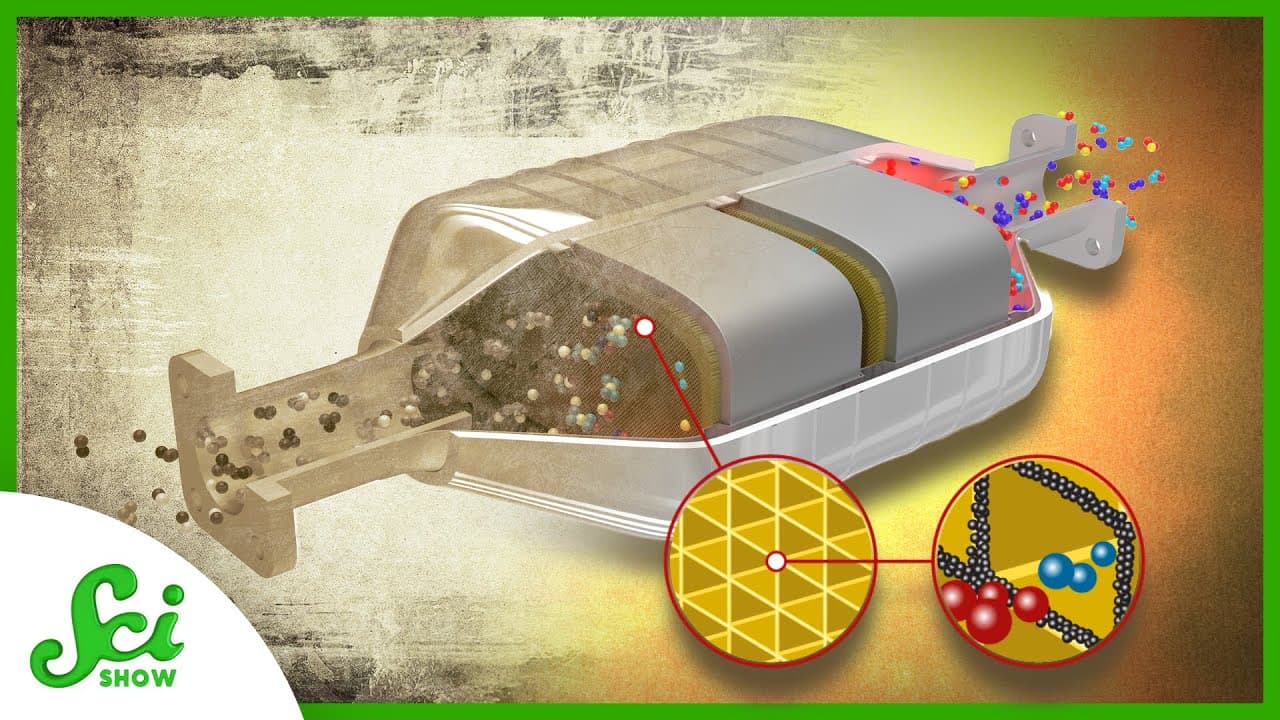
Catalysts provide a surface for reaction ingredients to stick to, facilitating bond formation at lower temperatures.
Q: What were Elizabeth Fulhame's primary experiments focused on?
Fulhame's experiments aimed to dye cloth with gold by using metal-salt solutions and exploring reduction and oxidation processes.
Q: How did water play a role in catalyzing metal reduction in Fulhame's experiments?
Water bound to positive metal ions and facilitated their reaction with electrons from reducing agents, lowering activation energy.
Summary & Key Takeaways
-
Chemical reactions require activation energy, which can be lowered by catalysts.
-
Elizabeth Fulhame's experiments in the late 18th Century led to the discovery of catalysis.
-
Catalysis plays a crucial role in industrial processes and biological functions.
Read in Other Languages (beta)
Share This Summary 📚
Summarize YouTube Videos and Get Video Transcripts with 1-Click
Try YouTube Summary with ChatGPT & Claude or YouTube Transcript Generator
Explore More Summaries from SciShow 📚


Summarize YouTube Videos and Get Video Transcripts with 1-Click
Try YouTube Summary with ChatGPT & Claude or YouTube Transcript Generator