Why Is Price Volatility Not a True Measure of Risk?
TL;DR
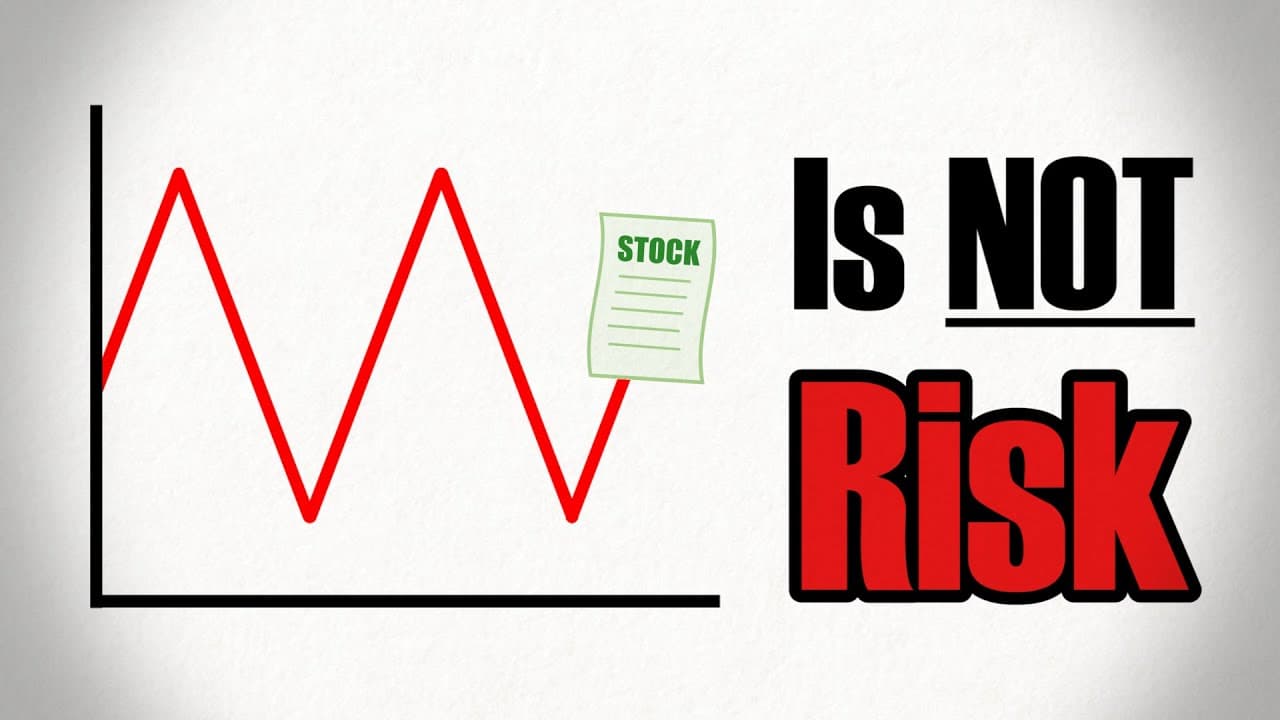
Price volatility is not a reliable measure of risk because it only reflects price fluctuations, ignoring potential losses and changes in a company's true value. Relying on volatility can mislead investors, prompting poor decisions such as selling at a loss. Instead, risk should be viewed as the probability of losing money or facing permanent capital impairment.
Transcript
this video is sponsored by skillshare visit the link on screen or in the description below to get a free two-month premium trial risk is the fundamental balancing force of investing it is the yin to returns yang that forever forces us to consider not only how much we earn from our positions but also how much we're willing to lose it's an ever impor... Read More
Key Insights
- 😚 Risk in investing should be measured by the probability of losing money or facing permanent capital impairment, rather than just looking at volatility.
- 🌸 Volatility fails to consider potential losses and changes in a company's value, making it an incomplete measure of risk.
- 🥺 Relying on volatility as a measure of risk can lead to poor investment decisions, including selling when prices are down.
- 🍉 Understanding and managing risk involves controlling emotions and impulses, as well as considering the long-term perspective.
- ❓ Investors should focus on the fundamentals of a company and its actual value, rather than being solely influenced by price movements.
- ✳️ There are limitations to measuring risk, and different investors may have different perspectives and approaches.
- 🍉 Volatility can still be useful in comparing risk-adjusted returns of different stocks or for short-term investment horizons.
Install to Summarize YouTube Videos and Get Transcripts
Explore YouTube Video Summarizer or Get YouTube Transcript Extractor
Questions & Answers
Q: Why do many investors believe that volatility is the best measure of risk?
Many investors believe this because volatility is easy to measure and provides information about a stock's price movements. It is widely used in financial formulas and theories.
Q: What are the three major shortcomings of volatility as a measure of risk?
The first is that not all volatility is bad, as price movements can include both upwards and downwards movements. The second is that volatility is backward-looking and doesn't account for future changes. The third is that it focuses exclusively on price without considering a stock's actual value.
Q: How does Warren Buffett view volatility as a measure of risk?
Warren Buffett famously declared that volatility does not measure risk. He believes that volatility has shortcomings and fails to capture the true risk of an investment.
Q: What is the alternative perspective on risk in investing?
The alternative perspective on risk is that it is the probability of losing money or facing permanent capital impairment. It focuses on potential losses and changes in a company's value.
Summary & Key Takeaways
-
Risk in investing is the probability of losing money, coming from various sources such as internal factors and the external environment.
-
Conventional measures of risk, like volatility, focus on a stock's price fluctuations but fail to account for potential losses and changes in value.
-
Volatility has three major shortcomings: not all volatility is bad, it is a backwards-looking measure, and it only considers price without considering value.
Read in Other Languages (beta)
Share This Summary 📚
Summarize YouTube Videos and Get Video Transcripts with 1-Click
Try YouTube Summary with ChatGPT & Claude or YouTube Transcript Generator
Explore More Summaries from The Plain Bagel 📚



Summarize YouTube Videos and Get Video Transcripts with 1-Click
Try YouTube Summary with ChatGPT & Claude or YouTube Transcript Generator