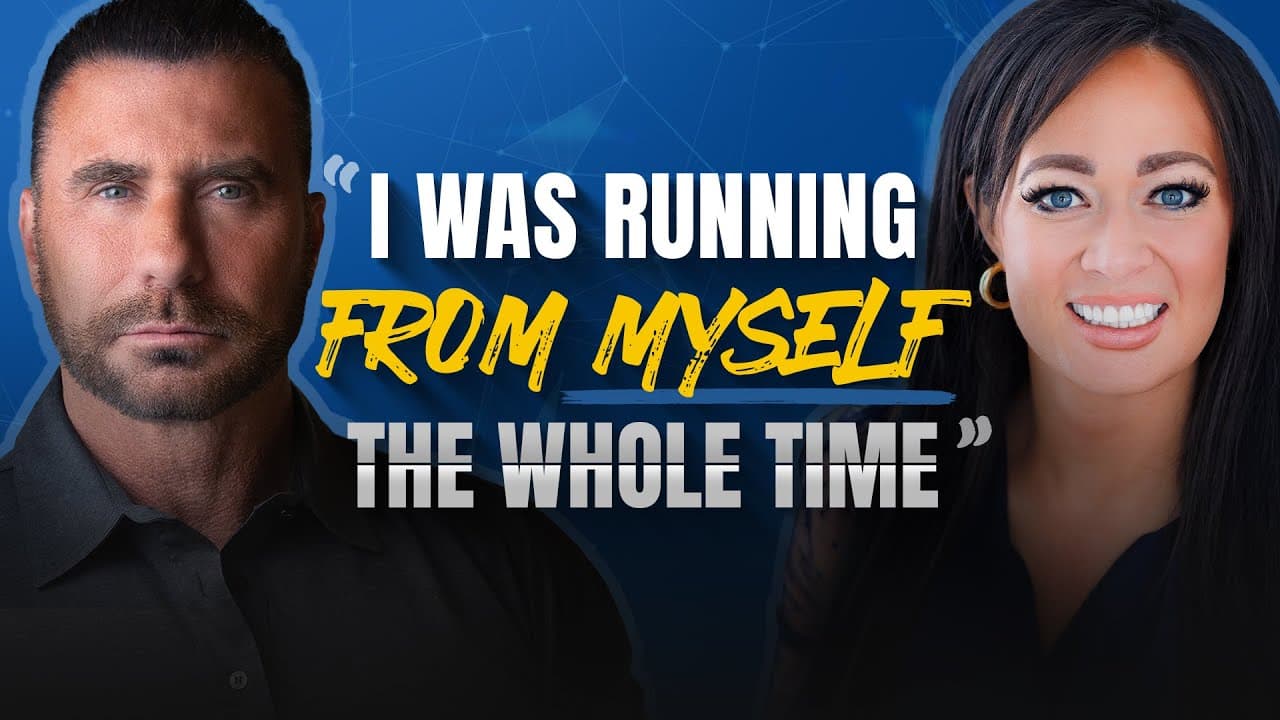
If You're Constantly Beating Yourself Up In Your Mind, Focus On THIS Feat. Thais Gibson
TL;DR
Explore attachment styles to enhance self-love and relationships.
Transcript
you started doing some of this work at like 21 years old and clearly the depth of your work is it's really extraordinary what caused you to start doing this in the first place I was an addict I was addicted to opioids after a knee surgery just before I turned 15 soccer was my coping mechanism from a really chaotic childhood and when that got ta... Read More
Key Insights
- Understanding attachment styles can significantly impact personal relationships and self-awareness, providing a framework for emotional healing.
- Reprogramming negative core beliefs through neuroplasticity can lead to increased self-esteem and healthier relationships.
- Meeting unmet emotional needs is crucial to breaking free from dependency on others, promoting self-sufficiency and emotional stability.
- Self-awareness is a powerful tool that can elevate various aspects of life, from personal relationships to professional success.
- The subconscious mind plays a pivotal role in shaping thoughts and behaviors, often dictating emotional responses and decision-making.
- Integrated attachment theory offers a pathway to change attachment styles, promoting secure attachments and emotional resilience.
- Emotions directly influence actions and decisions, highlighting the importance of emotional regulation and understanding.
- Past pain can be a source of purpose, guiding individuals toward personal growth and fulfillment when properly addressed.
Install to Summarize YouTube Videos and Get Transcripts
Explore YouTube Video Summarizer or Get YouTube Transcript Extractor
Questions & Answers
Q: What led Thais Gibson to start her work on attachment styles?
Thais Gibson began her work on attachment styles after struggling with opioid addiction following a knee surgery. Her journey to sobriety led her to explore the power of the subconscious mind, which helped her overcome addiction and inspired her to help others understand their emotional patterns and attachment styles.
Q: How do attachment styles affect relationships?
Attachment styles, formed in childhood, dictate how individuals give and receive love in relationships. Secure attachment styles lead to healthier relationships, while insecure styles, such as anxious or dismissive, can cause challenges like dependency, fear of abandonment, or emotional withdrawal. Understanding these styles can improve relationship dynamics.
Q: What is the significance of reprogramming negative core beliefs?
Reprogramming negative core beliefs is crucial for building self-esteem and emotional health. These beliefs, often formed in childhood, can sabotage relationships and self-worth. By using techniques like neuroplasticity, individuals can replace these beliefs with positive ones, leading to more fulfilling relationships and a stronger sense of self.
Q: How can unmet emotional needs impact self-esteem?
Unmet emotional needs can lead to dependency on others for validation, causing a roller coaster of self-esteem. By identifying and meeting these needs independently, individuals can stabilize their self-worth and reduce reliance on external sources for emotional fulfillment, leading to a more grounded and confident self.
Q: What is integrated attachment theory?
Integrated attachment theory focuses on changing attachment styles to become securely attached. It involves reprogramming core fears, meeting personal needs, and regulating the nervous system. This approach helps individuals develop healthy relationship patterns and emotional resilience, transforming insecure attachments into secure ones.
Q: How do emotions influence actions and decisions?
Emotions are the driving force behind actions and decisions. Neuroscience shows that every decision is based on emotional states, even if rationalized through logic. Understanding and regulating emotions can lead to more intentional and healthier decision-making, emphasizing the importance of emotional awareness and control.
Q: What are the six stages of relationships according to Thais Gibson?
The six stages of relationships are: dating, honeymoon, power struggle, stability, commitment, and bliss. Each stage represents a phase of relationship development, with the power struggle stage being critical for overcoming challenges and deepening connection. Successful navigation through these stages leads to more profound and lasting relationships.
Q: How can past pain contribute to finding one's purpose?
Past pain often holds lessons and insights that can guide individuals toward their purpose. By addressing and healing from painful experiences, individuals can uncover strengths and passions that align with their true calling. This process of transformation can lead to personal growth and fulfillment, turning adversity into purpose.
Summary & Key Takeaways
-
Thais Gibson discusses the importance of understanding attachment styles for personal growth and emotional healing. She explains how these styles affect relationships and self-esteem, offering insights into reprogramming negative beliefs.
-
The episode emphasizes the significance of self-awareness and meeting unmet emotional needs to foster independence and emotional stability. Gibson highlights the role of the subconscious mind in shaping behaviors and the impact of core fears.
-
Practical techniques for transforming attachment styles and enhancing self-love are explored, with a focus on neuroplasticity and emotional regulation. The discussion also touches on how past pain can be a source of personal purpose.
Read in Other Languages (beta)
Share This Summary 📚
Summarize YouTube Videos and Get Video Transcripts with 1-Click
Try YouTube Summary with ChatGPT & Claude or YouTube Transcript Generator
Explore More Summaries from Ed Mylett 📚



Summarize YouTube Videos and Get Video Transcripts with 1-Click
Try YouTube Summary with ChatGPT & Claude or YouTube Transcript Generator