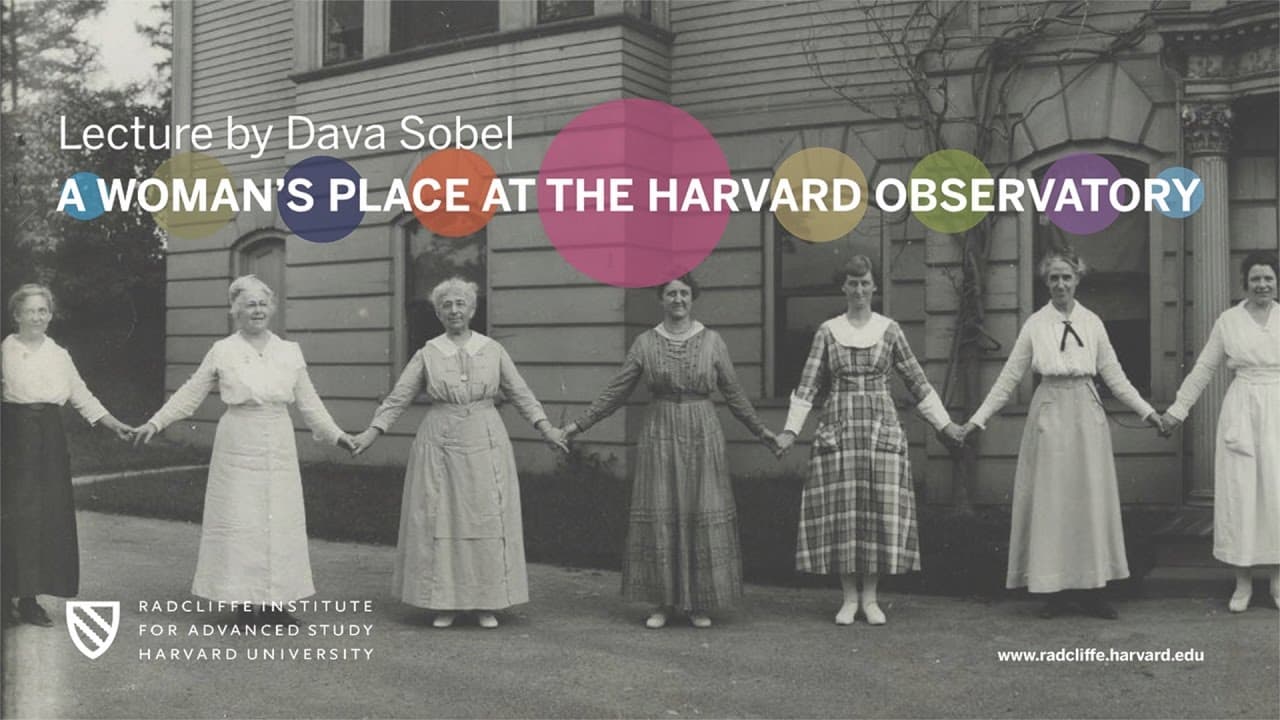
Dava Sobel | A Woman's Place at the Harvard Observatory || Radcliffe Institute
TL;DR
The Glass Universe chronicles the important contributions of women astronomers at the Harvard Observatory, highlighting their significant scientific discoveries and inspiring future generations.
Transcript
[MUSIC PLAYING] Good afternoon, everyone. I'm Liz Cohen. I'm Dean here at the Radcliffe Institute. And I'm delighted to welcome you to this afternoon's program. In a moment my colleague, Susan Ware who is the Honorary Women's Suffrage Centennial Historian at the Schlessinger Library, will give a proper introduction to today's speaker, the acclaimed... Read More
Key Insights
- 👩🎤 The glass plates at the Harvard Observatory played a crucial role in the women astronomers' discoveries, allowing them to analyze and classify stars based on their spectra.
- 💨 These women made significant contributions to the field of astronomy, paving the way for future discoveries and advancements.
- 🫡 The women faced challenges and discrimination due to their gender but were recognized and respected for their work within the scientific community.
- 🧔♀️ The story of these women serves as an inspiration, highlighting the importance of inclusivity and recognizing the contributions of women in scientific fields.
Install to Summarize YouTube Videos and Get Transcripts
Explore YouTube Video Summarizer or Get YouTube Transcript Extractor
Questions & Answers
Q: How did glass plates contribute to the women's scientific discoveries at the Harvard Observatory?
The glass plates captured the spectra of stars, allowing the women to analyze and classify them. By examining these plates, they were able to make significant discoveries about variable stars and their brightness over time.
Q: What were some of the challenges faced by the women astronomers at the Harvard Observatory?
The women faced discrimination and were often paid less than their male counterparts. They also had to overcome societal expectations and obstacles to pursue careers in astronomy.
Q: How did the work of these women astronomers impact the field of astronomy?
The women's discoveries and classifications of stars provided valuable data for future astronomers. Their work led to the understanding of variable stars and the size of the universe, contributing to the advancement of astronomy.
Q: How were the women astronomers recognized for their contributions?
Despite the challenges they faced, the women were recognized by scientific societies and received honorary degrees. Their work continues to be celebrated, and their legacy lives on through awards named after them.
Summary & Key Takeaways
-
The Harvard Observatory employed a group of women in the late 1800s and early 1900s to analyze glass plates of stars and classify them based on their spectra.
-
These women made groundbreaking discoveries in the field of astronomy, including Henrietta Swan Leavitt's discovery of the Period Luminosity Relation, which helped estimate the size of the universe.
-
Despite facing challenges and discrimination, these women played a crucial role in advancing our understanding of the stars, and their work laid the foundation for modern astronomy.
Read in Other Languages (beta)
Share This Summary 📚
Summarize YouTube Videos and Get Video Transcripts with 1-Click
Try YouTube Summary with ChatGPT & Claude or YouTube Transcript Generator
Explore More Summaries from Harvard University 📚





Summarize YouTube Videos and Get Video Transcripts with 1-Click
Try YouTube Summary with ChatGPT & Claude or YouTube Transcript Generator