Fashion Illustration Tutorial: Leopard Print 5 Different Ways
TL;DR
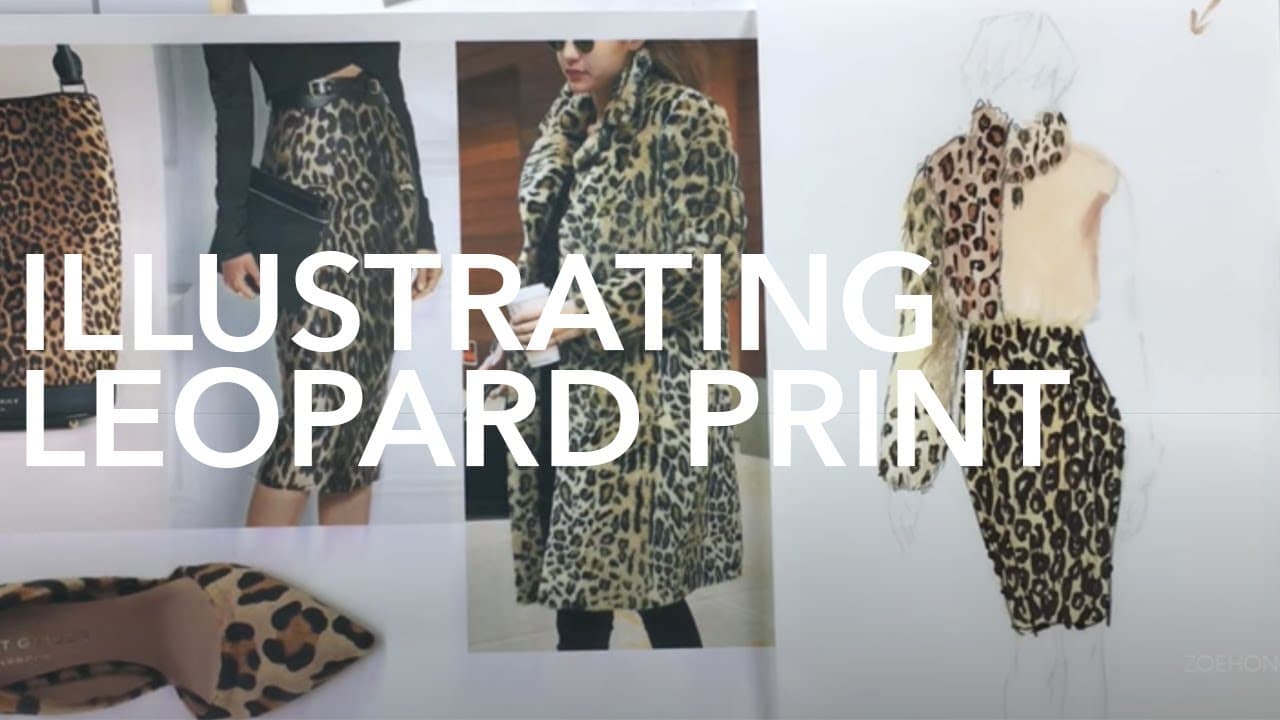
Learn how to render various types of leopard print fabric using markers and colored pencils.
Transcript
hey hey party people in this video I'm going to show you how to render leopard print leopard prints comes in so many incarnations we have leather we have it on fabric it looks like a like a type of satin it comes in a faux fur and this looks like maybe suede or a pony skin okay which actually doesn't come from ponies okay and so I'm gonna show you ... Read More
Key Insights
- 👣 Differentiate between media options for rendering leopard print fabric, choosing based on fabric texture.
- 😎 Pay attention to color selection, considering warm and cool tones for accurate representation.
- ❓ Consider garment draping, texture, and fabric thickness for realistic fabric illustration.
- 👾 Importance of attention to detail in replicating spot sizes, shapes, and spacing for authentic leopard print.
- 🫳 Scale fabric correctly using the palm-to-palm method and ensure patterns extend to fabric edges for a complete look.
- 👣 Replicate center colors, irregular shapes, and fuzzy textures to accurately render different types of leopard print.
- ✏️ Utilize marker, colored pencil, and fine liner techniques to achieve varying textures and spot iterations in the fabric.
Install to Summarize YouTube Videos and Get Transcripts
Explore YouTube Video Summarizer or Get YouTube Transcript Extractor
Questions & Answers
Q: What are some key tips for selecting the right media for rendering leopard print fabric?
When selecting media for rendering leopard print fabric, consider the texture of the fabric - whether smooth or fuzzy, and choose between markers, colored pencils, watercolors, or gouache based on the desired effect.
Q: How can one ensure accuracy in rendering leopard print fabric?
To ensure accuracy in rendering leopard print fabric, pay attention to the color ratios, spot sizes, irregular shapes, and spacing between spots, as well as replicating any distinct features like center colors or fuzzy textures.
Q: Why is it essential to consider the drape and texture of the fabric when drawing garments?
Considering the drape and texture of the fabric when drawing garments helps in creating realistic clothing shapes that wrap around the body convincingly, showcasing the thickness and texture of the specific fabric being illustrated.
Q: How can one prevent common mistakes while rendering leopard print fabric?
To prevent common mistakes while rendering leopard print fabric, avoid growing spot sizes, maintain consistency in spot shapes, pay attention to fabric scale, extend patterns to fabric edges, and replicate any distinct features accurately.
Summary & Key Takeaways
-
Tutorial on rendering different types of leopard print fabric using markers and colored pencils.
-
Tips on selecting media, choosing colors, drawing garments, and adding shadows to create realistic fabric textures.
-
Emphasis on attention to detail, scaling fabric correctly, and maintaining consistency in spot sizes and shapes.
Read in Other Languages (beta)
Share This Summary 📚
Summarize YouTube Videos and Get Video Transcripts with 1-Click
Try YouTube Summary with ChatGPT & Claude or YouTube Transcript Generator
Explore More Summaries from Zoe Hong 📚

Summarize YouTube Videos and Get Video Transcripts with 1-Click
Try YouTube Summary with ChatGPT & Claude or YouTube Transcript Generator